Letters from Cardiff in lockdown: Jane Cook

This instalment of Letters from Cardiff in lockdown comes from Jane Cook, a freelance PR practitioner who lives in Canton. She also writes the  sustainable food blog Hungry City Hippy and is one half of the duo who produce the Hank! Cardiff food podcast.  We’re looking for your stories, so please contribute to Letters from Cardiff in lockdown

When the full lockdown was announced, my first thought was ‘oh, shit.’

When the full lockdown was announced, my first thought was ‘oh, shit.’ That’s because around 50 per cent of my projected income as a freelancer was planned to come from working with local restaurants and food festivals this summer, and I knew that as they were pretty much closed down with immediate effect, those contracts would be the first to go. I was worried about whether I would still be able to earn enough to pay my mortgage, which isn’t small, as we only paid a five percent deposit towards our house in Canton which we bought four years ago.
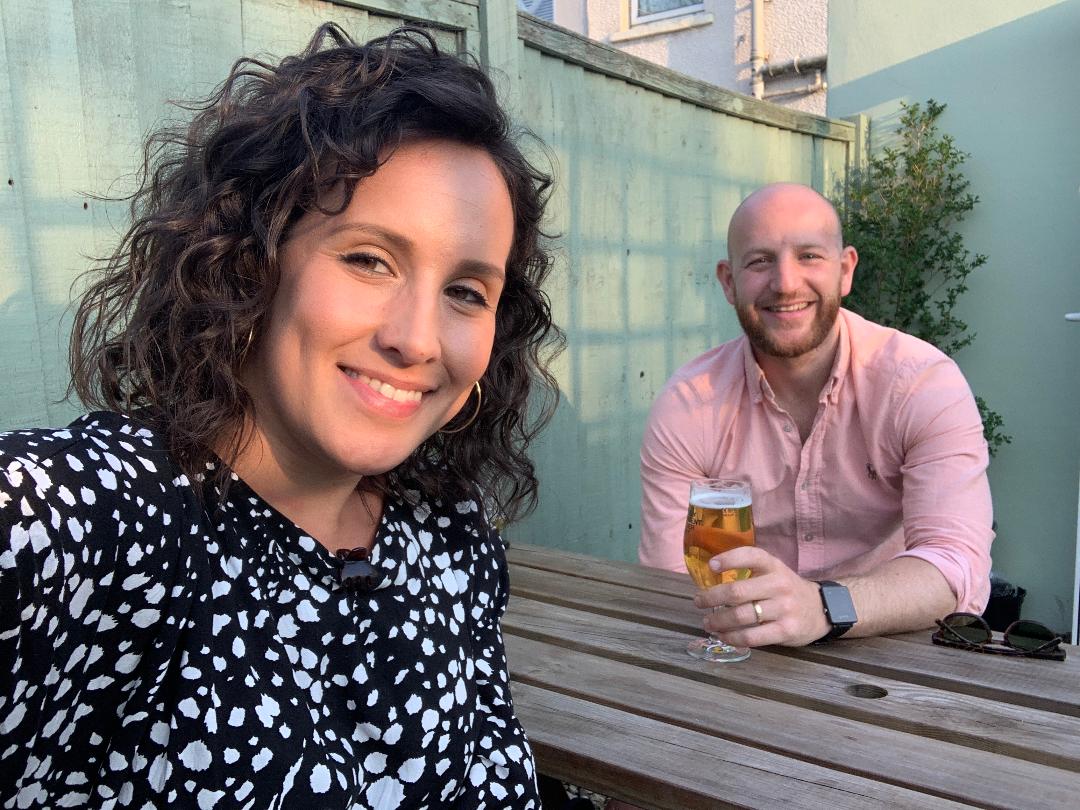
As it turns out, so far things are going okay. Personally, my income has gone down by about a third, but my outgoings have also been slashed by not being able to go anywhere or do anything, so I’ll be okay. I’m using the extra free time to cook more, podcast, write my blog, and help out with some pro-bono work on some of the feed the NHS campaigns in the city. The government support for freelancers will also apply to me so I have that to fall back on if I need to. I feel incredibly sorry for freelancers who have been on their own for less than a year as they won’t qualify for support and have probably not had a chance to build up as wide of a network for potential work.

The way that restaurants have responded to the crisis in launching deliveries and takeaway offerings – quickly and with very little help – etc has been incredible to see. I just hope that the restaurants make it through to the other side. I am doing as much as I can to support them with orders and home deliveries during this difficult time.

Moving my work life into the home hasn’t been especially hard for me; I used to work from home when I first went freelance, and whilst I don’t like doing it all of the time, it’s fine really. My other half – who works for Cardiff Uni – works from the spare bedroom and I’m in the front room, so we have our own spaces. I’m also very used to having client meetings via video etc as it’s much more efficient than travelling to meetings all the time; I have clients based in Aberystwyth and Abergavenny and this was always the norm for us.
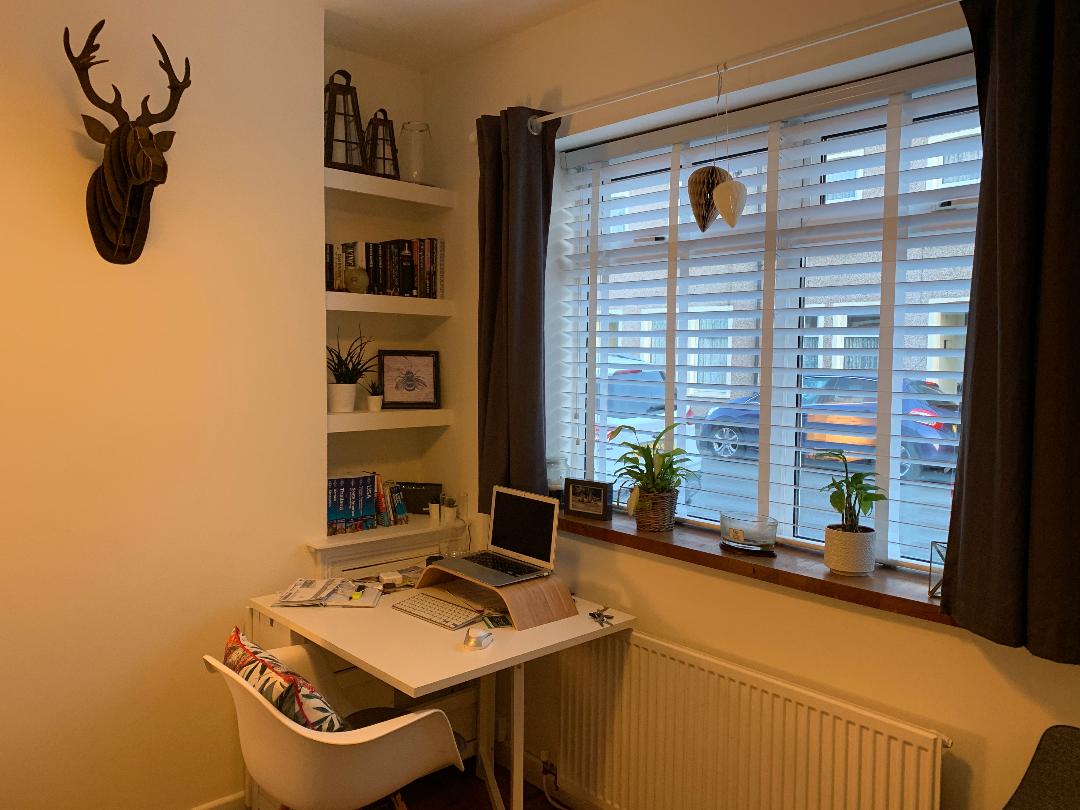
My home office!

Health-wise, both myself and my husband are low risk. We’re in our 30s, with no underlying health conditions, and pretty healthy, but we’re staying in to protect others. We’re friends with a few healthcare workers the same age who’ve had the virus – a GP who got it and was sick at home for a couple of weeks but has since recovered, and another friend who tested positive but had no symptoms. My grandad’s brother unfortunately died from it last week – at a care home in Sheffield – which is really sad; especially for my grandad as he can’t go to the funeral and has to deal with his grieving alone.

The thing I miss most about ‘normal life’ is other people. Being able to have friends over for a BBQ, being able to go out to eat / drink / dance is one of my favourite things, and whilst video calls can replace client meetings, they’re no substitute for catch-ups with more intimate acquaintances. I miss being up close with my friends and having conversations that flow more easily without WiFi drop-outs and frozen screens. I know my mum is finding it much harder than I am as she is furloughed, so doesn’t have the distraction of work in the week. I am glad I have something to occupy me and keep my brain busy.

I am learning to appreciate the benefit of regular exercise, and I never thought I would be a person who said that! I hate working out, have never been a gym bunny, but in February I started the ‘Couchto5k’ app. It’s a nine-week series of podcasts that builds you up to being able to run 5km in half an hour by coaching you through three runs a week. I have been able to stick to it (socially distancing of course) and I finished the program last week, with a 30-minute run around Victoria Park. I plan to keep up the habit of running three times a week for as long as I can.

For me, one of the most positive changes that I have seen so far in this crisis is the shift in people’s relationship to their local economy and to food.

Local veg box schemes are popping up all over and subscriptions are soaring, people are cooking from scratch more, and they are looking to their local food producers and retailers for help in feeding themselves, instead of relying on the big supermarkets for everything. This is good news for local jobs, local farmers – everyone. I hope that that those habits will continue for long after this is over.

The other thing that has fascinated me is the way that people have been looking to nature to cheer themselves up during lockdown – it shows that most of us still value that connection and are suddenly appreciating it anew.

Sadly, the reality is that collectively we have treated nature so poorly for so long in the name of economic growth. Now that growth has been stalled, people are realising that yes, things could be different, and in some ways better. I wrote a more detailed post about the lessons I hope we learn from all of this here: COVID-19 BRINGS OUR RELATIONSHIP WITH NATURE INTO SHARP FOCUS.

Follow Jane: Hungry City Hippy website | Hungry City Hippy Twitter | Hungry City Hippy Facebook | Hungry City Hippy Instagram

Want to write for Letters from Cardiff in lockdown? Find out how

***

See also:

***

Letters from Cardiff in lockdown: Neil Cocker

There’s a beautiful synchronicity at work in the universe sometimes, as evidenced by this – our first ever instalment of the Letters from Cardiff in lockdown series, written by the wonderful Neil Cocker who also wrote the first ever story that we EVER published here on We Are Cardiff, nearly ten years ago. Neil has spent a lot of the time since then travelling around and living in other countries, but has ended up back here in the lockdown. All roads lead back to Cardiff! Big love to Neil and thanks for this – the first post in our new series, examining how you’re all managing through the lockdown. We’re looking for your stories, so please contribute to Letters from Cardiff in lockdown

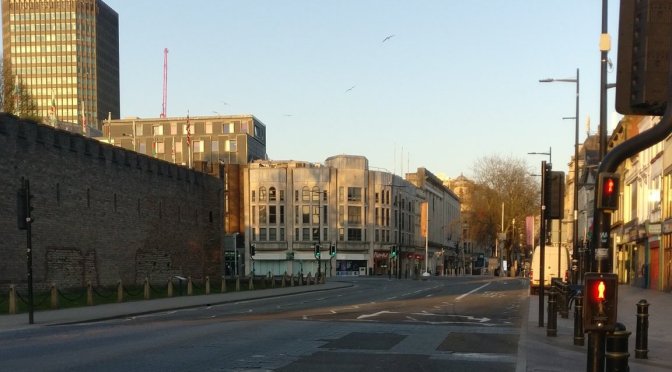
Castle Street Cardiff, 6pm, 25 March 2020 – photo by Neil Cocker

At the beginning of 2016 I left Cardiff, “temporarily” moving to London to work on a three month project. I didn’t know then that I wouldn’t return properly to my adopted home for nearly three years, and would live at the very far side of Europe for two of those. 

Just over a year on from my return, I find myself living right in the city centre. Not my first choice of location in a city that offers so many options to those looking for a suburb that feels like home. But a result of circumstance, luck, and others’ generosity for a wanderer who hasn’t quite settled again yet.

On returning, my relationship with the city changed, and continues to change, as I’m now able to compare it fairly with other European capitals. But also I’m now able to see the city centre “as it is”, without shoppers, tourists, coffee shop flâneurs. The lockdown has dissolved the flesh, tendons, arteries and organs. All that’s left are the bones; the empty streets, closed shops, and those that call the centre “home”. And among those bones two things have become very apparent to me.

Firstly, one of the things that struck me hardest when I returned in late 2018 was the extent to which homelessness was now an un-ignorable facet of the city centre. Now, with the streets so quiet, I can see the homeless community much more clearly. But I can also hear them.

When I first left Cardiff I felt that the situation, while bad, was one that was easy to pretend didn’t exist. You could see a huddled figure in a doorway, and hope your headphones were prominent enough that you could pretend not to hear any requests for money. Now, after what appears to be a sharp rise in homelessness, I’m not just ashamed of my own ignorance. I’m also ashamed at just how much, as a society, we were failing the people that needed our help the most. 

Living in the very heart of Wales’ capital is an odd experience during lockdown. It’s quiet for the first time in the 12 months I’ve been in this apartment. I don’t just mean that there are very few people in the streets during the daytime, but that I don’t get woken at 3am by drunkards shouting, as people stagger up The Hayes to their homes and hotels. I also don’t have to keep my windows closed on sunny days just to take the edge off the volume of a busker playing the same six songs on repeat. Now it’s very, very quiet – just me, my open windows and the sound of seagulls occasionally fighting over the dwindling scraps of food, or having noisy, hasty, bird sex.

Pretty much the only human voices I hear now are those of the homeless. Their voices are no longer drowned out by the hubbub of a thousand shoppers, so they’re louder and more evident. No longer the inconvenient, marginalised 0.1%, they make up a much bigger proportion of the people who are on the streets of the centre. They can’t be ignored, as they may be literally the only person on the street at the same time as you. Whether we will step up to help them in the long term after this pandemic ends remains to be seen.

The other noticeable thing about the city centre is that, despite the increasing number of  large blocks of flats, there appears to be little in the way of “community”. Or, not that I’m aware of, at least. In my apartment complex alone there are over 300 flats, although I suspect that occupancy is nowhere near 100%. Yet, I’ve never heard of one single communal activity. Apart from a few familiar faces with whom I’m on nodding terms, I have almost zero interactions in this building. And this saddens me.

Maybe it’s the lack of “need” around which a community can coalesce, because we all live in the very heart of the action. I remember back in my dim and distant past, that those who lived in the student halls at Senghennydd Court complained of a lack of community there. They lived a short stumble from both the city centre, and the Students Union, so they didn’t “need” to create a community. Those of us consigned to Llys Tal-y-bont (a much smaller development back in the mid nineties) had to make our own entertainment, as we’ve all heard our grandparents say. We had to form friendships and bonds late at night in others’ apartments, because we couldn’t just go to the Pen & Wig to meet friends. We were, we felt, many miles from the action. And that was what created a need.

As we’ve seen during this pandemic, many communities have stepped up to fill the gap of their regular interactions at their local Coffee No.1 by creating a Whatsapp group for their street, or putting flyers through doors offering food shopping for those in quarantine. Humans seem to create community when there isn’t one. But not here, it feels. Maybe because there’s no central point, value, or identity around which to gather. Especially when everything is closed, and all the suburb dwellers aren’t here, too. Regardless, if city centre living is to continue growing at the same pace, we need to find ways to provide people who live together to get to know each other in an easy, unforced way. How will we facilitate interactions outside of awkwardly acknowledging each other while waiting for the lifts? Architects and city planners call these “third spaces” or “bump spaces”. Spots where you can meet people outside of home or work and, hopefully perhaps, get to know people that you wouldn’t normally meet.

Where are the spaces in a city centre where we can dwell, outside of the cafes that we use to have preplanned meetings? More importantly, why aren’t the buildings in which us city centre dwellers better at making it easier for us to meet, and learn about, our neighbours? There’s no doubt that the lockdown has made us all consider our lives in different ways and examine the things that are important. I just hope that the cities that we build in the future reflect and embody these changing priorities. For those that sleep next door, and for those that sleep in doorways – community is everything.

Follow Neil on Twitter @NeilCocker. He’s recently set up his own newsletter about community, the science of happiness and wellbeing, a (secular) retreat he’s going to be running, and how we build a happier, better world. Sign up to Neil’s newsletter.

You can help Cardiff’s homeless and vulnerable by donating to some of the following organisations:

Want to write for Letters from Cardiff in lockdown? Find out how here…

See also:

***

Letters from Cardiff in lockdown: contribute to our new series!

Well hello there.

Nature reserve with a large bay behind, on a sunny day, blue skies

There’s almost so much to say, I don’t quite know where to start. Firstly, just quickly, there’s a new series of posts coming here on We Are Cardiff, and we’re looking for contributors. It’s called Letters from Cardiff in lockdown, which hopefully is a fairly self explanatory thing. We’re looking for anyone (really, anyone at all) to send us short pieces about your experiences in lockdown.

If anyone says the word unpr*c*d*nt*d again I’m going to eat my laptop. But genuinely, this is a pretty unusual situation. Most of us (if we are lucky) would never have been through anything like this before. The city of Cardiff certainly hasn’t experienced anything like this, not in my lifetime.

If you’re interested, we’d love your contributions:

  • 500-1500 words on your experiences of being in lockdown;
  • some photos if you can (they don’t have to be of you, they could be of whatever you’ve been doing during this time, or what your post is talking about);
  • feel free to write whatever you like, but if you need some prompts, you could think about these aspects:
    • What’s your lockdown situation in terms of work, health, relationships, friends, family, pets…?
    • How are things in your neighbourhood, your local area?
    • What were you doing before, what are you doing now?
    • Have you found it difficult to transition to lockdown life, what is the hardest thing for you, what do you miss the most about your “normal” life?
    • Is there anything you’ve been surprised by in terms of not finding it as bad as you had thought?
    • Any tips for other people struggling with lockdown for whatever reason? Your hopes for the future? Anything you’d like to take from this time into future life?
And that’s it. We’ll accept and publish everything we receive (but only things that are real, obviously, so please don’t troll us, as ain’t no-one got time for that). We’d love to document your experiences.
Please send your pieces to wearecardiff@gmail.com.
Peas, and don’t forget to wash your hands
WAC
x
***

Looking after your mind in lockdown

(PLEASE NOTE! THIS PAGE WAS LAST EDITED 12 JUNE 2020. IT IS NO LONGER BEING ACTIVELY UPDATED).

Morning all.

Seems like a trite thing to say, but we genuinely mean this: we hope you’re keeping safe, keeping happy, healthy, and free from suffering.

Yes, we’ve been trying to do our loving kindness meditations to cope with it all. If you’re looking for resources to help manage anxiety or general feelings of being out of control, there are a number of free things you can access.

Thanks to the wonderful We Are Cardiff reader who works in addiction counselling – who wished to stay anonymous – who sent me all of this. You’re amazing and thanks for all the work you do!

Mental wellbeing while staying at home (NHS UK) (our favourite bit from here – “You may feel bored, frustrated or lonely. You may also be low, worried or anxious, or concerned about your finances, your health or those close to you. It’s important to remember that it is OK to feel this way and that everyone reacts differently. Remember, this situation is temporary and, for most of us, these feelings will pass. Staying at home may be difficult, but you are helping to protect yourself and others by doing it.”)

Looking after your mental health during the coronavirus outbreak (The Mental Health Foundation). (Our favourite bit from here: “Try to avoid speculation and look up reputable sources on the outbreak. Rumour and speculation can fuel anxiety. Having access to good quality information about the virus can help you feel more in control. You can get up-to-date information and advice on the virus here: Gov.uk  |  Health Protection Scotland  |  Public Health Wales)

Self-Isolating For Coronavirus? Here’s How To Stay Mentally Well (Huffington Post, includes advice from a counsellor and a volunteer from Rethink Mental Illness). (Their list of advice is good, and covers the following topics: Get on top of things, Use social media for good, Read a book or three, Marie Kondo your room, Buy yourself something nice, Prioritise sleep (but not too much), Get creative, Dance, Focus on the future).

Local sources of support:

  • Cardiff Mind. They have a great resource for dealing with stress during the coronavirus COVID-19 pandemic, which is a six-session, cognitive-behavioural therapy class used in community-settings by the NHS (UK) and HSE (Ireland) and across the world. Usually you would attend these sessions in person, but at the moment they’re being live-streamed twice a day. Visit the Stress Control website for more information and to sign up.
  • Cardiff and Vale Action for Mental Health. They have a list of different resources you can access, including support groups.
  • Stepiau. This is a service developed by the Primary Mental Health Support Service for Cardiff and the Vale of Glamorgan, and provides accessible self help resources and links to local services as a first step to developing mental wellbeing. They also have options for people needing emergency assistance.

More options for help and support:

  • Mind, open Monday to Friday, 9am-6pm on 0300 123 3393
  • Samaritans offers a listening service which is open 24 hours a day, on 116 123 (UK – this FREE number will not appear on your phone bill.)
  • The Mix is a free support service for people under 25. Call 0808 808 4994 or email them: help@themix.org.uk
  • Rethink Mental Illness offers practical help through its advice line which can be reached on 0300 5000 927 (open Monday to Friday 10am-4pm). More info can be found on www.rethink.org.
  • Insight Timer. The world’s largest free library of meditations and music to help you with sleep, anxiety and stress. The app is FREE and available for download, and features a host of different meditations and courses to help you manage your mind. There is also a large section of audio for kids and young people.
  • Palouse Mindfulness. This online training course focuses on mindfulness-based stress reduction (MSBR) and is completely free. It’s  created by a fully certified MBSR instructor, based on the program founded by Jon Kabat-Zinn at the University of Massachusetts Medical School.

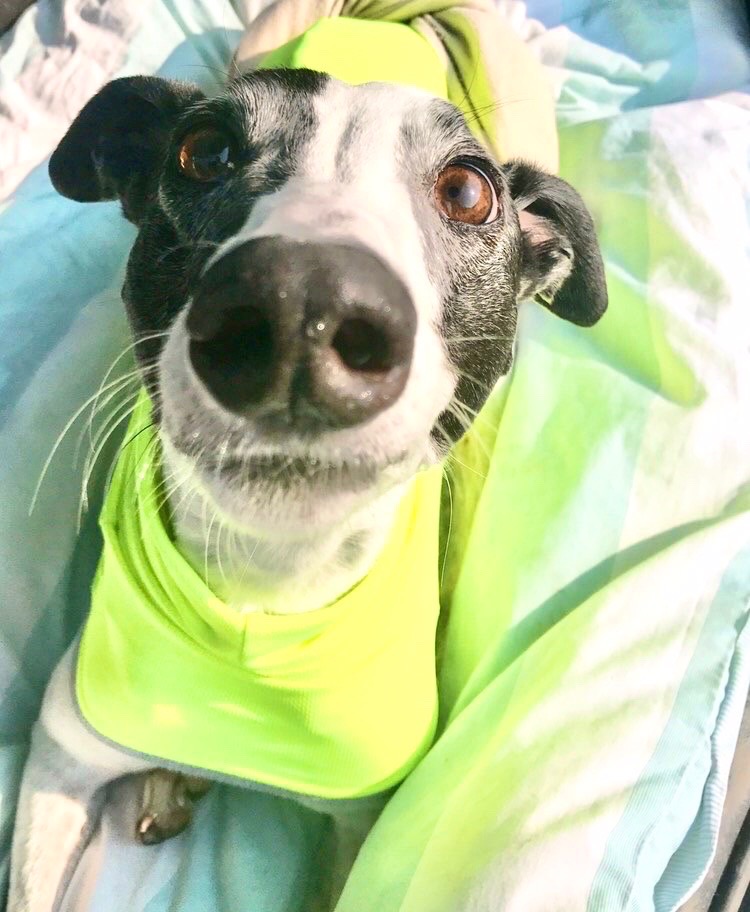
Big love from all of us, especially from Zelda, our mental health officer, who offers socially distanced vibes.

***

Support Cardiff’s NHS / frontline staff: donate your moneys!

(PLEASE NOTE! THIS PAGE WAS LAST EDITED 22 ARIL 2020. IT IS NO LONGER BEING ACTIVELY UPDATED).

There are a number of ways you can support Cardiff’s frontline staff. This page covers a number of FUNDRAISING INITIATIVES where you can donate money to help NHS staff,  plus a list of locations where you can directly donate supplies.

There’s also another We Are Cardiff page dedicated purely to ways you can buy meals to feed staff at NHS hospitals.

Please comment below if you have more links that need to be added. And if you can, donate generously. It’s appreciated.

See also:

***

SUPPORT THE HEALTH BOARDS

Cardiff and Vale Health Board

This is the main charity that supports the departments and staff across the Cardiff and Vale University Health Board. Their Spread the Love campaign has just had large donations from Aaron Ramsey! The money raised through this appeal will go directly to Cardiff & Vale Health Charity’s Make It Better Fund. The doctors and nurses – local professionals who understand what is most needed for our local communities, and who are aware of what the NHS is already doing – will decide how the money raised will be used to best benefit the most vulnerable.

As well as money, the appeal is looking for donations of food and other supplies to help support local NHS staff. The original post is on Facebook so apols if you don’t got that thing. Current drop off locations are Sainsburys in Thornhill and Boots in Llanishen. Alternatively donate cash directly to the CARDIFF AND VALE HEALTH CHARITY – SPREAD THE LOVE CAMPAIGN

DONATE TO THE CARDIFF AND VALE HEALTH CHARITY – SPREAD THE LOVE CAMPAIGN

Follow Cardiff and Vale Health Board Twitter / Cardiff and Vale Health Board Facebook


Aneurin Bevan University Health Board

Aneurin Bevan University Health Board covers Blaenau Gwent, Caerphilly, Monmouthshire, Newport, Torfaen and South Powys. As I know a lot of you will be living / working / have family in these places, or have family in these places, I’ve included info here on how you can support them.

Aneurin Bevan are looking for donations for NHS patients, as no  visitors are allowed on site anymore. The easiest way to do this is to purchase them directly from the Aneurin Bevan Health Board Amazon Wishlist.  Alternatively you can donate to the Anuerin Bevan Health Charity through GoFundMe.

The Aneurin Bevan GoFundMe page is collecting donations directly from the public to be placed into a specific fund for the COVID-19 / Coronavirus pandemic. From their page: “The Health Board is currently committing resources on a range of things in response to COVID-19 including PPE, ventilators, beds, drugs, consumables, additional staff, etc. all of which we hope to be funded by Welsh Government. We do not yet fully know how we will utilise your donations as none of us have been in this situation before. Staff well-being, essential supplies for patients and increasing volunteer activity are some of the things we are currently looking at.”

Follow Aneurin Bevan UHB Facebook | Aneurin Bevan UHB Twitter


***

Don’t forget to stay inside, and wash your paws.

Peas. WAC x

See also:

***