All posts by Katie Witcher Hamer

Katie Witcher Hamer is an author inspired by music and mythology. By tapping into the magic of storytelling, she hopes to provide inspiration for people far and wide. To date she has taken part in many writing collaborations, including "Skywriters Ring Anthology: Short Story Collection", compiled and edited and self-published by herself, and her international writing group, Sky Writers.

Cardiff A-Z: P is for parkrun

Katie Hamer continues her A–Z series with an exploration of Cardiff’s ever-growing running community.


IMG_1043
A runner near the start of the route on Taff’s Trail near Bute Park


How are you doing with your New Year’s Resolutions? What do you hope to achieve in 2015?

Whatever you have planned, make getting out in the fresh air and exercising a priority. As I’ve discovered, there’s nothing better for blowing away those winter cobwebs. It helps to eliminate the gloom of long dark evenings, and may also have prevented me from catching a cold so far.

What’s so special about parkrun?

Parkrun events are free. All you have to do to take part, is register online and turn up with a printout of your barcode (scans from mobile phones don’t work, for some reason). They take place at many venues, both UK-wide and internationally. Local running clubs organize them and people of all abilities are welcome to take part.

At the end of the run your time appears online for all to see, provided you have brought your barcode. It’s not a race, but from my own personal experience, I’ve gained a lot of satisfaction from smashing my Personal Best.

IMG_1024
Leaders of the pack on Saturday


So, it it’s nationwide, what makes the Cardiff parkrun special?

Well, this I couldn’t initially answer, as I am in fact a veteran of another parkrun venue, the one at Bryn Bach, Ebbw Vale. So I decided to set out to investigate. This is what I discovered:

Cardiff parkrun is huge

Four hundred runners on average turn up every week to participate. The most they’ve had is a staggering seven hundred, now that makes for crowded footpaths!

Cardiff parkrun has a vibrant community

They have a very lively Facebook group with 2,000 plus registered members. They’re adding more people all the time. All members are encouraged to post, and there’s almost always a vibrant conversation going on. Which got me thinking…

IMG_1026
Determined runners stride ahead


How could I play an active role in that community?

I had to think about this. I could turn up to the Cardiff parkrun to take part, but what would that teach me? Then, it occurred to me that what I should do is sign up to volunteer.

What happened next?

I found signing up to volunteer very easy. A few days after signing up, I received an email requesting that I marshal at the crossroads. So, on a wet and windy Saturday at the beginning of January, I turned up at the Taff’s Trail next to the big Tesco Extra, donned a high-vis bib, and stood at the side of the course to cheer the runners on.

IMG_1031
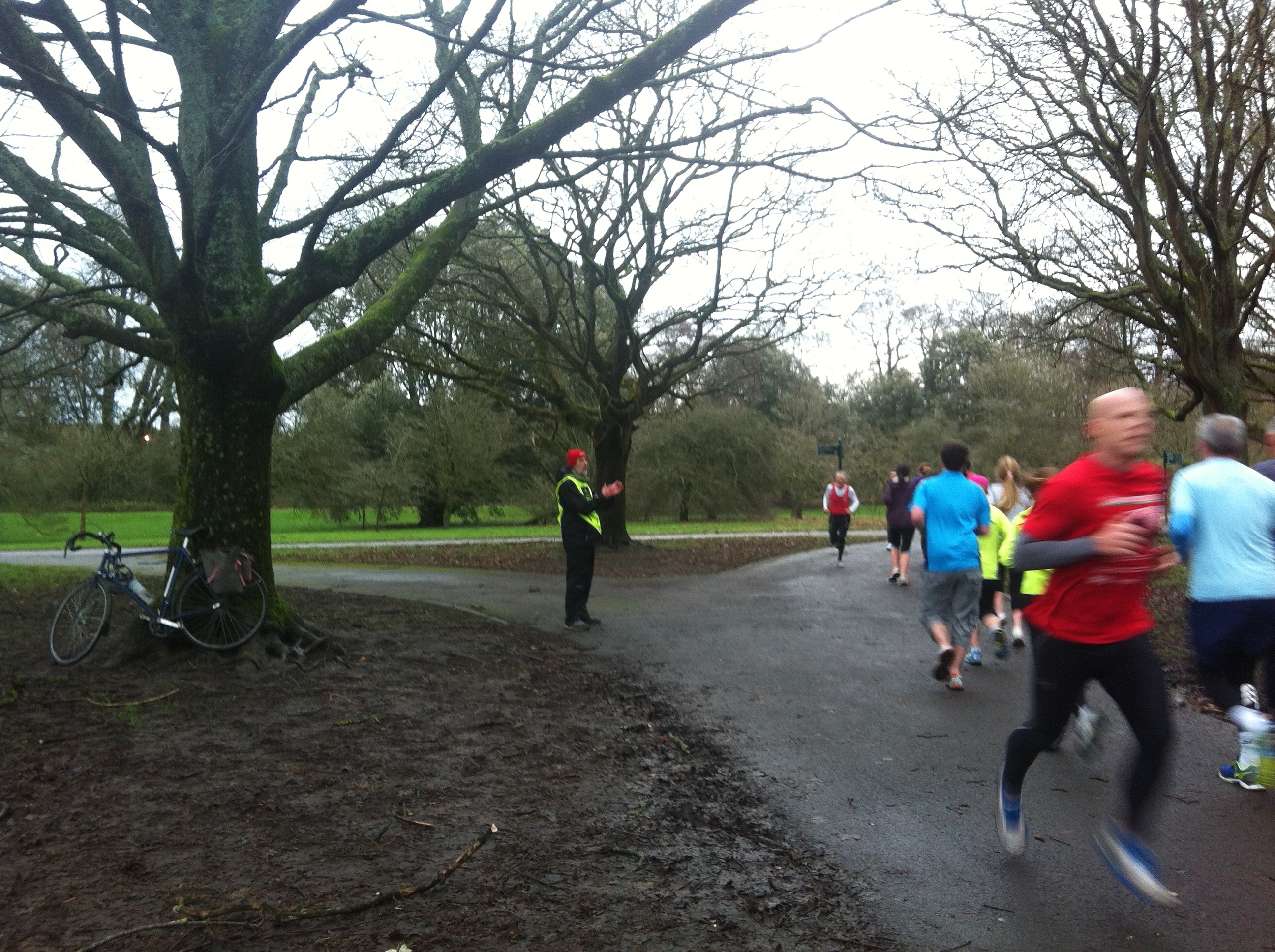
My view from the crossroads, a stretch where marshals have to ensure runners have enough space to run both directions: there and back


How did I rate the experience?

Never having been to this particular course before, and not knowing anyone there, I did feel daunted. But that daunted feeling soon dissipated as I got chatting to the other volunteers. I quickly realized how passionate the people who marshal the event are. They are members of running clubs who have taken part in elite races, and yet go out of their way on a Saturday to give support and encouragement to aspiring runners of all abilities. What really impressed me is that they have a volunteer to ensure the slowest participants cross the finishing line and gain their time.
IMG_1037
The fastest runners pass the middle of the pack on the two-way stretch as marshals offer guidance and encouragement


Parkrun changes lives

Parkrun has changed my life. When I turned up for my first event, I did so as a casual runner. I’m now a member of a running club, registered with the Welsh Athletics Association and training to take part in the Berlin 25km race. If you ask around at any parkrun event, you will hear many similar stories, and ones that are even more remarkable.

Cardiff – a great city for running

Cardiff is an amazing city to be a runner. If you don’t believe me, take a look at this list of forthcoming races:


1st March 2015 St. David’s Day Run

4th May 2015 Cardiff Bay 5 mile

28th June 2015 Cardiff Triathlon

6th September 2015 Cardiff 10k

4th October 2015 Cardiff Half-Marathon


If you’re new to running or it’s been a while since you last did any running, you can find some great training tips here, to help you get prepared: Runner’s World Website.

So, what are you waiting for? Put your trainers on and get down to Cardiff parkrun this Saturday!

You can find more information on Cardiff Parkrun here:

Parkrun website

Facebook 

Twitter

Thanks for reading.


Cardiff A-Z: O is for OPENCities

What better way to kick off 2015 in Cardiff than to celebrate all that makes the city uniquely special?

I’m now halfway through my A-Z exploration so I decided to sum up what I’ve discovered so far. During this summing up I also uncovered the city’s involvement in the European-wide OPENCities project so I’m sharing this with you as well. Here goes:

OPENCities is a British Council project set up to examine the future role of urban spaces. Cardiff has had a pivotal role in this project since it began in 2008. I’ll explain why.

First of all, why openness matters

By 2050 two thirds of the world’s population will live in cities. This urban expansion will be caused by mass migration. OPENCities examines how cities can embrace their migrant populations and offer new opportunities for all.

DSCF2720
A bilingual sign for the City of Cardiff


“Openness is the capacity of a city to attract international populations and to enable them to contribute to the future success of the city”

What makes Cardiff especially important?

First off it’s the youngest capital city in Western Europe. Since the 19th Century when the city become a major importer of coal from the valleys its population expanded tenfold. It has welcome new residents from all over the world, who have made a valuable contribution towards the city’s economy and culture. Cardiff is indeed a vibrant multicultural hub of which all its citizens can be proud.

As well as examining the patterns of migrant populations, the OPENCities project has investigated how cities such as Cardiff can raise its profile internationally. The longterm plan is make Cardiff an even more attractive place for people of all ages and backgrounds to live and work than it is now.

DSCF1629
In the picture – What will the future of Cardiff look like?


“By 2020…Cardiff will be a world class European capital city with an exceptional quality of life and at the heart of a thriving city region.”

In my explorations of Cardiff for my A-Z series I have indeed experienced a culturally diverse city, as my photo gallery demonstrates. Here’s to a good 2015 for you all, and Enjoy!

DSCF1564
Arcades provide a cafe culture as well as shops


DSCF1626
Green areas provide rest and relaxation within the City centre
IMG_0110
Different eras of history co-exist in harmony. The 19th Century clock tower at Cardiff Castle as seen from the Medieval Keep.
DSCF2023
Daleks, who have made their home in Cardiff Bay
DSCF2073
Cardiff University students dig for Iron Age remains at Caerau Hill Fort
DSCF2105
Visitors enjoy the sunshine outside Rhyd-Y-Car Terrace, an exhibit which takes you through 200 years of Welsh history.
DSCF2315
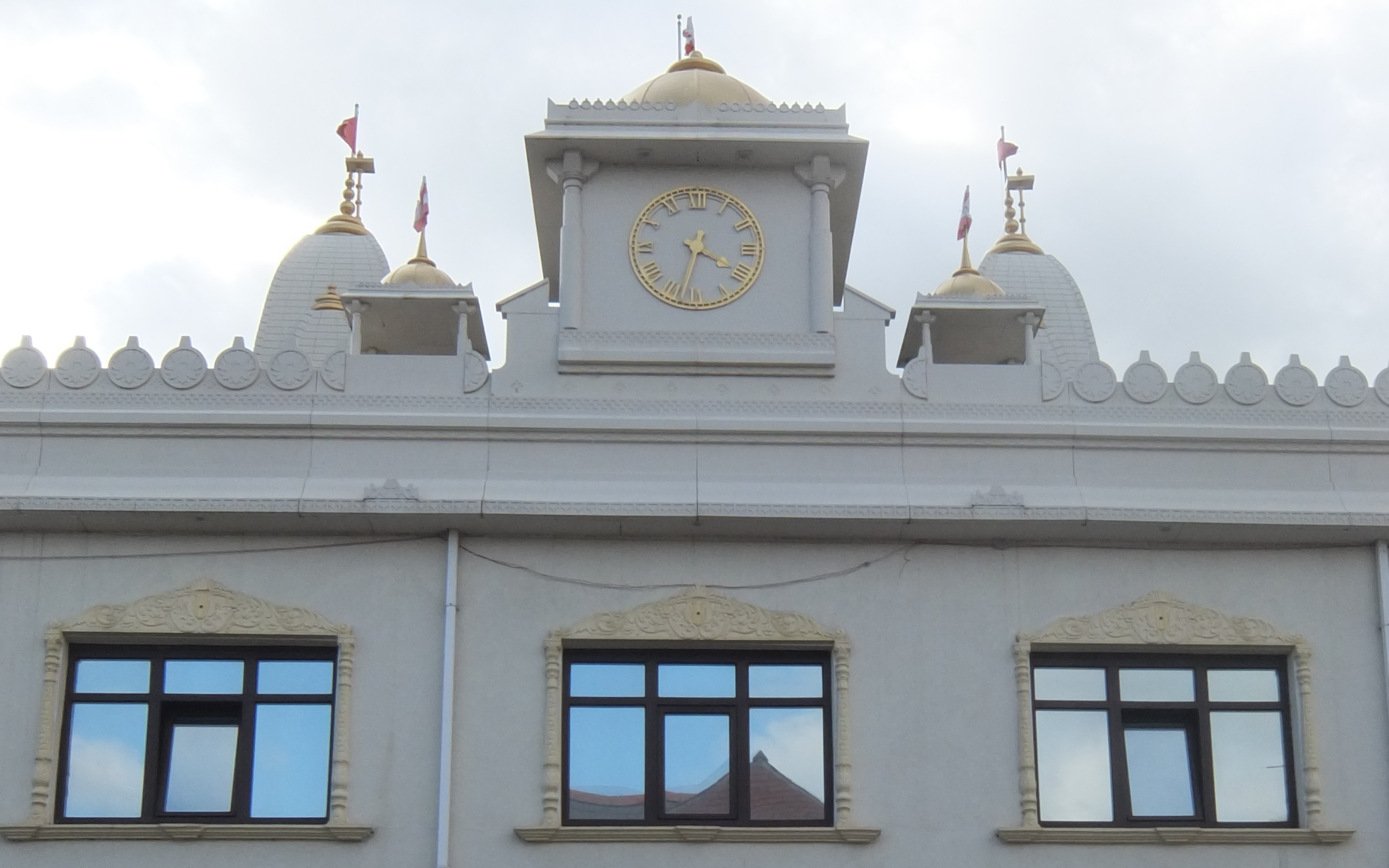
The Shree Swaminarayan Temple within Grangetown demonstrates the diversity of religions catered for in Cardiff.


DSCF2441
Brains beer, as celebrated in The Hennessys’ song ‘Cardiff Born, Cardiff Bred’.
S0162570
Ianto’s shrine at Mermaid Quay is on the tourist trail for international visitors.
DSCF2674
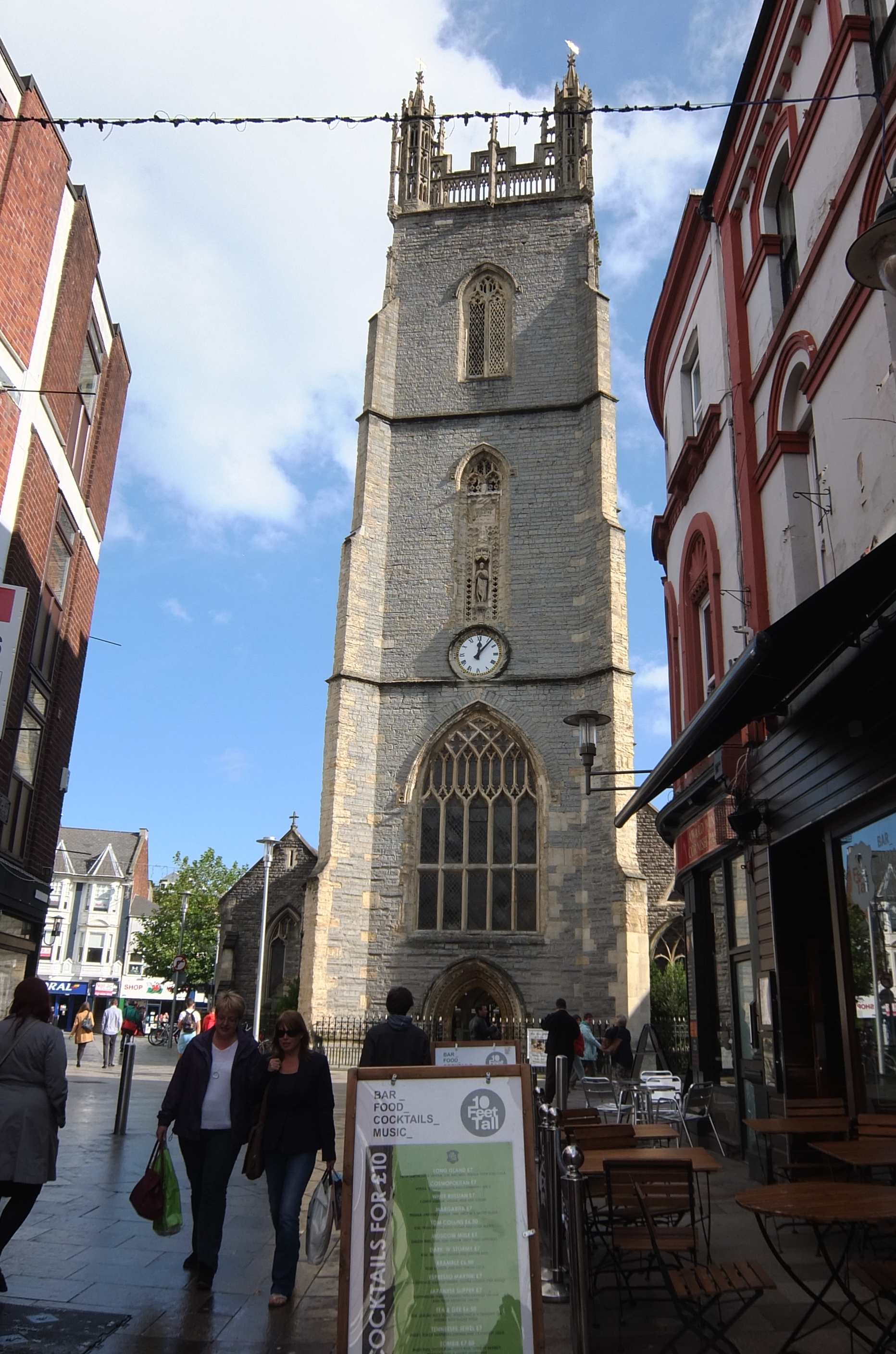
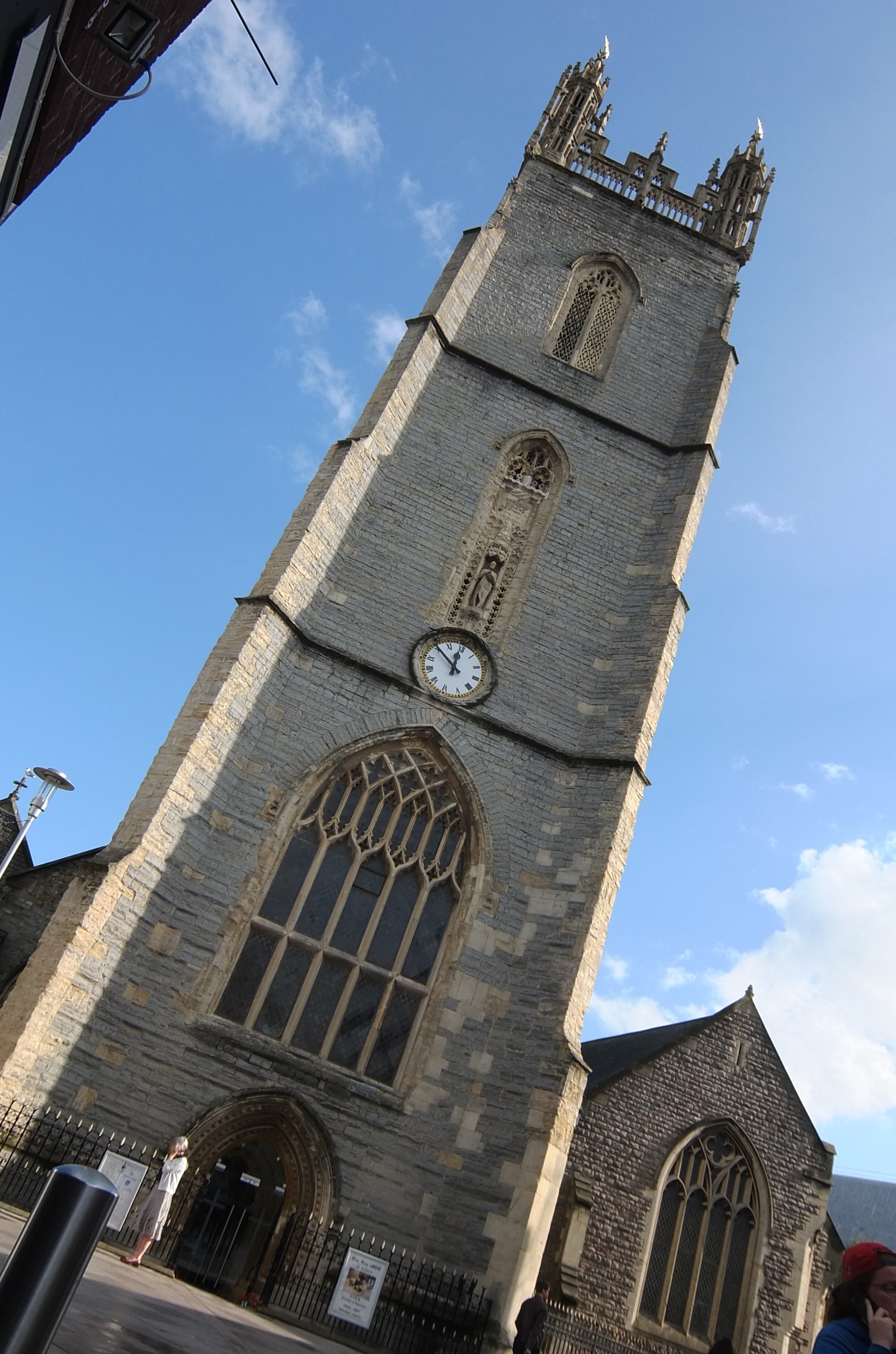
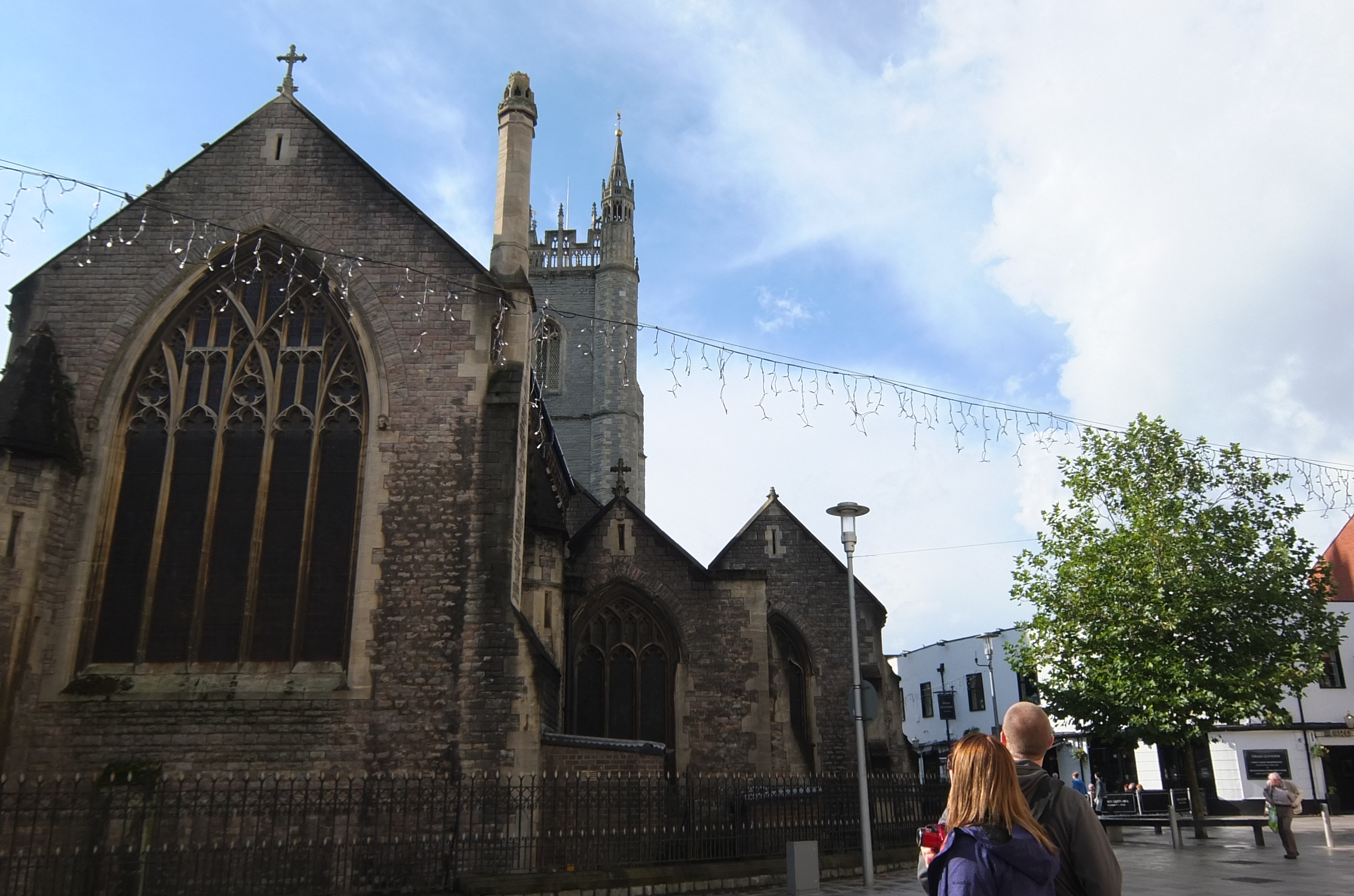
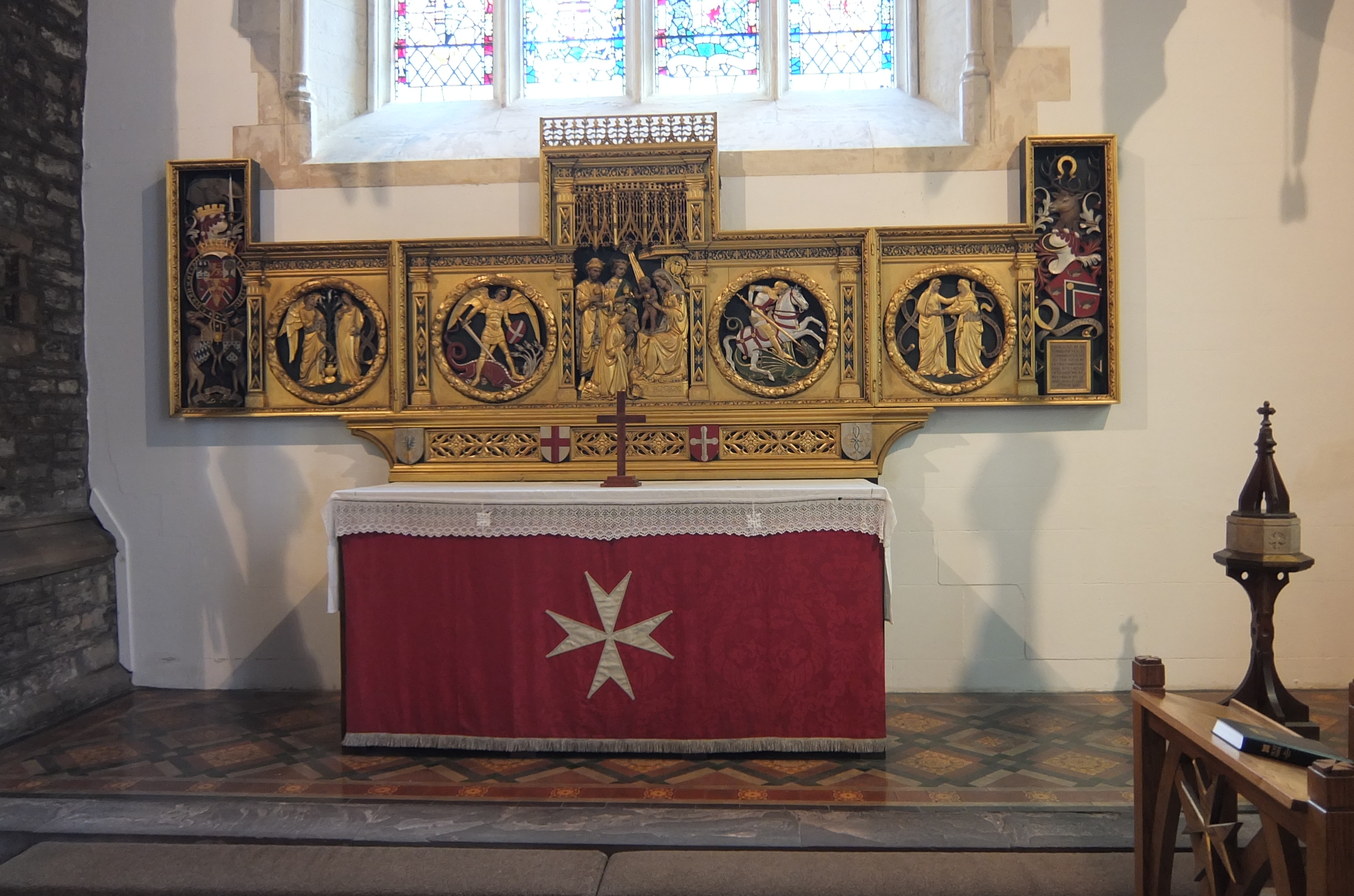
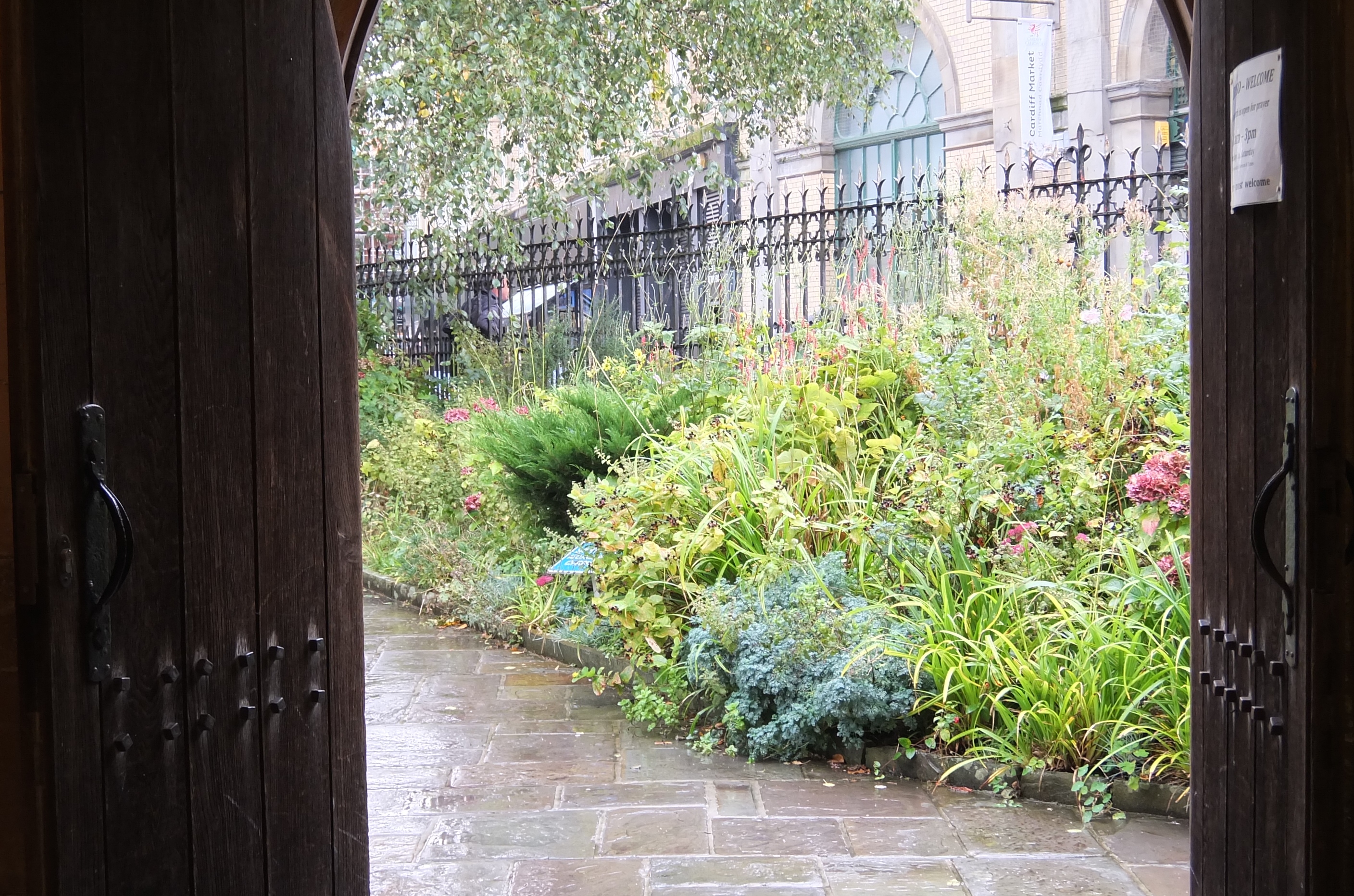
St John the Baptist Church provides an open door policy within the heart of the City.
DSCF2701
Roath Park – one of the favourite places for Christian Amadeo, the brains behind ‘I Loves the ‘Diff’
DSCF2747
Visitors gather to be spooked by ghost stories in Llandaff.
DSCF2821
Visitors can experience the view through the players’ entrance while on the Millennium Stadium tour.
DSCF2918
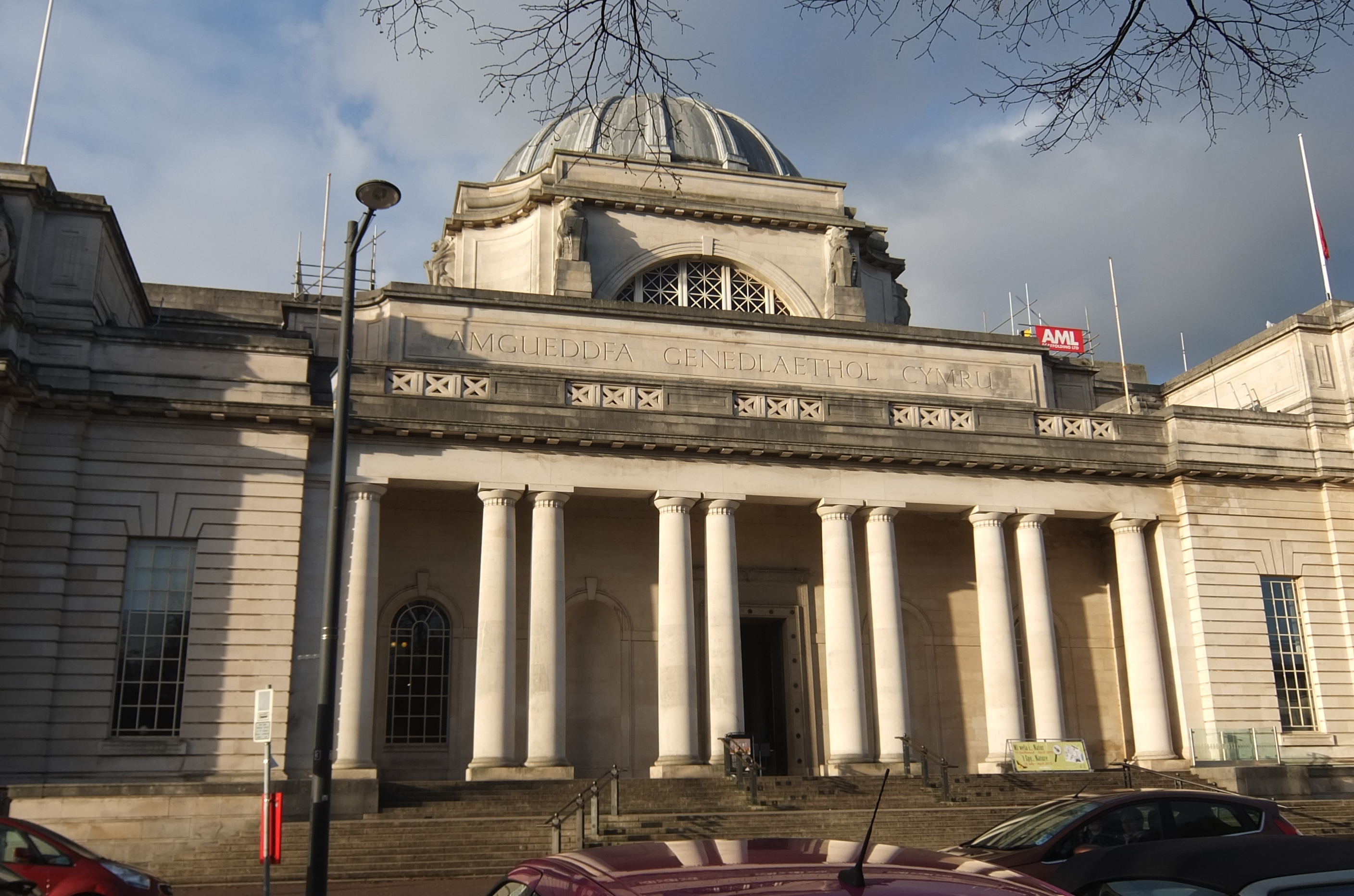
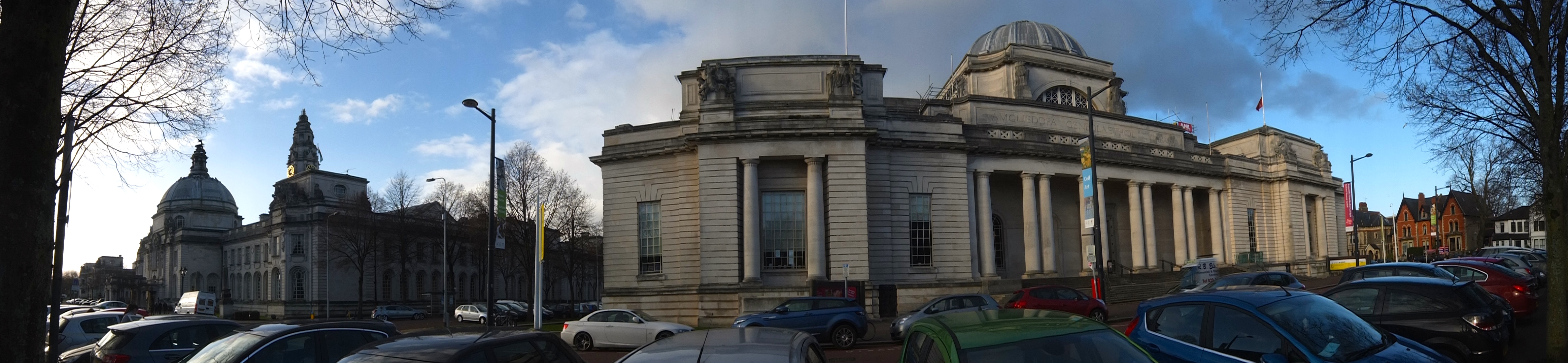
National and international exhibits can be viewed alongside each other at the National Museum, Cardiff


Cardiff A-Z: N is for the National Museum, Cardiff

Katie Hamer continues her A-Z exploration of the highlights of Cardiff with an excursion of discovery to the National Museum, Cardiff. Here’s what she discovered.

DSCF2925

I decided to go on a journey to explore the Evolution of Wales through the millennia, and where better to do this than at the National Museum, Cardiff?

DSCF2924

Right at the heart of Cardiff’s beating civic centre, I experienced a permanent exhibition of fascinating artefacts, which took me from pre-pre-historic times right up to the present day. I found it breathtaking to discover just how much Wales has evolved. Although today the country has a relatively wet but stable climate, its history reveals an entirely different story.

DSCF2933

My journey started 4.6 billion years before the Common Era. I ventured past giant screens where molten lava boiled and flowed, before cooling to form solid rock. I heard explanations for how meteors from space formed minerals here on Earth. I stood amazed in front of displays, which revealed that Wales at one point had a tropical climate with coral reefs around its shores. It appears that the country has had a very tumultuous time in the past, and we cannot take for granted that our current stable climate will last. Indeed, we take it for granted at our own peril.

DSCF2941

By visiting this vast exhibition I gained a great understanding of how modern day Wales came to be. I saw fossils of shells and plants, minerals such as gold, iron ore and coal. I discovered that the black gold, which led to the nineteenth century population explosion of the city, originated from fossilized peat deposits. I also witnessed dragonflies as big as buzzards, came face to face with dinosaur skeletons and even a life-sized Woolly Mammoth with cub, if that’s the correct word!

DSCF2968

I discovered that the Wales we know and love today didn’t actually begin to take shape until after the last Ice Age, 10,000 years ago. At this point the glaciers retreated, and flora and fauna flourished. But it wasn’t for another 4,000 years that farmland for grazing herds of sheep and cattle were claimed from the woodlands, which resulted in the first permanent settlements being established. Farming communities, where families lived in wooden huts became the norm, then led to the extinction of the hunter-gatherer way of life.

DSCF2967

Following on from that, Wales experienced a Bronze Age, an Iron Age and eventually a Coal Age. We’re now heavily invested in the Technology Age without which I wouldn’t be sharing this article with you now.

So, where next for our small corner of the planet?

I’m sure whatever occurs the National Museum Cardiff will keep us updated.

You can find out more about the National Museum and its various exhibits here:

Museum Wales website

Twitter: @AmgueddfaCymru

Facebook: Amgueddfa Cymru Facebook Page

Thanks for reading. I hope you enjoy looking at my gallery. Catch up with you again soon!


DSCF2926

DSCF2928

DSCF2918

DSCF2929


DSCF2938

DSCF2940

DSCF3018

DSCF3027

DSCF2984

DSCF2937


A-Z of Cardiff: M is for the Millennium Stadium…

Katie Hamer continues her alphabetical adventure through the landmarks of Cardiff! Today she’s reached M … and heading to the Millennium Stadium…


DSCF2864

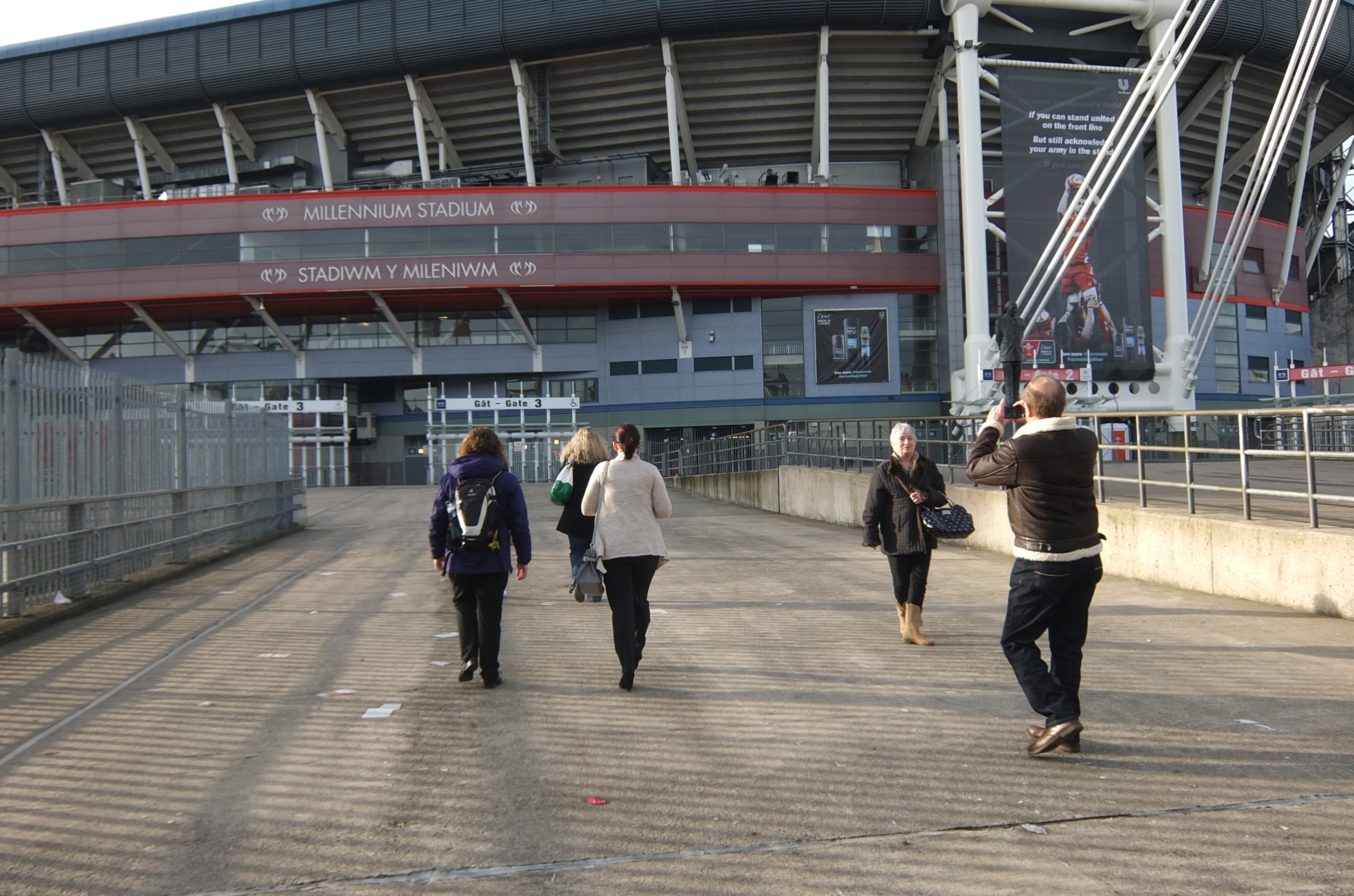
The Millennium Stadium has to be the most iconic landmark in Cardiff. Its eye-catching structure is one of the first things visitors encounter after leaving the Central Station. The city centre positioning is exactly the reason why it’s so special as it places it within the beating heart of the city. It lends to it a vibrancy and liveliness that is harder to create in a stadium on the outskirts of a town or city.

DSCF2787

It’s strange to think that I’ve passed this Stadium nearly every time I visit Cardiff on the train and yet I’d never been inside it. Clearly, this didn’t put me in the best position to talk about the Stadium experience, did it? And I wondered what I could do about that. By searching the web I soon realised that I could sign up for a guided tour of the Stadium and buy tickets online, so that’s exactly what I did. This is what I discovered from my visit:

DSCF2790

First, I’ll give you a few facts about how the Stadium came to be built. The Millennium Stadium, home of the Wales National Rugby Union team, was built in order to showcase the best that Wales could offer in the run-up to the country hosting the 1999 Rugby World Cup. When it opened its gates to the public for the first time in June of the same year it could boast a full capacity crowd of 74,500 which makes it the third largest Six Nations Championship Stadium to this day. It also stands out for its amazing fully retractable roof, as there is only one larger stadium in the world to have this feature.

DSCF2789

All in all, the Stadium has to be one of the best features in Cardiff for getting a photographer’s ‘trigger finger’ fidgety. It’s photogenic from so many different angles. I felt wowed by the potential of visiting such an eye-catching landmark, so unsurprisingly the first question I asked upon joining my tour group was, “Can I take photos?” To my great relief, Pete the tour guide informed me that absolutely, I could take photos and there were no restrictions on what I took. Phew! That was good to hear!

DSCF2801

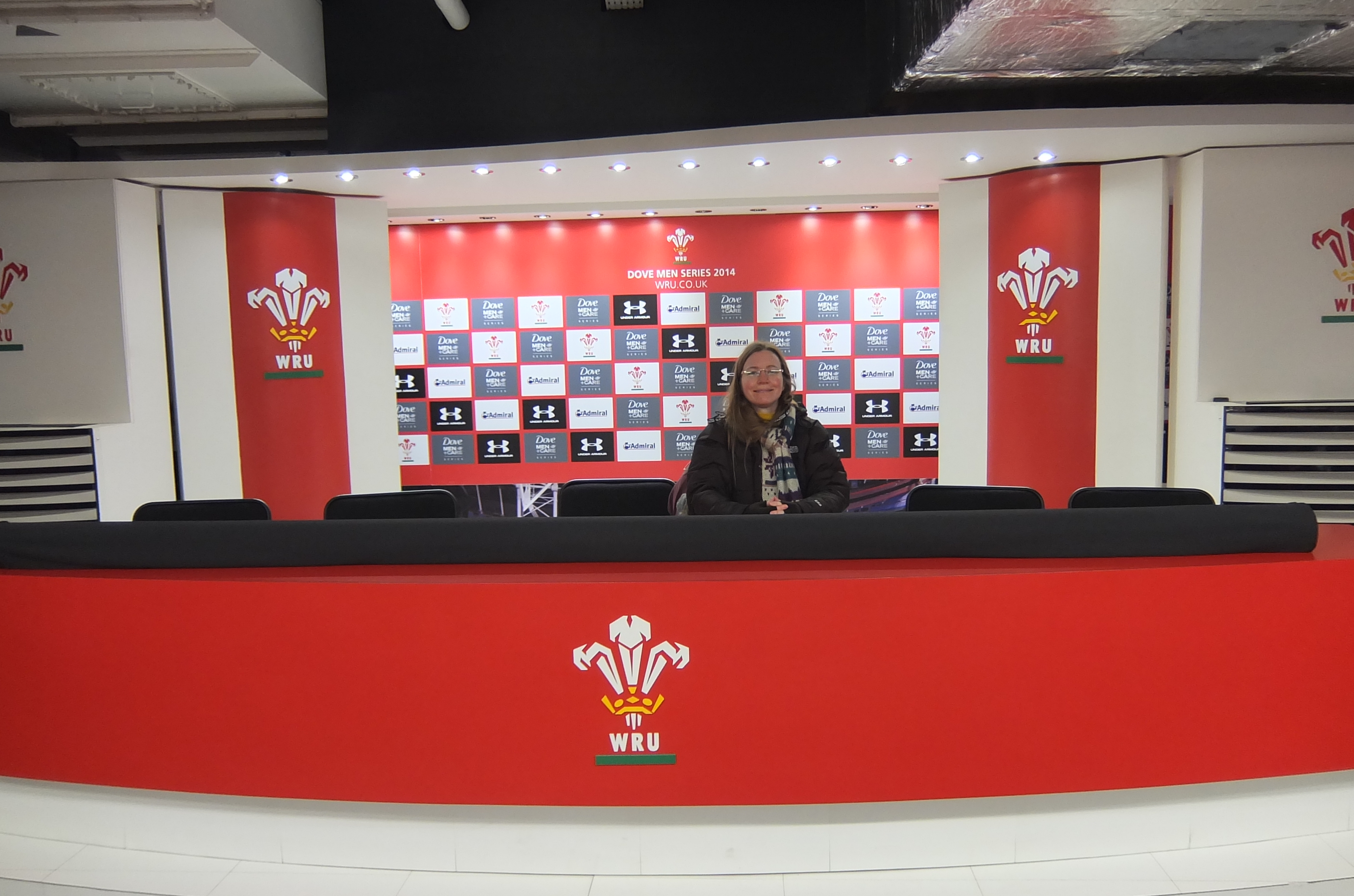
Pete guided my group of intrepid explorers on a tour of the whole building, taking in the press conference suite, the changing rooms for both the home and away teams, the prestigious boxes and of course the Stadium itself. Along the way we were allowed to take our time to relish the memorabilia that they keep in glass display cabinets and which also decorate the walls.

DSCF2835

At one point, when we were about to go through double doors which are the player’s entrance onto the pitch, Pete told us all of an experience he’d recently had, and of which he was most proud. He’d told us that he’d met many famous people while working at the Stadium, but the guest he met on Saturday surpassed them all.

DSCF2821

While the crowds within the Stadium were waiting in anticipation to see the home team play New Zealand’s All Blacks, he got a chance to speak with a world-famous celebrity, the ‘Hoff, no less. From what I recall, he told me he got a genuinely warm response along the lines of “Hey Buddy”. Oh, to be a fly on the wall on that occasion.

DSCF2825

We then entered the Stadium through that most lauded entrance. As I did so, I could imagine the sense of anticipation that the players must feel, the sense that anything is possible, that victory could be within their grasp. I imagined the roar of the crowds on all four sides of the Stadium as the teams finally made it on to the pitch.

DSCF2848

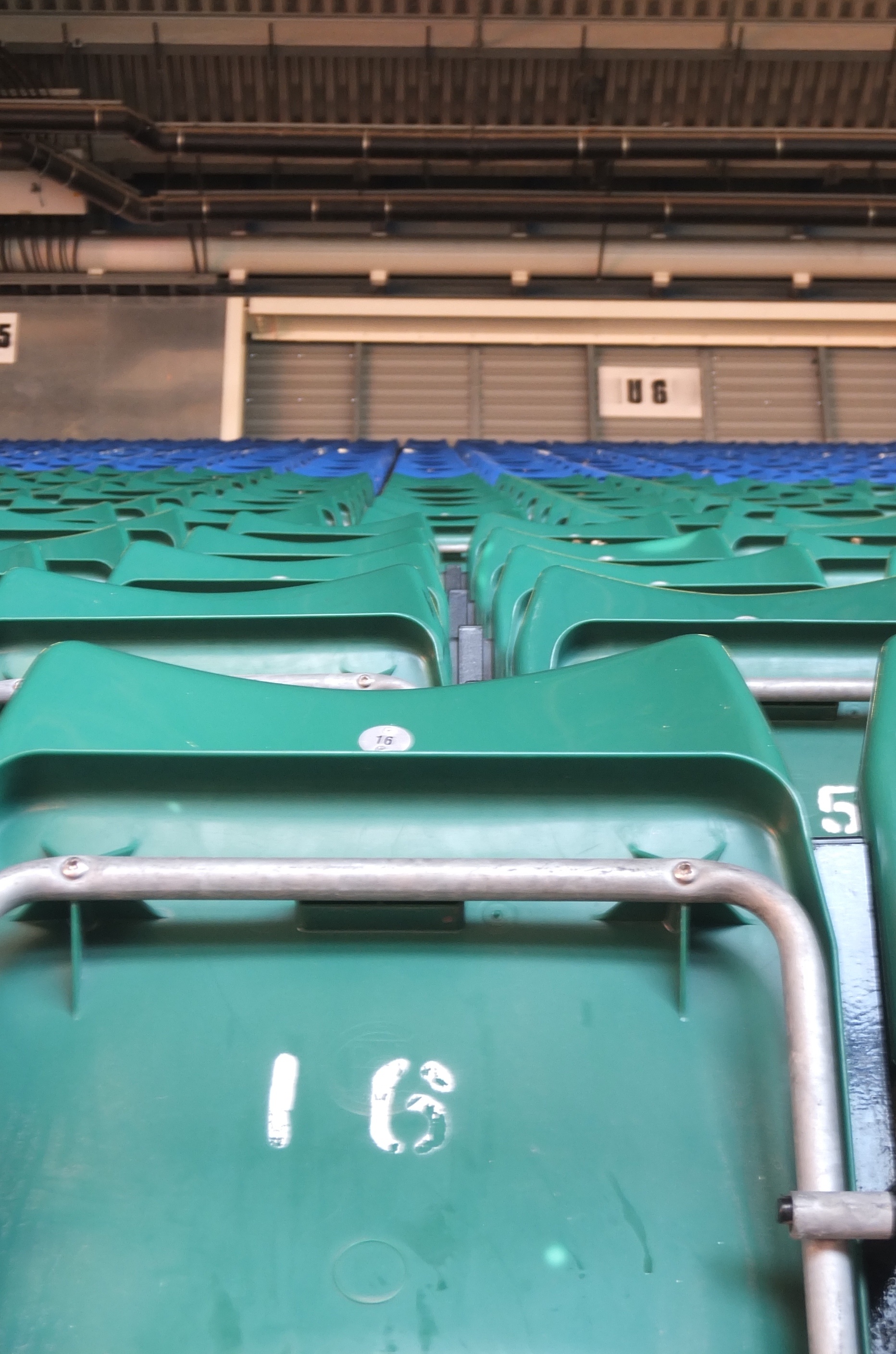
During the tour, we visited the Stadium at various different levels, drinking in the atmosphere each time. Pete the tour guide was very congenial and made every effort to make the tour memorable by offering to take photos for us. I’m very pleased with the photos that he took for me from one of the seating areas high up from the pitch. He’s clearly had a lot of practice.

DSCF2860

We finished up the tour gazing at a Rugby cup, which was perched on a stand near the top of the Stadium, which was emblazoned with ribbons, but sadly was not a Six Nations Cup. The whole tour party sat in seats over-looking the cup and out towards the pitch, admiring the way it is carefully preserved with sprinkler systems and sun lamps between matches, especially in the winter when there’s not much chance for natural daylight to filter into the grounds.

Looking out at the Stadium I got a real sense of how great the atmosphere would be when there’s an important match, or when the place is full of music fans dancing along to one of their favourite bands. I could imagine how the crowd would react to seeing headliner acts such as Madonna, Take That and Bruce Springsteen performing here. I read somewhere that the Manic Street Preachers were the first band to play at the Stadium, on New Year’s Eve 1999. Now, that’s one concert I wish I could have been at. Perhaps I should see if Doctor Who’s time machine in Cardiff Bay could take me back there!

You can find out more information about Millennium Stadium tours and events here:

www.millenniumstadium.com

Once again, thank you for reading. I hope you enjoy spending a few minutes looking through my photo gallery.

DSCF2859


DSCF2844

DSCF2804

DSCF2862

DSCF2855

DSCF2849

DSCF2863

Thanks Katie! More Cardiff A-Z very soon…

***

Sign up for the weekly We Are Cardiff newsletter


Cardiff A-Z: L is for Llandaff

Katie Hamer gets into the spirit of the season, checking out the historic district of Llandaff…

IMG_0044
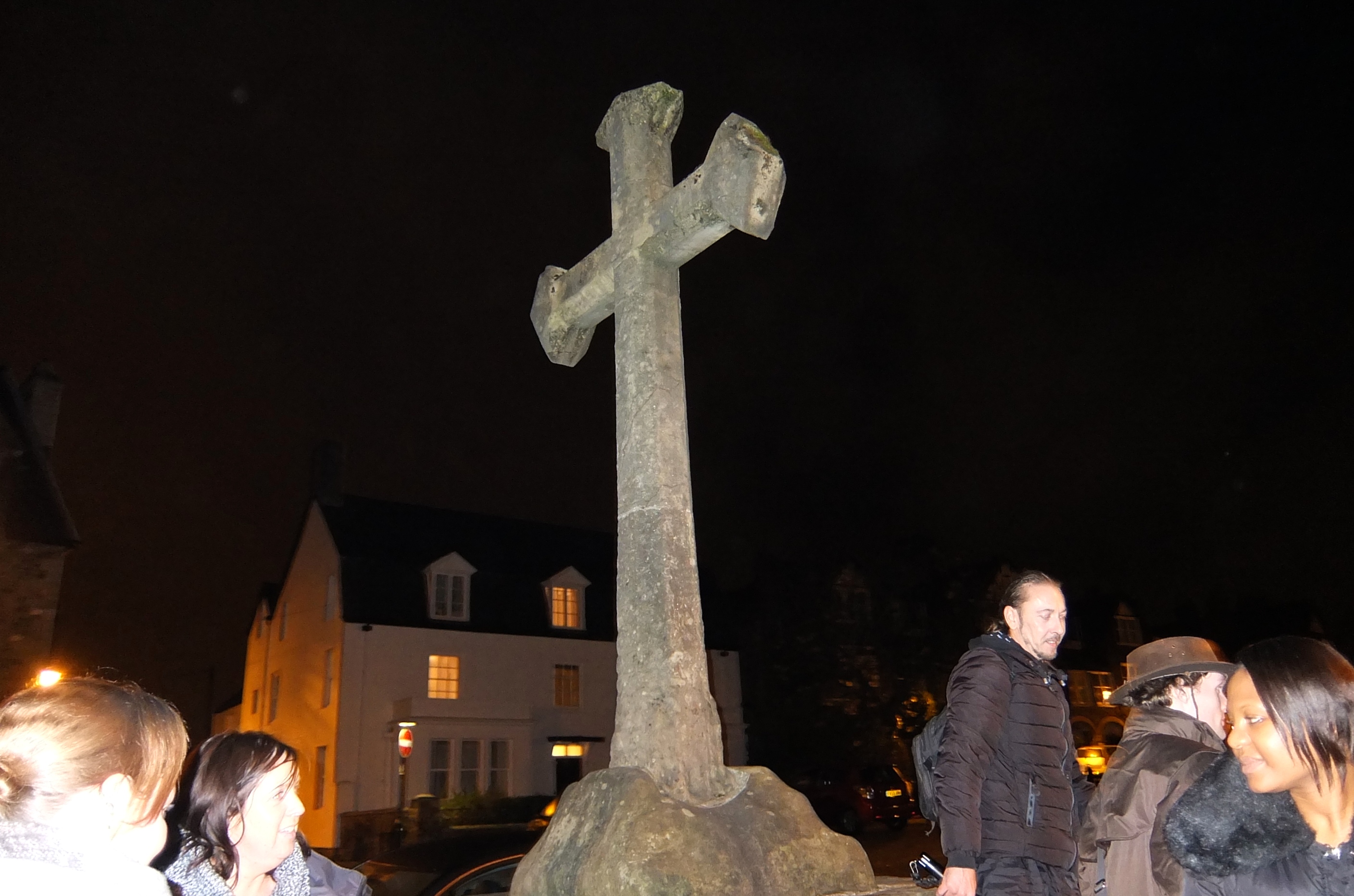
The City Cross at Cathedral Green, Llandaff

I’d heard rumours that Llandaff is one of the most haunted places in the UK. Deciding to investigate further, I armed myself with a camera and also some ghost-detection equipment, in order to join John Hutch on the Llandaff Ghost Walk. What, you may be wondering, did I discover?

By day, Llandaff has the sleepy respectability of a village from out of Agatha Christie. But by night, it takes on much more sombre feel, as the landscape recalls past traumas. Indeed those more grisly moments of Llandaff’s history came to life for me on the ghost walk, thanks to John Hutch’s awesome powers of storytelling.

IMG_0046
Llandaff Cathedral


Llandaff’s history spans as far back as the Romans, and there is evidence of Roman burials beneath the walls of Llandaff Cathedral. History books illustrate how it became embroiled in the bloody battles of Owain Glyndwr in the fourteenth century. Later on, in the seventeenth century, Llandaff was again thrown into conflict, as Oliver Cromwell and his army of Roundheads, fought to bring down the monarchy.

DSCF2747
This is where we met for the walk

Llandaff Cathedral itself has a checkered history. It’s taken the brunt from uprisings, going as far back as the Norman conquests of the eleventh century. Only Coventry Cathedral was more badly damaged by the Luftwaffe during the Second World War.

As recently as 2007, the Cathedral again suffered damage, when its spire was struck by lightning. The strike blew the brass weathervane clean off the roof, and destroyed the electric church organ.

Was this an act of God, as parishioners had allegedly been praying for a new church organ? Whether act of God or simply act of nature, the full impact of the new organ echoing around the Cathedral grounds as John recalled ghost stories certainly added to the atmosphere, and sent shivers down my spine.

DSCF2746
The Cathedral at night

The mist rolled in as we followed John down the footpaths, and through the fields and woodlands. He recalled so many different stories, and in such a magical way, that I wouldn’t be able to recall them all to you now.

Perhaps, the most sinister of them all is about a black faceless figure that watches people unawares, before gliding towards them faster than any human could run. Who could that be? John offered an explanation for this ghost after we reached the graveyard. His delivery of this story was perfect, that I wouldn’t want to steal his thunder, so to speak, by providing a spoiler!

DSCF2754
A woodland trail by torchlight
DSCF2755
John recalls one of his many ghost stories


Not all the ghost stories are fully polished and explained. In some cases we simply do not know the origins for the ghostly visitors. What makes the accounts fascinating are the number of unrelated sightings of the same apparition.

However, it appears that ghosts do not perform on cue, so sightings from beyond the grave cannot be guaranteed on the walk. Then again, there is always a chance that you might experience something otherworldly, or that an unexplained image could appear in a photograph. I didn’t spot anything in my photos, but I’d love to hear from you, if you think you can!

John touched upon how scientists have tried to explain away the paranormal with logic. For instance, it’s part of how we are as humans to be scared of the dark, to fear dying and what we may or may not face after death. From the very earliest age, we are trying to understand the world around us.

DSCF2758
The weir

Interestingly, when those of a sceptical or scientific leaning have experienced these phenomena for themselves, they often become willing converts.

For many people, when faced with the unknown, negative emotions such as fear become as real as fact in a way that happier, more positive feelings rarely do. The resultant sense of panic leads us into the fight or flight mode. More often with ghosts, it’s flight.

Another line of thought is that, when a traumatic event takes place, a memory of that moment is forever etched upon the atmosphere of that place. It is then replayed, as a permanent recording on the Earth’s magnetic fields, to be observed by particularly receptive individuals.

DSCF2767
Llandaff graveyard

Whatever the causes of these hauntings, they have certainly captured our imaginations, and our desire to recount stories about them will be around a long time after we are.

So, if you’re curious to hear the stories of ghosts past, while surrounded by some of the most magical settings Cardiff has to offer, I’d well recommend the Llandaff Ghost Walk.

You can find more information on ghost walks, and also how to sign up for them here:

The Cardiff History and Hauntings website: http://www.cardiffhistory.co.uk/index.php?p=1

And also on Facebook:
https://www.facebook.com/cardiff.ghosts?ref=name

Thanks for reading. I’d love to hear your spooky experiences, so feel free to share them in the comments below. I hope you also enjoy spending a few minutes looking at my gallery.

DSCF2778
Back in the Cathedral grounds


DSCF2777

DSCF2776
Outside the Cathedral


DSCF2749


DSCF2781

DSCF2766

A-Z of Cardiff: K is for the Kaairdiff Accent

Katie Hamer carries writing her A-Z of our fine city – today, she’s looking at the city’s accent! Kaairdiff indeed!

I touched upon the Kaairdiff accent in my article, ‘H is for the Hennessys’. I realised what makes the accent special is its unique way of telling things. As Banarama sang, ‘It’s not what you say, it’s the way that you say it.‘ This is also true for the city’s distinctive accent.

Thinking along these lines intrigued me. I wondered how I could express the spirit of an accent in an article.

Then I discovered ‘I Loves the ‘Diff’. What this company have done is truly amazing; they’ve captured the city’s way of telling things in an original and quirky way.

DSCF2745

I loved their products instantly, and was curious to know how they had come about. I sent an email to them to see if they would provide me with further information. To my great delight, Christian Amodeo, ‘The Chairman of the Bored” responded to the email I sent him, and agreed to answer the rapid-fire questions I put to him. This is what he told me:

Your logo is a play on the classic New York logo. When I first read it, I thought you meant ‘I loves the difference’ LOL! What do you think sets Cardiff apart from other capital cities?
Where d’you want to start? It’s pretty small for a capital city, which makes it unusual and also a fab place to live; it’s the youngest capital in Western Europe – not sure if you can compare a city to a human’s development, but Cardiff’s both growing and growing in confidence, and lots of exciting things are happening here – maybe the ‘Diff awkward teens are behind it and its about to swagger into its roaring 20s? Or maybe that’s just a terrible analogy!
DSCF2738
Bakers Row
DSCF2740
Bakers Row
So, Cardiff is your home city. What are the places of which you are particularly fond, that are special to you?
I really like the Bakers Row and the street it comes off for some reason, and not just because Metro’s is on it. My parents met in a club in Bakers Row according to legend so maybe that’s why. Roath Park has a place in the heart of many a Cardiffian – it’s the place you’re taken as a kid. So many afternoons spent here with relatives and friends. I remember my Uncle Gino bought some ducklings from Splott market and once they became too much of a handful, we released them on the lake.
When I was even younger, my grandad would take me on regular outings up the Wenallt – so that holds some great memories. Lavernock Point is another lush place – close to the city but away from it. Another place to think, to regain perspective. There are loads of great places. I’m quite fascinated by the way although we share a space, there are so many memories, like ghosts, on every corner of incidents and happenings in people’s lives.
I’m jealous of the way every building offers a different view of Cardiff. Which means we all see it differently. Not that I sneak into people’s homes and offices to look out of their windows – though I like delivering to office blocks in town and the Bay for the views.
DSCF2703
Roath Park
DSCF2694
Autumn colours in Roath Park
DSCF2726
Are these ducks the offspring of Uncle Gino’s ducklings?
Have you ever lived anywhere else? Would you think about living anywhere else? If so, where?

I’ll always live here, if only for tax reasons! I’ve lived in salubrious Swansea (at university), in Italy, and in London. I actually lived in rural Sussex for a tiny bit too, which was great. It’s well posh down that way. I thought I’d wandered into a Sunday evening ITV drama.In London I lived on a boat near the Albert Bridge for a bit, and later [with] my wife in Islington. (I’d been looking for her everywhere.) Being half Italian it was an amazing experience living in Italy – far more gay men than the national stereotype of womanising lotharios would suggest, but it’s like living on a film set the entire time. Even stopping to tie your shoe laces suddenly becomes some grand gesture.

I suppose it helps to live in other places, and certainly to see them, to be able to appreciate where you’re from. It’s one thing to blindly love your hometown, but it’s quite another to see the world and come back and still love it.
DSCF2744
What inspired you to set up this business? Did you have a ‘eureka’ moment?
If I did I wasn’t paying attention. I just admired the Glaser-designed NY classic and started playing with a Cardiff version. No one seemed excited by my design until I thought of the ‘s’ after the heart – it went from there. It wasn’t a business – the aim wasn’t to make a million pounds and retire to Flat Holm. No, I just wanted to see someone I didn’t know wearing the t-shirt. Never having designed a t-shirt before, everything that is now a part of what has slowly evolved into a business was brand new to me. It’s been a slow learning curve, and the business came about as a natural result of how things slowly grew. Most of it, like the Taffywood Welshified film and book title range, has been a series of happy accidents with no master plan of any kind.
IMG_0140
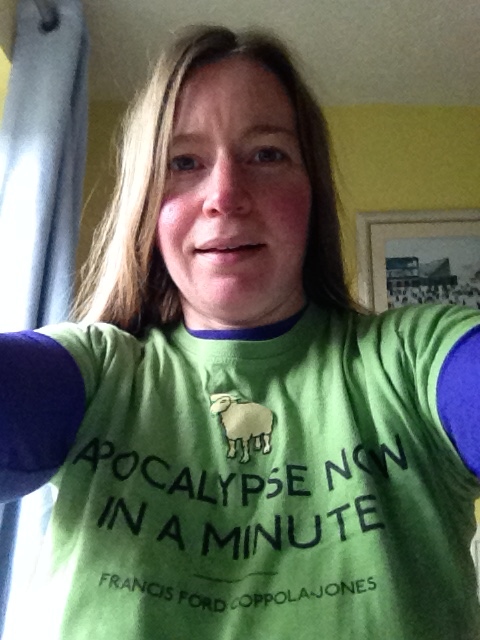
I pose for a selfie in the ‘Apocalypse Now, In a Minute’ t-shirt
 
I think my favourite product of yours, is the t-shirt with ‘Apocalypse Now, In a Minute’. It reminds me of someone I worked with, who always said ‘I’ll do it now, in a minute!’ 

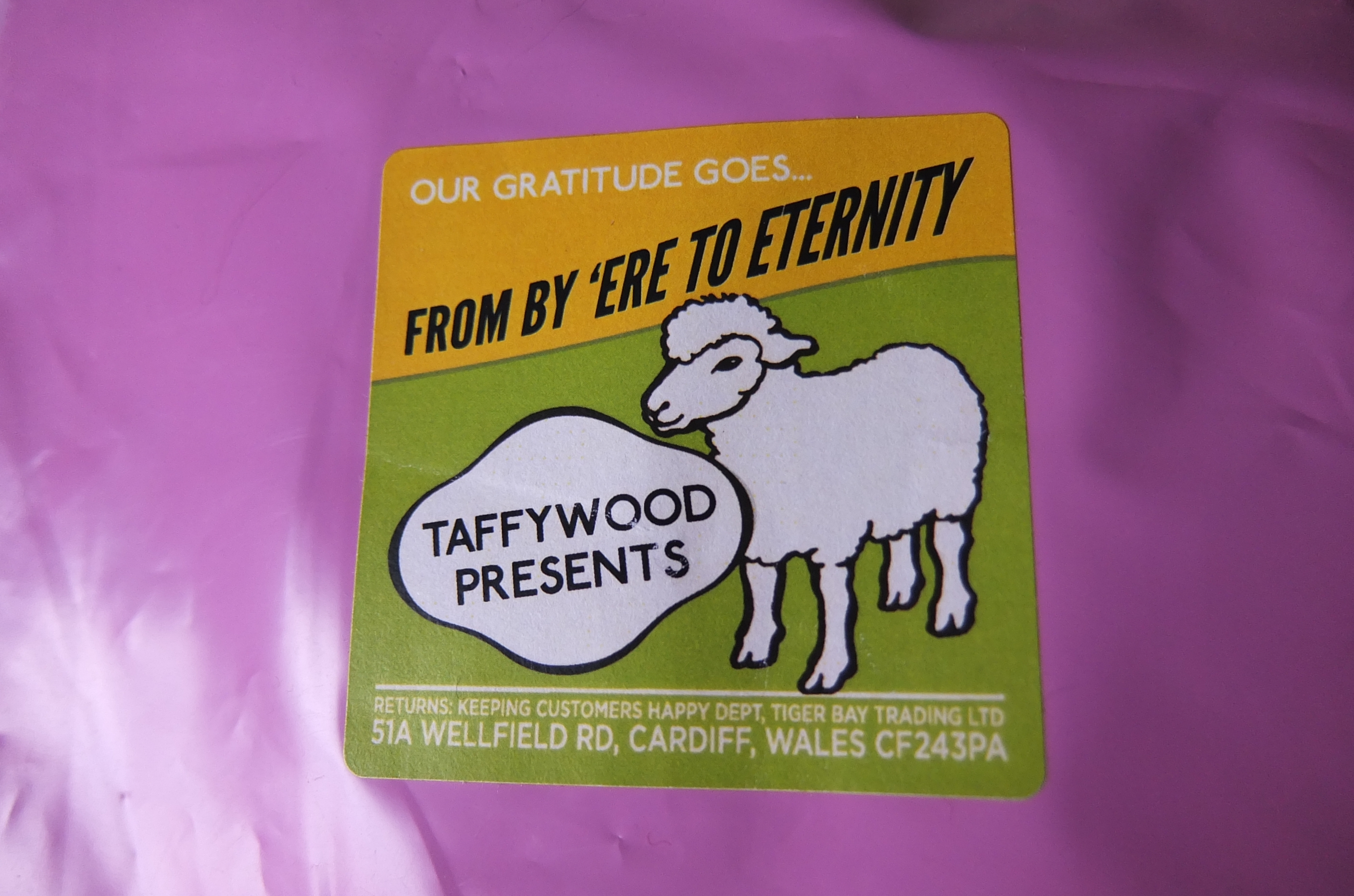
I’m glad you like that one. It’s actually one of our most popular Taffywood titles. It’s on mugs and cards too. It felt a bit like Apocalypse Now In A Minute round here during the NATO Summit, didn’t it? Other fab titles from that range include Cwtch Me If You Can, From By ‘Ere To Eternity, When Barry Met Sully, Cwtch-22, The Llandaff Time Forgot, and Llanishen Impossible. There are loads of them.

DSCF2720
 
What’s your favourite product? Have their been any unexpected successes?
Having zero design or retail experience when this started, it’s all been an unexpected and fun adventure. And it’s always hard to predict what will be popular, that’s for sure. I loves everything we do, but I suppose the Cardiff Underground map is my favourite thing. It took quite a while – I even shelved it for six months around the time I got married – and then to think of all the people who’ve since enjoyed it, well, it’s a lovely thing really isn’t, to have people like something you’ve created. I’m very grateful.
 
What’s next for the ‘Diff’? What new products can I look forward to?
We’re doing a wall calendar for 2015, launching a new logo, doing the popular Cardiff Heart poster in six lush colours at A3 size, we want to do some films, and want to break into the perfume market. Expect only 10 per cent of that to actually happen, mind.

Thank you Christian, for responding so enthusiastically to my questions. I shall definitely be adding your quirky designs to my Christmas present list!

You can contact them here for more information

 Thanks Katie! And we’ll catch you for the next instalment…
***


Cardiff A-Z: J is for St. John the Baptist Church


Katie Hamer continues her quest to write the ultimate Cardiff A-Z! Today, she’s visiting St John the Baptist Church in town. Read on to find out what she discovered!

DSCF2649

With still three months to go, we’re already getting the early signs that the festive season is on its way. I’ve seen Christmas cards since August, and supermarkets are bombarding us with gift packs, toys, food hampers, etc.

I don’t know about you, but I’ve got enough to think about, what with work, bills, family commitments, and social media distractions. Everyone wants to sell us something, with the pretence that our lives will be better. It can feel like life is getting ever more frantic, frenetic, and it’s hard to measure up to productivity targets, whether self- inflicted (as in the case of the creative writer) or work-related.

I felt a temporary reprieve from all this craziness, when I took a look inside St. John’s Church last week. Although placed on the Hayes, in the midst of the bustling shopping centre of Europe’s newest capital city, the church provides an oasis of calm. It’s a place to go and reflect upon the central message of Christianity, which is to reach out to the whole community and to:

‘Love the Lord your God with all your heart, with all your soul, and with all your mind’ and also to ‘Love your neighbour as you love yourself.’ Matthew 22:37-39

DSCF2651

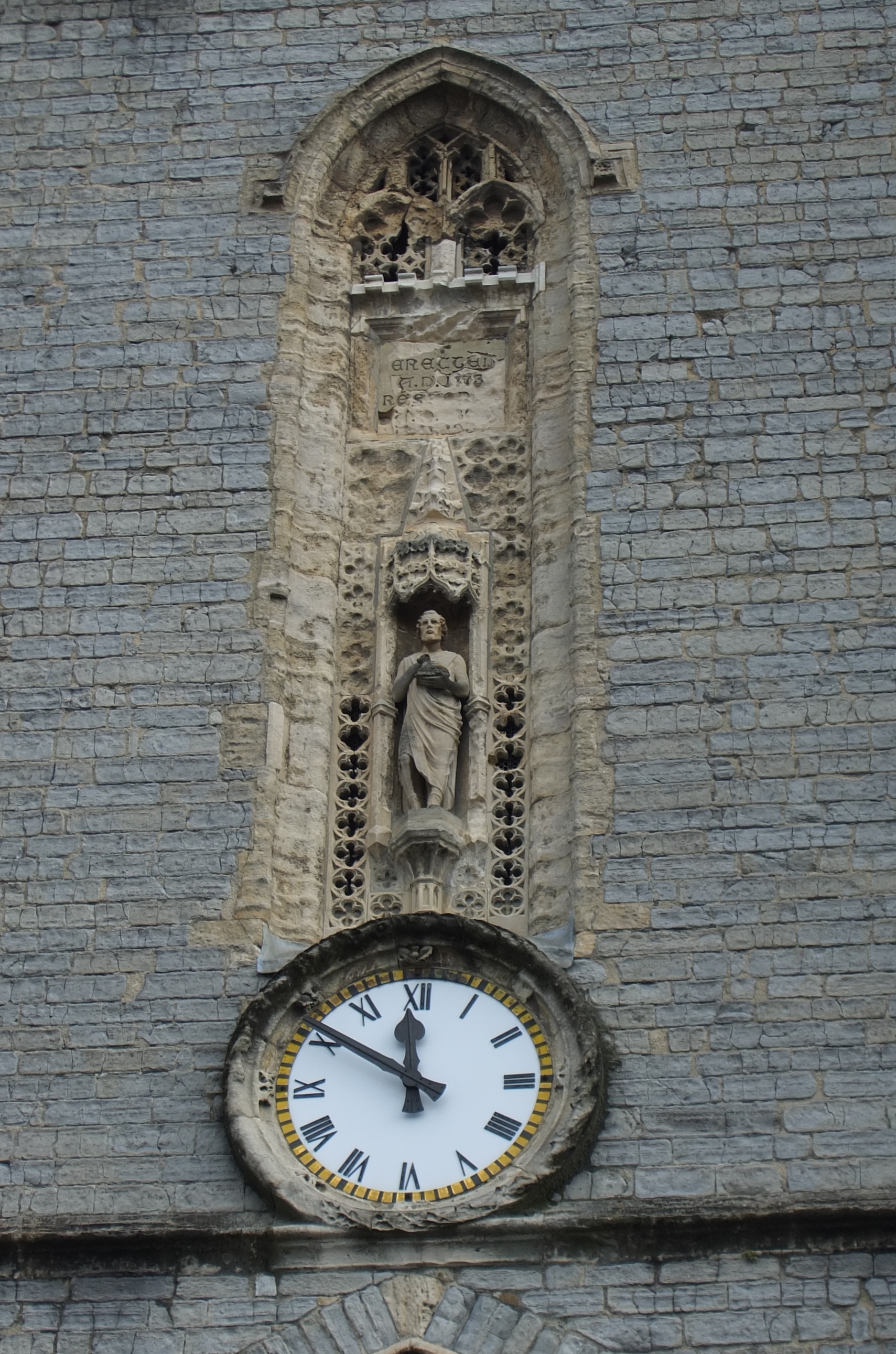
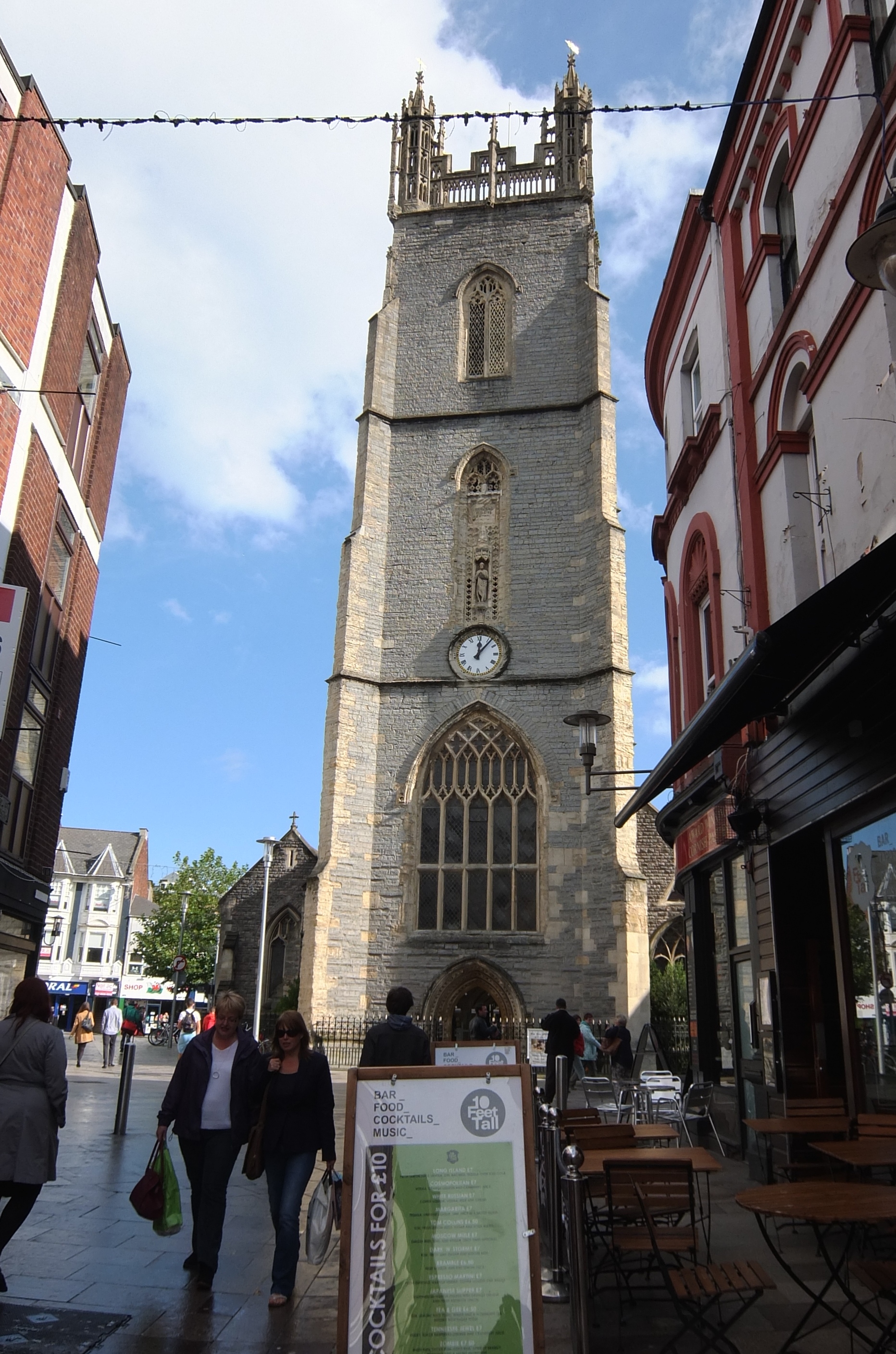
The longest established church in Cardiff, St John’s has been serving the community within the city for 800 years. Originally built in the 1100’s, it fell into disuse in early 1400’s following an uprising against Kind Henry IV of England, led by Owain Glyndŵr. Little remains of the earlier construction; the current church was built c.1490. Its most recognisable landmark, the clock tower containing a peel of ten bells, is from this era.

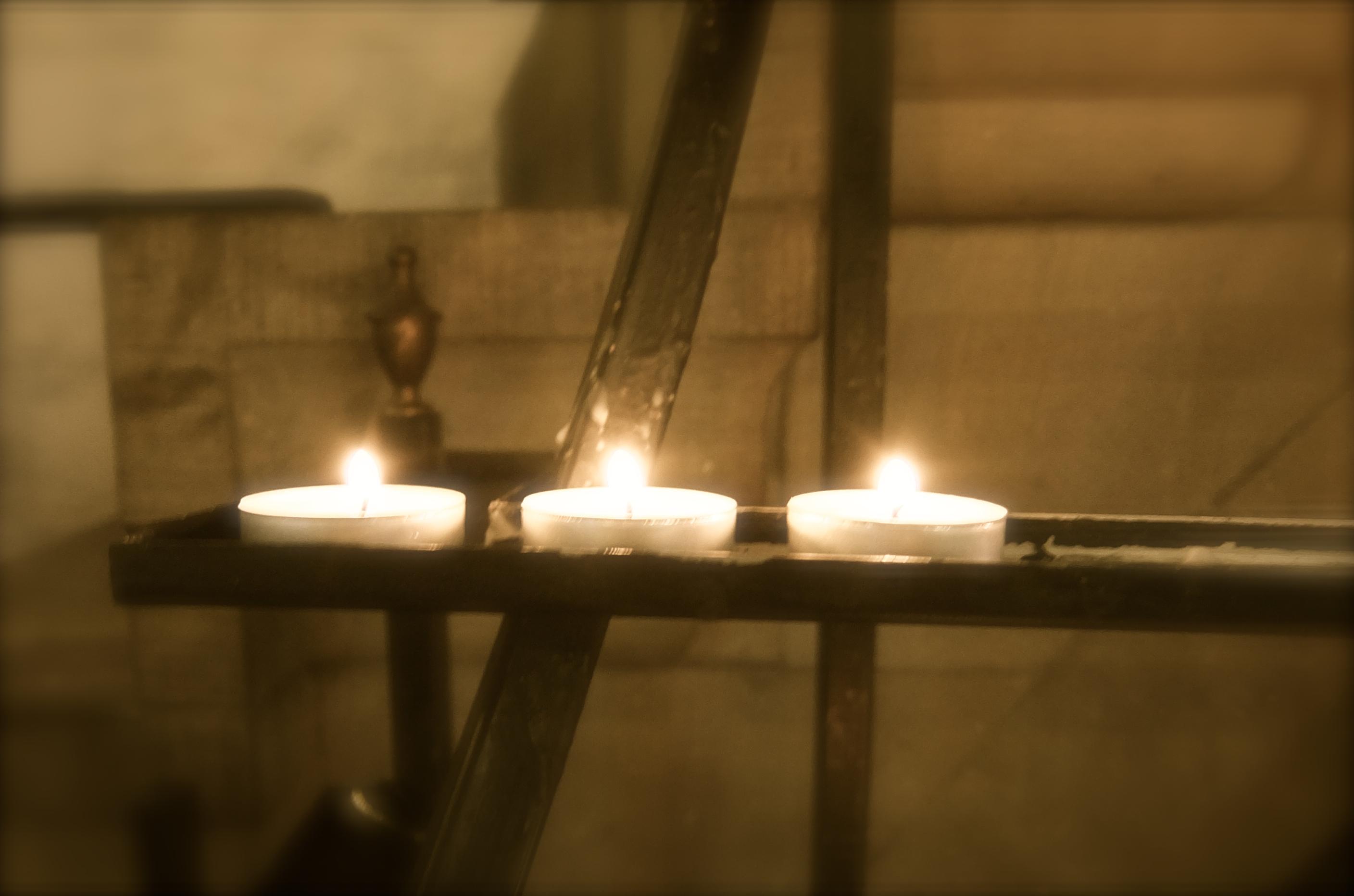
St. John’s reminds us that religion isn’t just for Sundays, not just a once-a-week performance of wearing the right clothes and saying the right things. Their doors are open to the community during the week as well. It’s a refuge for Cardiffians during their lunch hour, where you can pop in, light a tea light (there’s a small donation of 20p required), and have a quiet moment.

DSCF2687

As their website states:

‘The community that gathers at St John’s Church believes itself called to share in God’s mission by welcoming people of all ages cultures and traditions to worship, witnessing to Christian faith, knowing God and making God known by serving Christ in both our visitors and our neighbours.’

A thousand people visit the church every week. They’re also involved in local and international events, and supporting charities. Recently, they held a service of readings and prayers in order to promote peace, in the run-up to the NATO summit.

As well as services, such as the Eucharist, there is a daily slot at 10am: a Prayer for the City. On Tuesdays, at lunchtime, they organise a half-hour of ‘Stress busting’: an introduction to Christian mindfulness and meditation. The Chaplain is available during the day on Thursdays (from 12:30 until 2:00pm) for anyone seeking advice or guidance, or just a listening ear.

DSCF2667

I decided to attend one of the ‘stress busting’ sessions, to see how I could benefit from a quiet half hour of meditation.

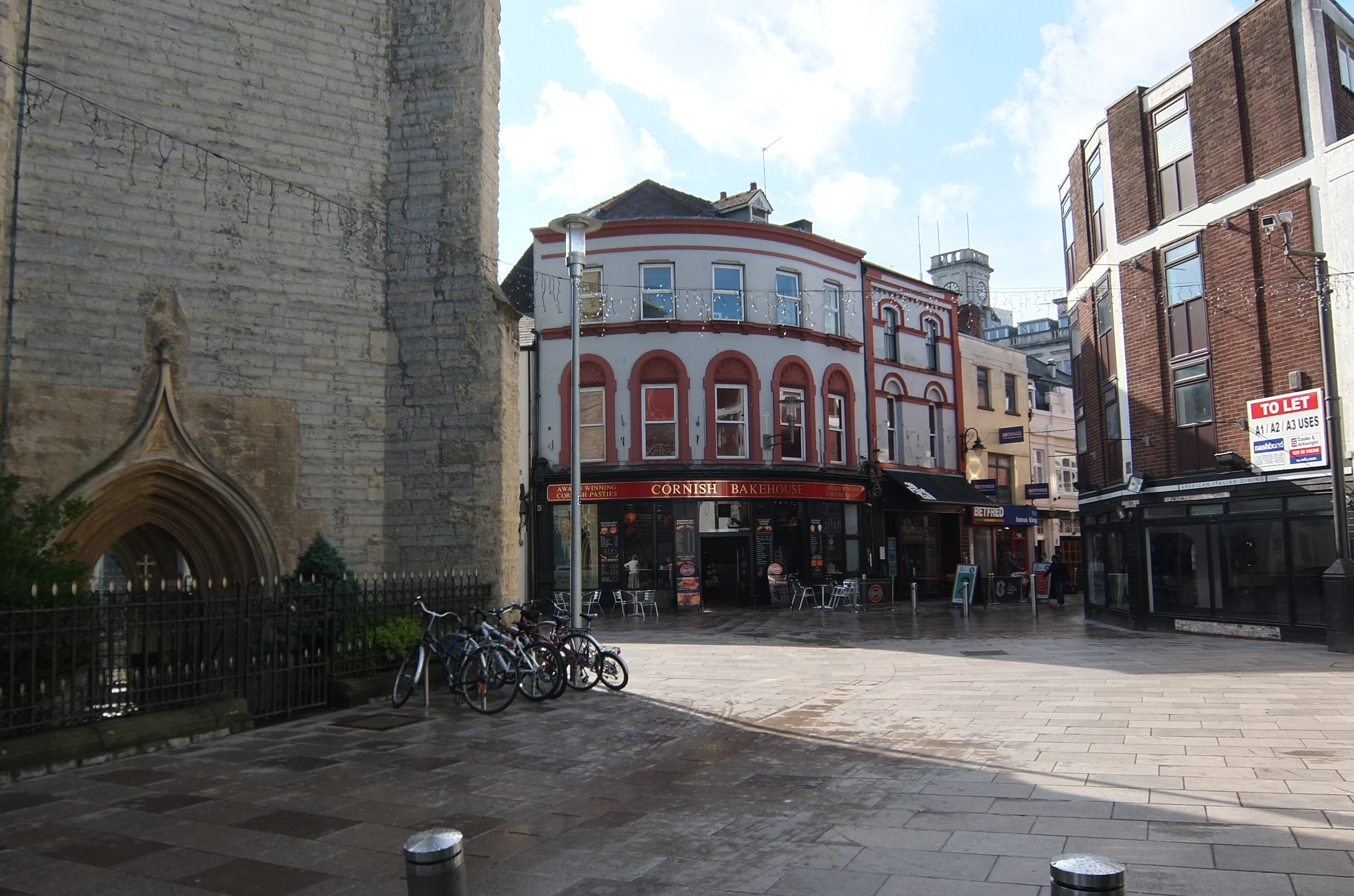
I arrived at the church early for the service. I’d forgotten how big the building is; the pictures on the web don’t do it justice, as it really is a huge church. But then I grew up attending a Methodist chapel that was, and is, only the size of an average family home. I stood outside it, in the crisp autumn air, with direct sunlight above me, and marvelled at its stone carvings.

DSCF2654

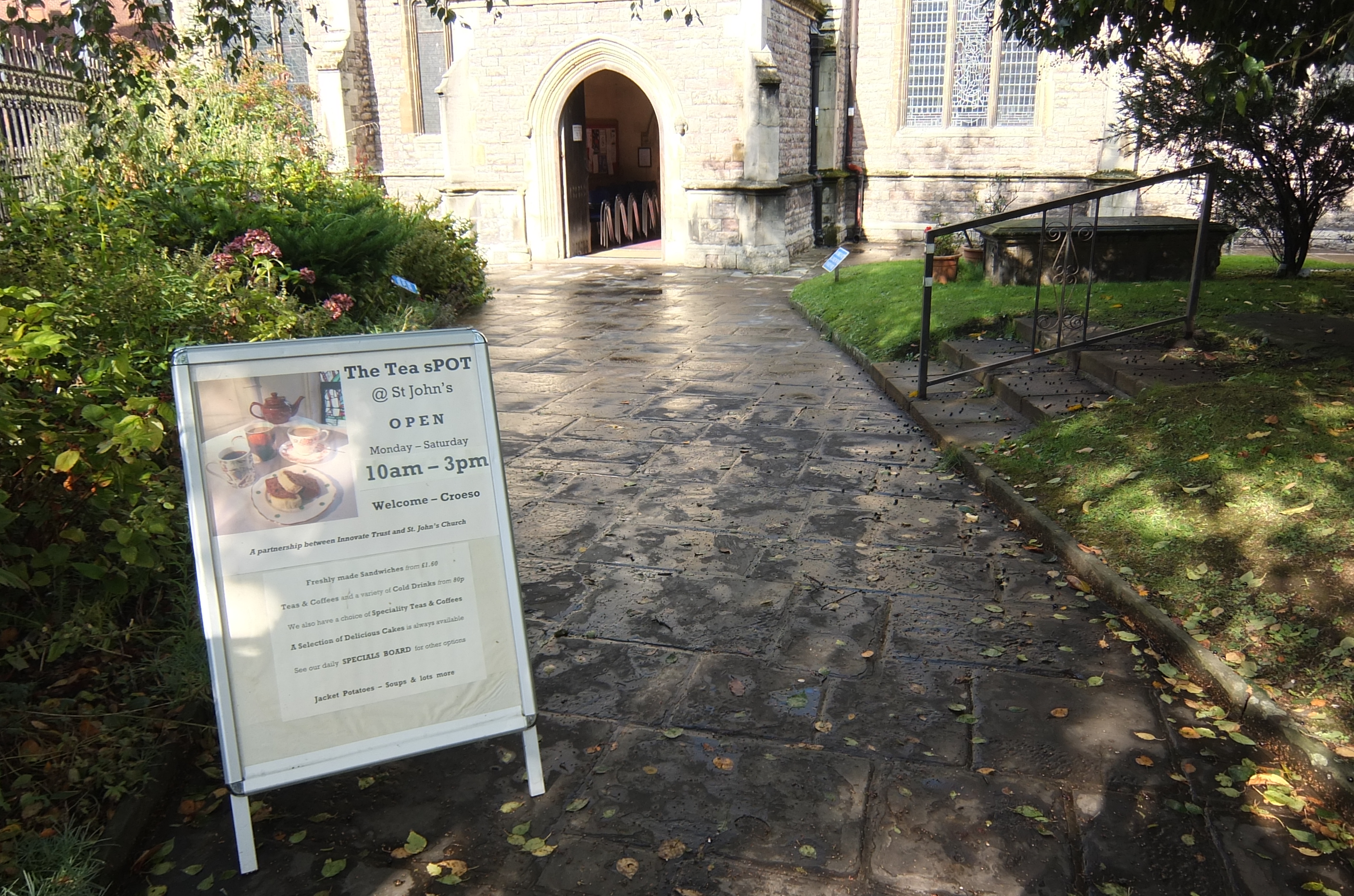
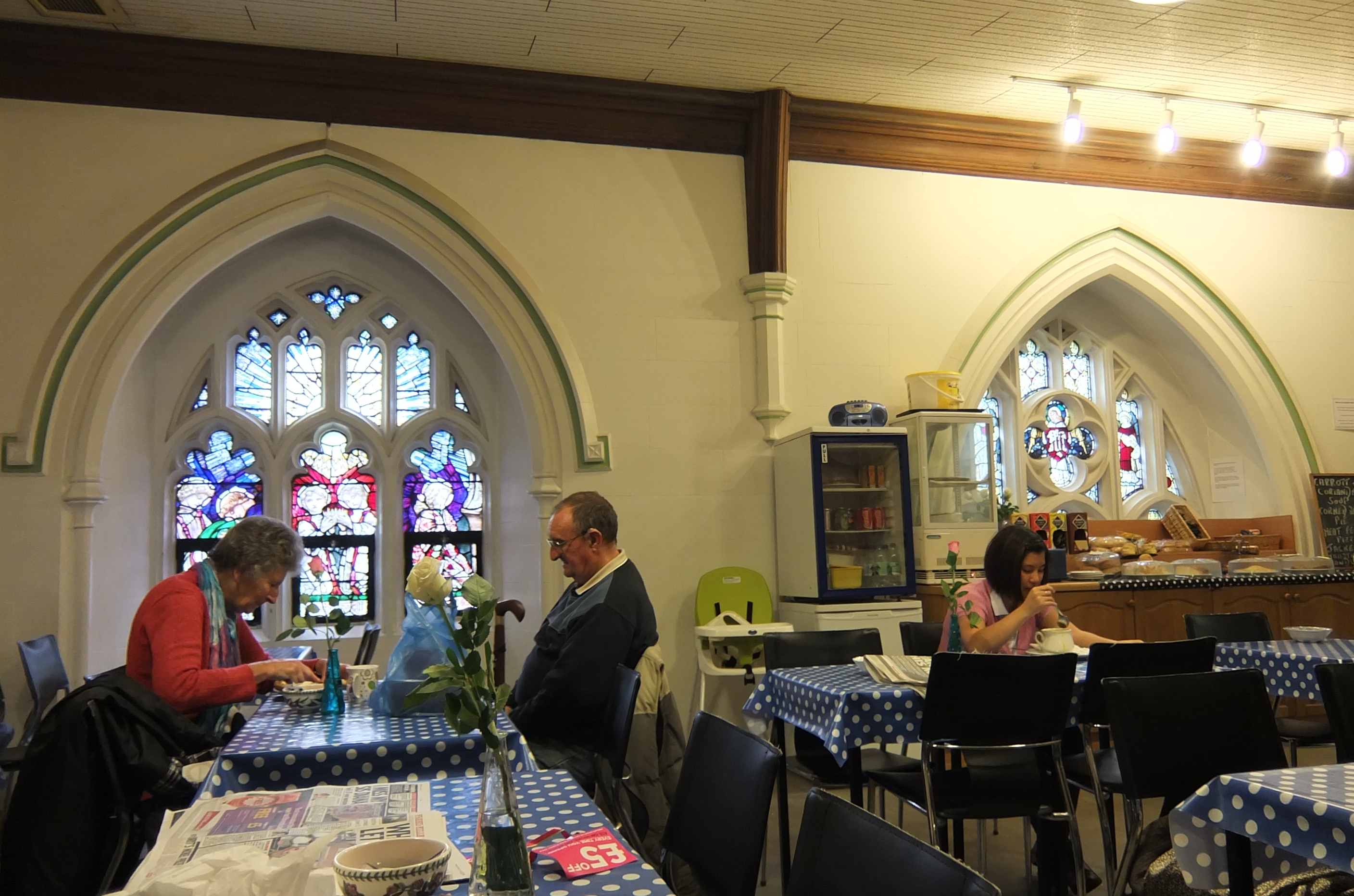
Entering the church from the South entrance I saw adverts for the Tea sPot, so I decided to make this my first destination. There’s a small staircase that leads up to them, and also a lift. They offer a menu of simple food, cakes and hot drinks, and service with a smile. You cannot look out at the city while you’re in there, probably a blessing, but the room is filled with the rainbow light from two stained glass windows. I had the most generous serving of carrot and coriander soup you could ever imagine, and really, I never thought I’d get to the bottom of it.

DSCF2676

I then had a look around the church itself, taking photos, before I joined the mindfulness session, which took place in a side-chapel. I joined about ten others. We sat in a circle, on wooden chairs. The Vicar, Rev’d Canon Dr. Sarah Rowland Jones, was present, but didn’t lead the session.

We each had a leaflet, to guide us through the various stages. There were prayers and a Bible reading, but for the most part, we sat in silence. I had my eyes closed, and attempted to empty my mind of all it’s daily clutter, anxieties, and trivia.

The Bible reading, from the New Testament related to Jesus’ miracle of walking on water. For me, this passage relates to self-belief: do I have the strength to conquer barriers, or will I drown in self-doubt.

During the session, I did find my mind fill with light, a reminder that, in the beginning was the Word, but also light. I visualised the rotating beam of a lighthouse beckoning me home.

We all need light in our lives, especially at this time of year, and even more so, if you suffer from Seasonal Affective Disorder, as I do. I left the session feeling more at peace. As I left, the Reverend smiled at me, and said she hoped I would visit again. I smiled back, and said I would. It’s these personal touches that mean so much, and people often overlook these days.

I hope you enjoyed reading my article. You can find out more about St. John’s here:
https://sites.google.com/site/stjohnscityparishcardiff/about-st-john-s

Also on Twitter: @stjohnscardiff

And St John’s Facebook page

I hope you also enjoy having a look at my photo gallery:

DSCF2648

DSCF2674

DSCF2663

DSCF2656

DSCF2671

DSCF2679

DSCF2682

DSCF2689

DSCF2691


***

Sign up for the weekly We Are Cardiff newsletter

A – Z of Cardiff: I is for Ianto’s Shrine

Katie Hamer continues her quest to write the Cardiff A-Z … today, she’s visiting Ianto Jones’ shrine in Cardiff Bay.

DSCF2622
Ianto’s shrine on Mermaid Quay

I have returned to Cardiff Bay, in order to pay my respects at Ianto Jone’s shrine. I am not alone in doing so. People visit from all over the world to remember this hero “who gave his life in defence of the children of the planet”. Below is his obituary:

Ianto Jones

Born 19 August 1983, died 9 July 2009

 Field Agent for the Torchwood three, Ianto Jones regrettably passed away in his hometown of Cardiff aged 25, while in the line of duty. His partner, Captain Jack Harkness, survives him.

 Remembered for his heroic actions he will be sadly missed.

R.I.P. Ianto

DSCF2632
A memorial plaque presented by the Management of Mermaid Quay
S0062512
Possibly someone standing in mournful reflection of Ianto’s passing


Mild-mannered and reserved, Ianto was initially employed as a ‘tea boy’ by the Torchwood Three. However, his actions gained him the trust of Captain Jack, and their relationship blossomed.

He was also known for his sense of humour. His mourners recall many a good humoured moment, such as when he bought a wedding dress for a friend. The shop assistant walked up to him as he was holding the dress to a mirror. Upon hearing Ianto’s explanation for his actions, He very tactfully informed him that he had men buying wedding dresses for their ‘friends’ all the time. LOL!

Rarely has there been such a national outpouring of grief, as for Ianto. His mourners visit the shrine on an hourly basis, leaving flowers and messages of grief. Some mourners clearly have reacted angrily to his passing, with suggestions that his death could have been avoided. Who knows?

I, myself, sensed some otherworldly intervention, when I arrived home after my initial visit to find my photos had been wiped from the memory card. Had they been erased from beyond the grave?

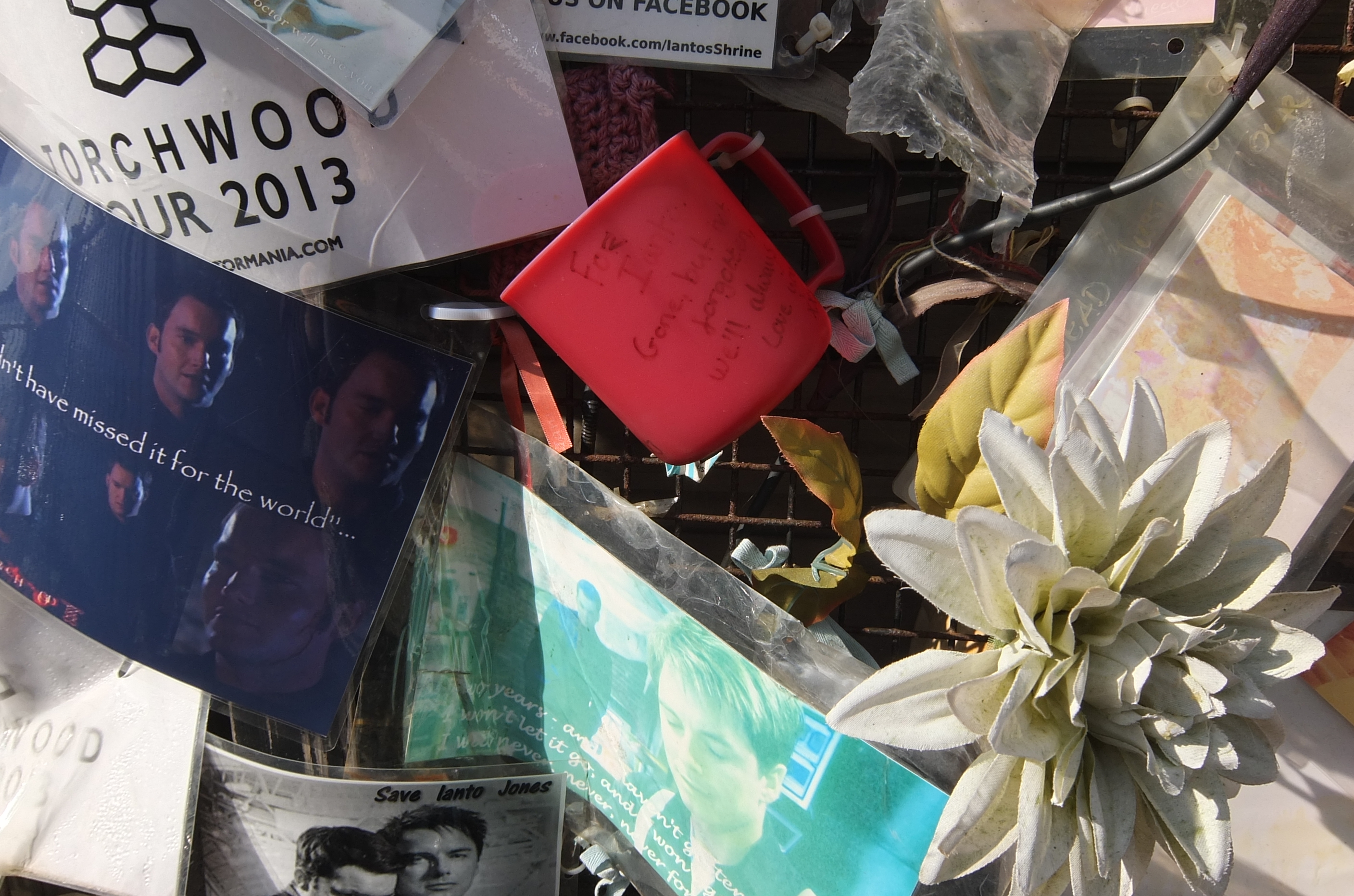
Upon my second visit, I decided to stay longer paying my respects. I was amazed at the diversity of the mementoes. There are Christmas decorations, coffee cups and, heaven forbid, even underwear. Well, the mind boggles!

As with Elvis Presley, some of his most devoted fans have even gone as far as to suggest that he is still alive. He’s not dead; he’s just gone globetrotting, apparently. They’ve even posted photos from around the world to ‘prove it’. There are also Christmas cards, and 30th birthday balloons, a milestone he sadly never reached.

DSCF2628
Flowers, and a 30th Birthday card


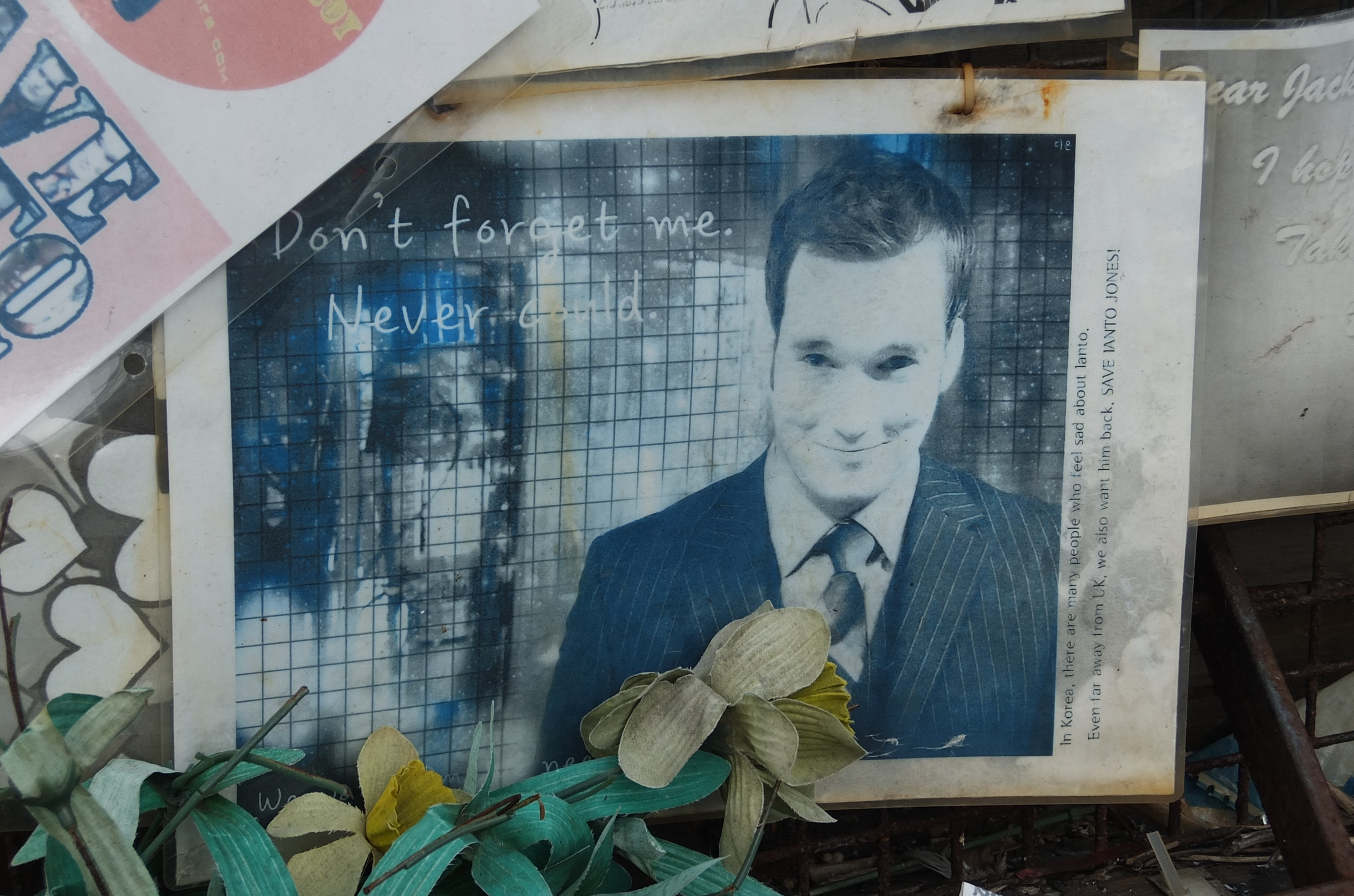
I noticed for the first time, upon my return, a photo upon which was scribbled Ianto’s final words: “Don’t forget me”, and Captain Jack’s response: “[I] never could”. My photos didn’t erase after this visit, so maybe these words were a message to me from beyond the grave. It certainly brings a tear to my eye. Sob!


DSCF2627
A reminder of Ianto’s final words


I hope you take a quiet moment to study my photo gallery. If you felt moved, upon visiting Ianto’s shrine, I’d love to hear from you. Thank you for reading!


DSCF2626
A hero in the league of Indiana Jones?


DSCF2623
Messages reflecting how sadly he is missed
DSCF2624
Ianto and Captain Jack – what a partnership!


DSCF2636
Coffee cups in his memory
DSCF2629
He’s not dead; apparently he was spotted at Tower Bridge in London!


S0132539
A quiet place to reflect on the life of a quiet, mild-mannered Welshman


***

You can find the shrine on the waterfront in Mermaid Quay, Cardiff Bay.

Sign up for the weekly We Are Cardiff newsletter

A-Z Cardiff … H is for The Hennessys

Katie Hamer continues her Cardiff A-Z by discussing Cardiff band, The Hennessys!

So, what makes folk band The Hennessys special? Well, as founder member Frank Hennessy sings in one of their most popular songs:

‘I’m Cardiff born and Cardiff bred, and when I dies, I’ll be Cardiff dead’.

Who wouldn’t be impressed by this band’s conviction for their home city?

As I’m a fan of alternative and Indie music, I decided to investigate the band further. I enjoyed listening to their music, which is deceptively simple, but strangely catchy. In one humorous and memorable lyric from their album ‘Cardiff After Dark’, they jest about a new logo for Cardiff: a huge pint of Brains Dark. They provide a running commentary on life in Cardiff, and it’s uniqueness. As the cover for this album suggests:

 ‘There is no substitute for the real thing, [the Kaairdiff Accent], hence this recording. If you want to listen in it’s true surroundings, get yourself a flagon of “Dark”, a Clarksey (Clarks Pie), and a tanners worth of chips in an echo.’

Cardiff 004
Cardiff after dark

 Their songs are a social commentary, full of wit, but also displaying a huge amount of affection for their home city.

Frank Hennessy, who wrote many of the band’s more memorable lyrics, was indeed born in Cardiff, into the thriving Irish community. From a very early age, his family encouraged him to perform. At age 13, his father gave him a guitar, which he took to with ease, and from then on, he became immersed in music.

In 1966 Frank, with his band yet to be named The Hennessys, won a youth talent contest in Cardiff. This led to them having a regular gig at St Joseph’s Catholic Club in Whitchurch Road.

A few years later, they moved to Ireland, where they again achieved recognition. What came as a surprise to them, though, was that they were seen to be a Welsh band, and not a Cardiff Irish band as they had expected.

This helped the band to realize that their Welsh roots made them special. They took to performing Welsh language folk songs, which raised their profile even further within the folk community.

Frank Hennessy could see that there was a gap in the market for Welsh folk songs written in English. On the bands return to Wales, he wrote some of their best-known songs: ‘Tiger Bay’, ‘Farewell to the Rhondda’ and ‘Billy the Seal’, as well as ‘Cardiff Born’.

DSCF2439
A traditional Brains beer pub, as praised by The Hennessys

‘Farewell to the Rhondda’ deals with the decline in population in the valleys due to pit closures. ‘Tiger Bay’ is about migration from Cardiff to North America, not always to a better way of life. ‘Billy the Seal’, a more light-hearted number, is the true story of a seal, who took up residence in Victoria Park, Cardiff around about a hundred years ago. If you’re ever in Victoria Park, you’ll see a statue in commemoration of this seal.

DSCF2430
The Animal Wall in Bute Park, as mentioned in one of Frank Hennessys’ songs.

Frank Hennessy has also written songs for special occasions. He penned a song for the visit of Pope John Paul II to Cardiff in 1982. For their audience with the Pope at Pontcanna Fields, The Hennessys sang: ‘John Paul, we welcome you with all our hearts’, undoubtedly a proud moment.

DSCF2442
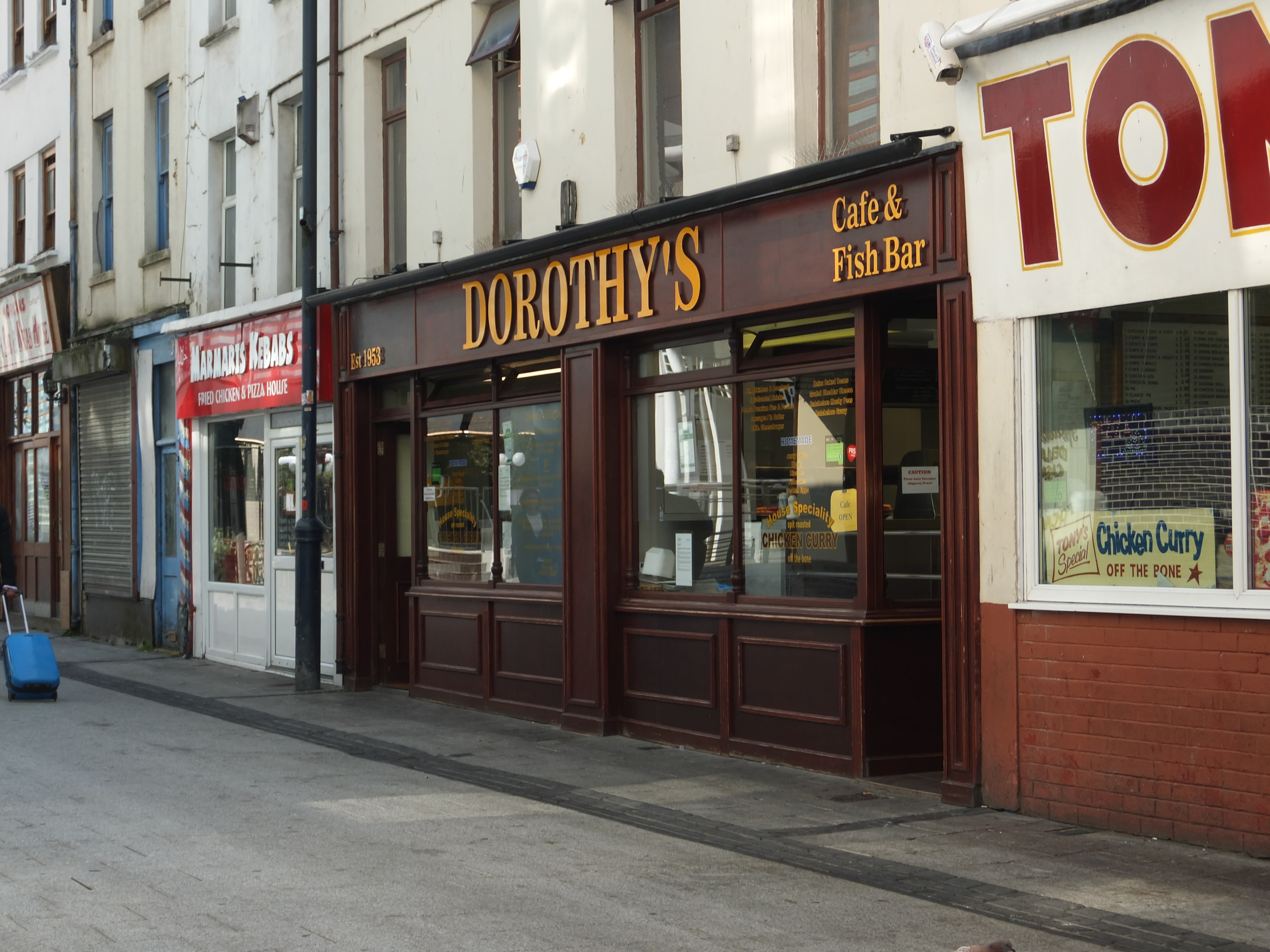
Dorothy’s Fish Bar – perhaps the oldest resident of ‘Chip Alley’

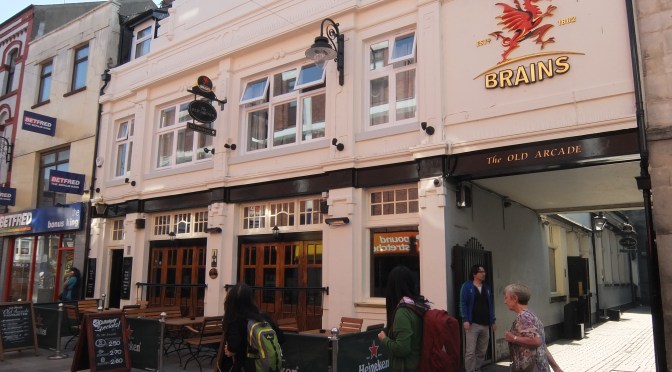
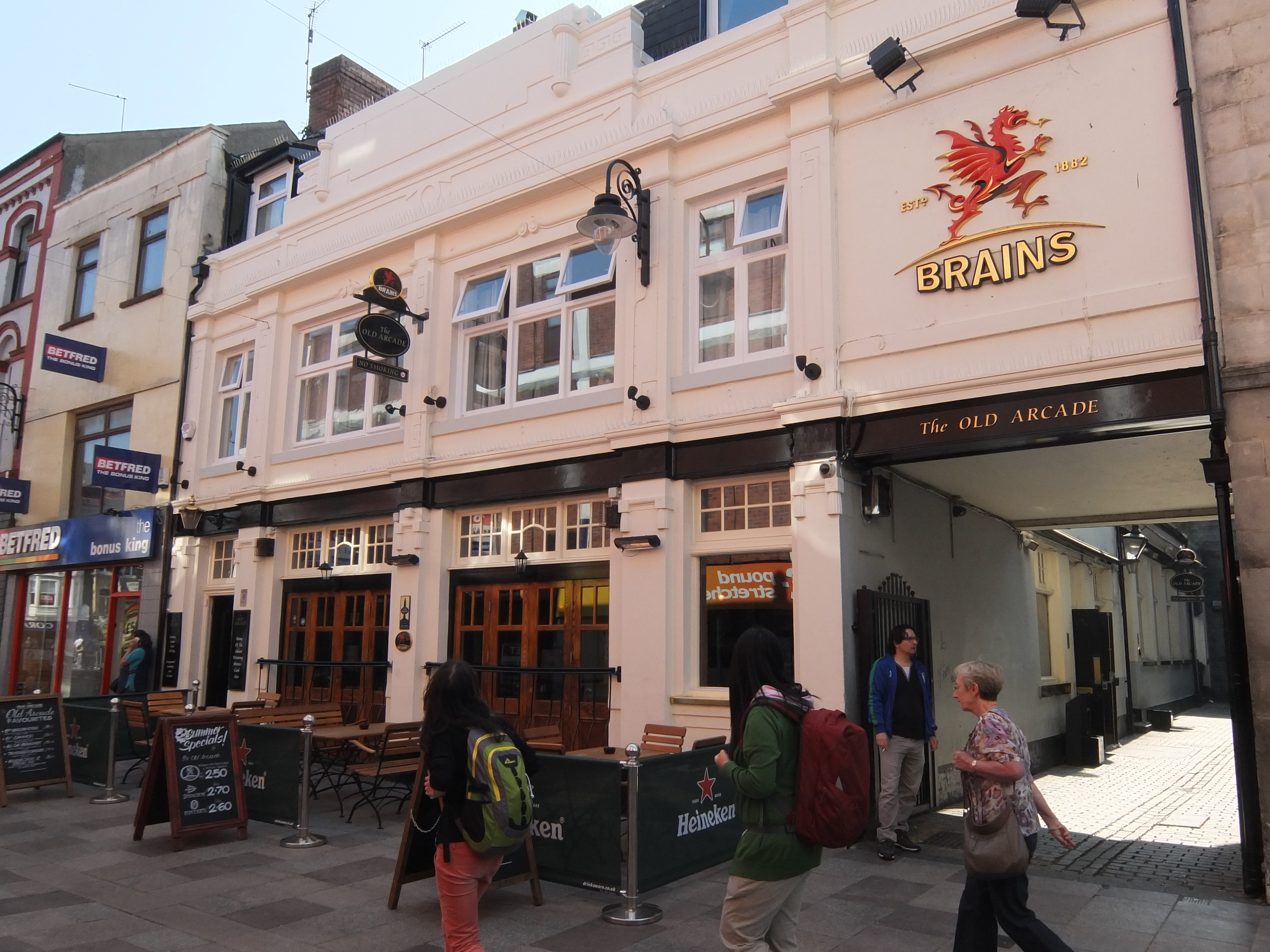
More recently, in 2005, Frank Hennessy wrote a song to mark Cardiff’s centennial year as a city, and 50 years since it became the capital of Wales. The song, titled ‘Always Beautiful: A Song for Cardiff’ includes memories of the Old Arcade pub, Caroline Street (a.k.a. Chippy Lane), and the Animal Wall at Bute Park. I would dearly love to listen to this song, but haven’t been able to locate it anywhere. If anyone reading this knows where I can listen to it, then please let me know!

DSCF2436
The Old Arcade pub, as mentioned in ‘Always Beautiful: A Song for Cardiff’

The band has seen some line-up changes, but still perform today. Most notably, they have performed their song ‘Cardiff Born’ on the streets of Cardiff on St David’s Day. This song has evolved over the years, to keep up with the changes in the city. Whereas the majority of musicians will write a song, and then perform the same version for ever after, The Hennessys have shown a sense of fun by adding new verses. For instance, recent versions of ‘Cardiff Born’ include a verse about how the Daleks are now roaming Cardiff Bay.

The band don’t perform as much as they did in their hey day, but Frank Hennessy is still very much part of the folk scene of Wales. He’s been hosting his BBC Wales show, Celtic Heartbeat, for twenty years. Broadcasting every Sunday evening, it’s full of information on new artists, upcoming gigs, as well as having some classic folk tunes on the playlist.

From everything I have read about Frank Hennessy, and his band, I can sense that they are proud of their Cardiffian heritage, and to be part of this city’s culture. Who wouldn’t be?

DSCF2446
Cardiff this week, adorned with banners

G is for Grangetown

Katie Hamer is on a quest to uncover her own A – Z of Cardiff. Today she’s off to Grangetown, where she’s having a look around the Shree Swaminarayan Mandir temple. Join her below!


G is for Grangetown

Just south of the city centre, and to the north of the docks is the suburb of Grangetown. Here you will find a vibrant multicultural, multiracial community. While the majority of places to worship are Christian in Grangetown, Muslims and Hindus are also accommodated.


DSCF2318


The Shree Swaminarayan Mandir Temple

My focus for this article is on the Shree Swaminarayan Mandir, the Hindu Temple. I have a personal interest in this subject, although my own background is Christian, since my brother had a Hindu wedding ceremony at Dulwich College, London in 2002. Despite this family connection, I came to the realisation that I have very little understanding of the faith, and I decided to rectify this situation by doing some research.


Why the Shree Swaminarayan Temple is so significant

The Shree Swaminarayan Mandir is the first of its kind to be built in Wales, and remains the largest. The original temple opened in 1982, and moved to its current location, previously an Irish pub, in 1993. Devotees celebrated its Silver Jubilee year in 2007. Significant renovations took place in the years leading up to this special occasion. Most obviously, the three stone spires (or shikars, which means mountain peak in Sanskrit) were put in place, and hence the building became the recognisable landmark that it is today.


DSCF2311


The basics of Hinduism

Hinduism is perhaps the world’s oldest religion. Originating in India, its routes can be traced back to 5000 BCE. For its 1 billion devotees world wide, it is not so much a religion, as a way of life. At the heart of Hinduism, is the belief in one God, a Divinity that manifests in all living creatures. Hinduism teaches its devotees to adopt a compassionate, unselfish, peaceful approach to life. They are taught an acceptance of other faiths, to be at one with nature, and furthermore to accept the inevitability of change. Regional variations exist, as I explain later. However, there is a universal belief throughout Hinduism in Karma, the cycle of life, and in reincarnation.


Explaining the Swaminarayan Sampraday

There are four major denominations within Hinduism. These are Saivism, Shaktism, Vaishnavism, and Smartism. The Swaminarayan Sampraday is part of the Vaishnavism denomination. The different denominations exist as a result of regional variations within Hinduism; many of the Swaminarayan Sampraday devotees in Cardiff originate from the Gujarat region of West India.

Bagwhan Swaminarayan is the central figure for the Swaminarayan Sampraday. Born on 3 April 1781, Swaminarayan lived a life dedicated to religious and social reform. Even before his passing, on 1 June 1830, he was recognised by many of his devotees as Bagwhan (a manifestation of the Supreme God). Bagwhan Swaminarayan supported the building of temples as places of correct theological worship. They allow many devotees to participate in Daily Darshan.


DSCF2313


Daily Darshan

Darshan derives from the Sanskrit word “drush” which means to see or perceive. Darshan is the most fundamental act of worship for Hindus, and involves not only praying within the presence of images of the deities, or ‘murti puja’, but also being seen by the deities.

In Cardiff, the Darshan is observed twice daily, once in the morning, and again in the evening. Devotees arrive at the temple in traditional dress, and remove their shoes, before entering the prayer room through separate male and female entrances. They bring with them offerings in the form of fruit and flowers, and in turn gifts are handed out all who attend. As well as the offerings, there is also the burning of incense, and the symbolic pouring of water into a cupped hand, which the devotee sips, before placing their right palm on the crown of their head.

While acknowledging the images of the deities, the devotee will engage in ‘pranam’, which involves pressing palms together, and bowing the head as an expression of reverence. Other devotees circumambulate – walk clockwise around the shrines – as an act of acknowledgement that God is at the centre of the universe.


Most important Hindu festivals

Hindu festivities are guided by the lunar calendar, and thus the exact dates vary on an annual basis. Among the most significant are the New Year festivities, which take place during March/April. The Swaminarayan Sampraday mark the birth of Bagwhan Swaminarayan during August/September. The birth of Shree Krishna (Lord Krishna) and the Ganesh Chathurthi (paying obeisance to Lord Ganesha, the Elephant God) are also observed during these months. Then during October/November is perhaps the best known festival: the Diwali, or Festival of Lights.


DSCF2317


Stories are at the heart of Hinduism

It is impossible to make an account of Hinduism without also mentioning stories. For instance, there are many stories involving Lord Krishna, who is significant for being the eighth incarnation of the god Vishnu. The epic ‘Mahabharata’, which I remember being televised, features detailed descriptions of Krishna as an incarnation of Vishnu. In the ‘Mahabharata’, he appears on the battlefield to proffer advice to warrior-hero Arjuna, as an act of divine intervention. He is also often depicted as an infant playing a flute, or a divine hero, and even as a prankster.


DSCF2316


Involvement within the community

The Temple’s devotees have formed a close-knit community, with involvement in humanitarian activities. They have raised funds for disasters such as the earthquake that hit the region of Gujarat in 2001. Most of the funds for the 2007 renovations came from within the community, although the Welsh Assembly also provided a grant.

All nationalities/religions within the local community are encouraged to engage with the Temple. School visits are organised on a regular basis, so that pupils can have a greater understanding of the religion. Religious classes are regularly held there, and also seminars to raise awareness of issues such as diabetes. As the Shree Swaminarayan Wales website states: “May Lord Swaminarayan reside in the hearts of all Cardiff Satsangis and in the hearts of all those who come for darshan at the temple”.


Thanks to everyone who helped me with my research.

Further information on the Shree Swaminarayan Mandir can be found here:

http://www.swaminarayanwales.org.uk

More information on the Swaminarayan Sampraday can be found here:
http://londonmandir.baps.org

Further background on Hinduism can be found here:
http://www.hinduismtoday.com


 Thanks Katie! We’ll catch you next time on Katie’s A-Z journey through Cardiff…

A-Z of Cardiff – F is for St Fagans …

Writer Katie Hamer is busily discovering parts of the city and revealing them through her We Are Cardiff series, the A-Z of what makes Cardiff special to her. She’ll be sharing the parts of the city she finds with you over the following weeks, so stay tuned!

Rhyd-Y-Car Terrace, originally built c.1795


F is for (St) Fagans

There are three places for which I will always find time to take an annual pilgrimage. These three places are the Eden Project in Cornwall, the grounds of Cliveden in Berkshire, and St Fagans’ National History Museum in the heart of Cardiff.

I thought I was fairly clued up about this open-air museum until my most recent visit last week. I got chatting to a couple of Australian tourists, who posed a relatively simple question to me: “So, why’s it called St. Fagan’s?” They were clearly very puzzled, and I was completely stumped.

On the off chance that those lovely ladies, who let me share a table with them in the tea rooms, are reading this article, here’s the reason for the unusual regional name: St Fagans is the village in which this museum, formerly the Museum of Welsh Life, is situated. Saint Fagan is believed to have been a second century missionary in Wales, but no historic records exist to back this fact up. As well as the museum, there is also a castle and an old rectory in the locality; this whole place is steeped in history.


st_fagans_katie_hamer24
St Fagans in the winter


St Fagans in the summer


The museum takes you through so many eras of history, from the Iron Age, right up to the present day. I’ve always had a fascination for the Industrial buildings of Wales, ever since I first set foot in the country nearly twenty years ago. In particular, I have a fondness for the rows and rows of houses that rise to greet you in almost every town, village, and city. So, it’s no surprise that it’s this era of history that I decided to concentrate on, for this article.

The Rhyd-Y-Car Terrace – a row of six terraced houses – is one of the main attractions for me. I couldn’t wait to see it when I first visited the museum ten years ago, and it continues to fascinate me, even now. St Fagans have done something truly special with these houses: starting from 1855, each house takes you forward a generation, with the final house decorated in the style of the 1980’s. The result is a time travel experience, on a level with “Back to the Future”, or “Doctor Who”.


The houses in their original location

This terrace of six houses was built in c.1795. They housed many generations of families before they were declared unfit for habitation, and demolished in 1979. In 1987, they were rebuilt in the grounds of St Fagans, and have been lovingly preserved ever since.


I’ll briefly talk you through each of the six houses, picking out the details which I found special. Here goes:


1805
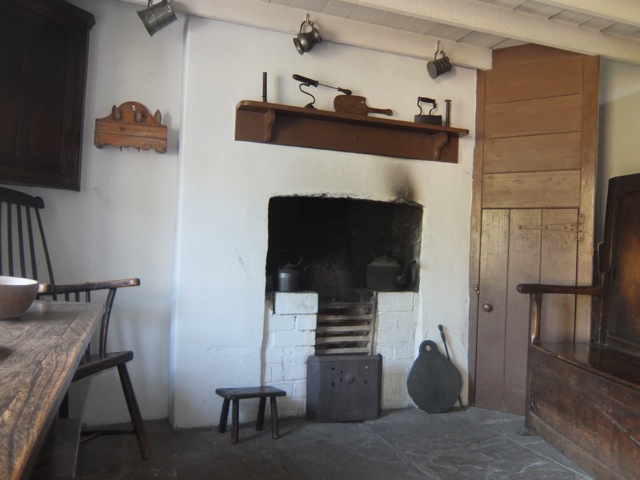
The original occupants would have been, in all probability, iron stone miners. They would have moved into these houses from near by villages, bringing their furniture with them. The interior is pared down, with just a few functional possessions. The little ornamentation that this home has is religious in nature, giving the whole interior an almost Puritanical feel. I find the simplicity refreshing. In a way, I felt that this home has more in common with modern minimalist styles, than perhaps the later houses have.
The 1805 interior
The 1805 interior
The 1855 interior
The 1855 interior


1855
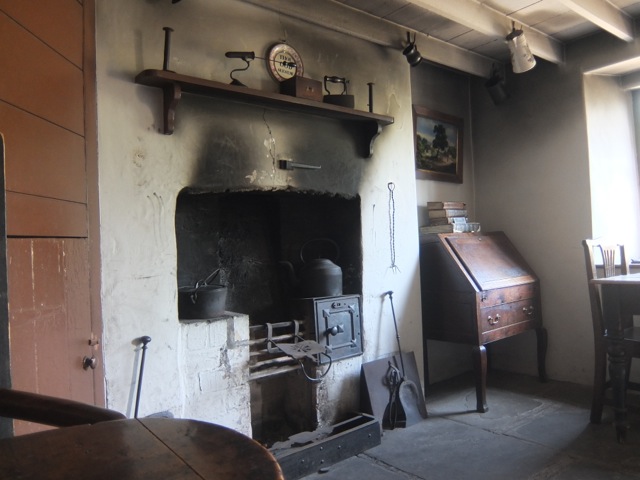
It’s from this era onwards that the ever-expanding mining community would have occupied these houses. Living standards were in decline, leading to outbreaks of cholera, of which the residents of this terrace didn’t escape unaffected. The interior is very similar to the home from 1805. There is perhaps a little more furniture, but the over-all feel is still very plain and religious.

1895
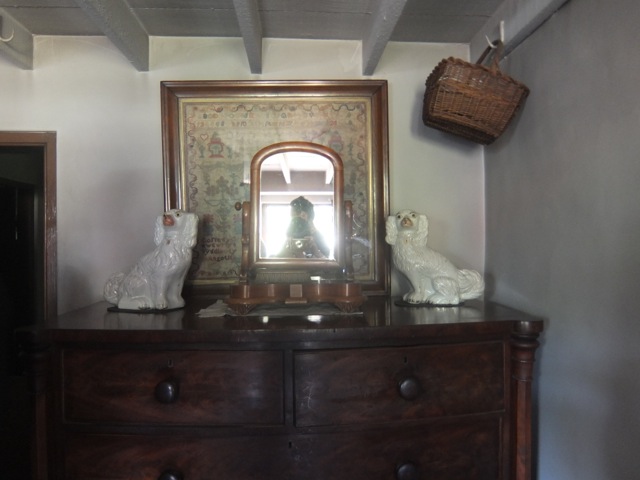
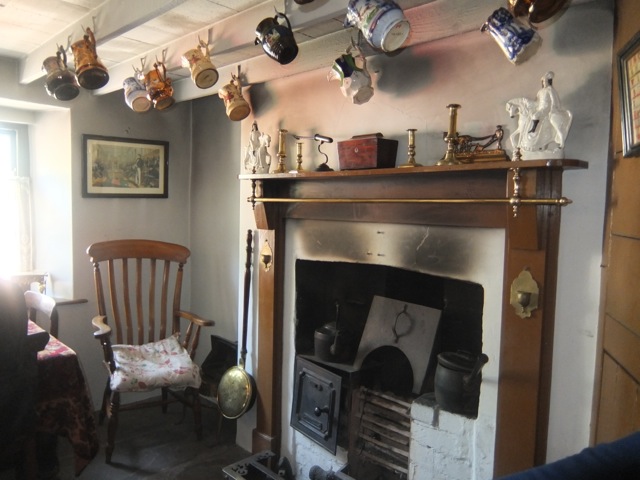
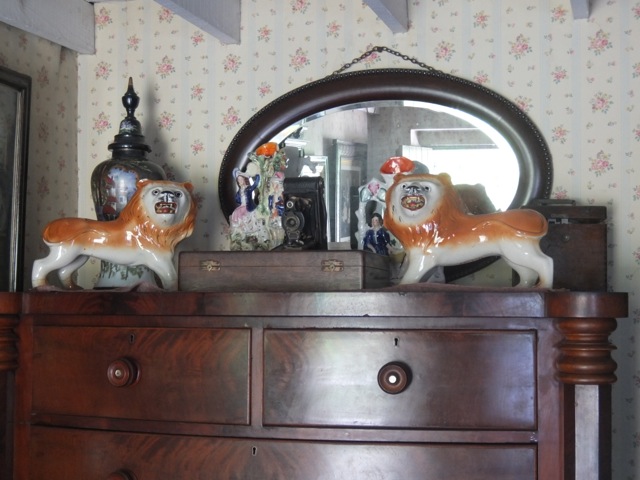
With now enter the late Victorian age. We witness the era of factory mass-production. The walls are still plain, but the furniture, mantelpiece and ceiling, are adorned with pictures, patterned fabrics, and ornaments. It feels very cosy; I could imagine having a bath in a tin tub, beside a roaring fire. Look out for the needlework samples: the first hint that housewives had time for indulging in fireside hobbies of a winter’s evening.

The 1895 interior, complete with china dogs and looking-glass mirror


Tankards adorn the ceiling of the 1895 interior


The 1895 interior captures the imagination of young visitors


1925


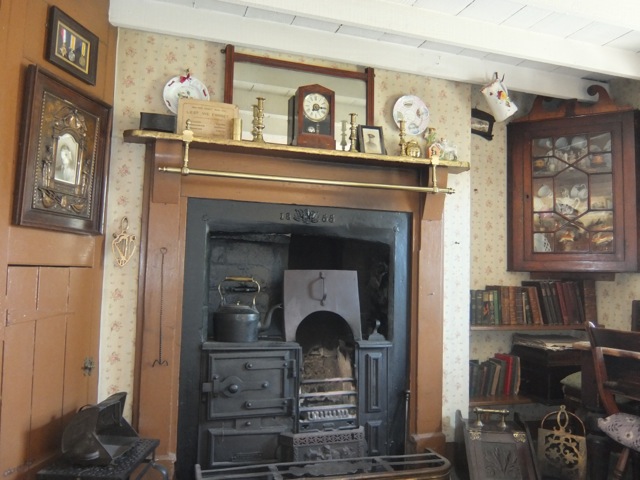
We fast forward to after the First World War. The current occupants have papered the walls with roses and pastel stripes. There’s a simple camera, hinting at the advent of mass photography. Most poignantly, there is a card with a reminder of the loss of life from the Great War of 1914-1918: “Lest We Forget”. This reminds us of the continuing grief of those who survived the front line combat, from a war where few escaped unscathed.

 The 1925 interior with patterned wallpaper, and camera
The 1925 interior with patterned wallpaper, and camera


The 1925 interior. Can you spot the war medals?


"Lest We Forget"
“Lest We Forget”

1955
With this house, we enter the Golden Era of the 1950’s, the era during which Harold Macmillan proclaimed: “You’ve never had it so good.” Despite the post-Second World War rationing, this became the dawn of the baby boomer generation.

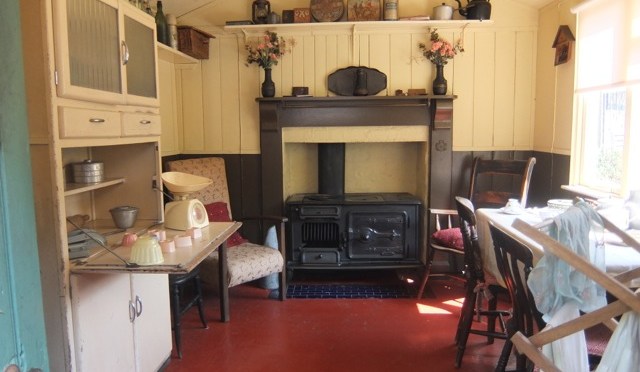
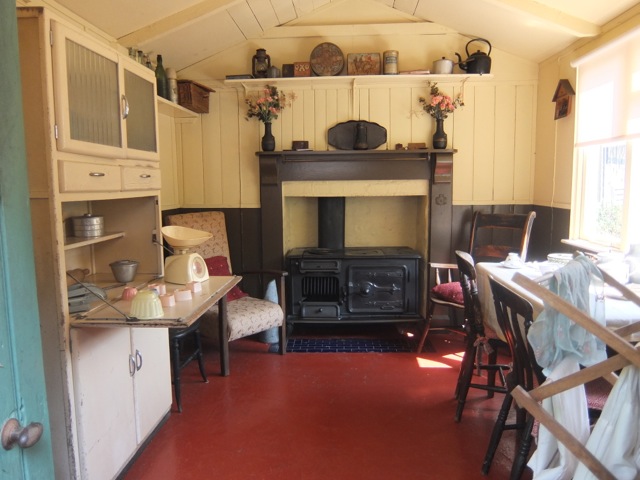
Due to the population expansion, the residents of these houses would have been allowed to extend. As a canal ran along the back of this terrace, they would have had permission to build outhouses. This era also sees the introduction of the goggle box, or television, which now competes with the fireplace, for centre of attention.

The 1950's out building at Christmas
The 1950’s out building at Christmas


The out building during the summer


Interiors are becoming more fun. This one reflects lifestyle and fashion fads, as demonstrated by the flying ducks, an iconic image for this era. I’ve included a picture to show how this home would look decked out in its Christmas glory, as I saw it on my visit last December. This scene evoked memories of Christmas past for me. I don’t know about you, but I’d have loved to join this family in their festivities.

The 1955 interior at Christmas
st_fagans_katie_hamer16
The 1955 fireplace competes with the goggle box for attention


1985
With 1985, I can feel the dawn of the age of IKEA. The furniture begins to feel more flat-packed for home assembly, in complete contrast with the solid wood furniture of the earlier interiors. There are hints that this family had fish and chip suppers in front of the television. For the first time, there’s a fully fitted kitchen at the back of the house, where the bedroom would have been for earlier generations. When you enter the kitchen, look towards the left: you’ll be in for a huge surprise!

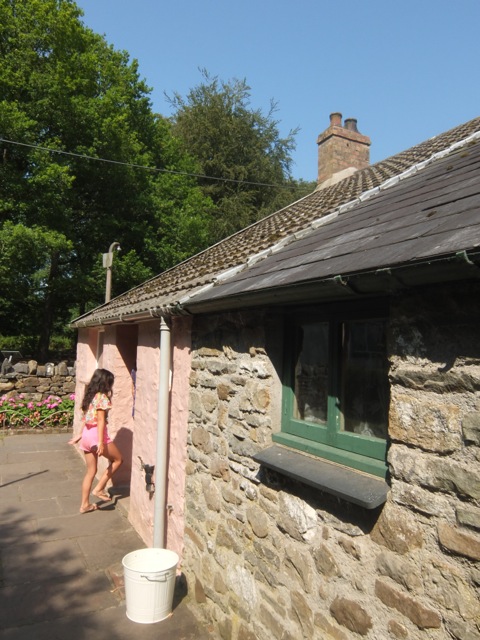
The pastel coloured 1980's exterior
The pastel coloured 1980’s exterior
st_fagans_katie_hamer19
The 1985 interior, with Sony television, and portable cassette player
st_fagans_katie_hamer21
The back of the houses, where there would have been a canal originally


St Fagans is a living museum, with seasonal shrubs as well as static exhibits. It’s well worth visiting at different times of the year, to see it change with the seasons. I hope you enjoy looking at my photo gallery. If you have any thoughts, or memories about visiting St Fagans, I’d love to hear from you.

St Fagans is open all year round. For further information, visit their website: https://www.museumwales.ac.uk/stfagans/


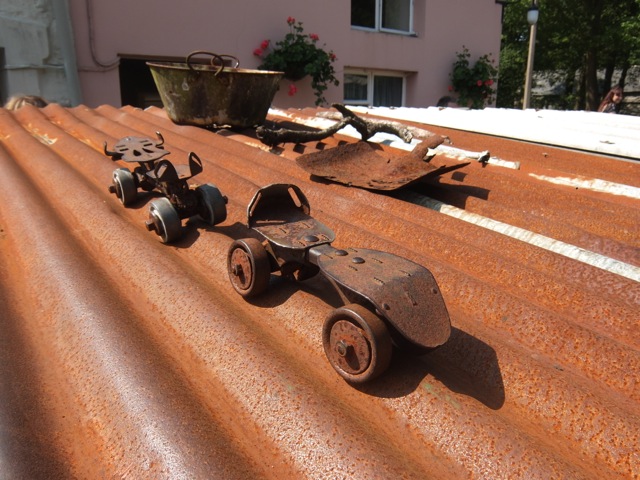
Rollerskates on top of the 1955 coal store


Visitors outside the 1955 house bring the whole place to life


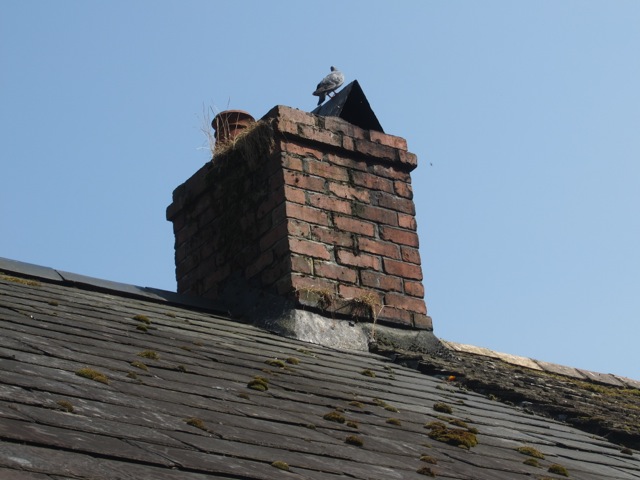
A pidgeon suns itself on a chimney pot


A potted plant in the 1980's kitchen
A potted plant in the 1980’s kitchen
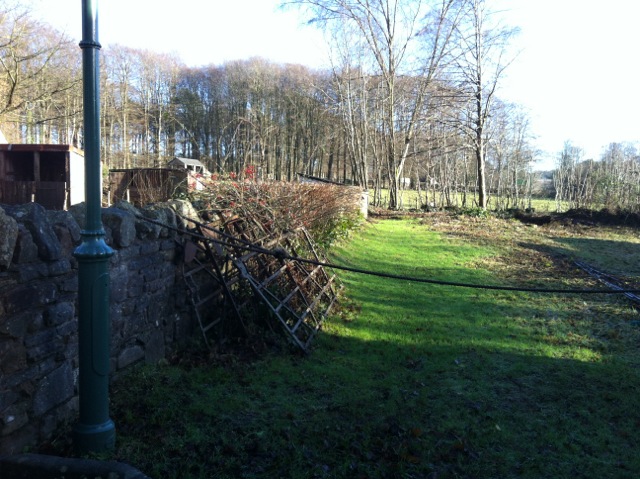
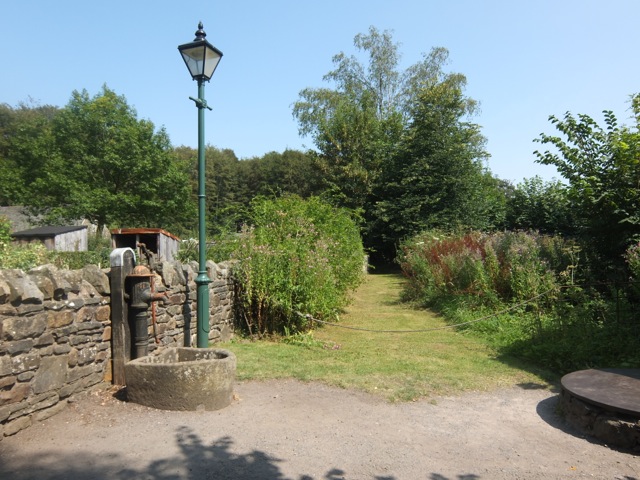
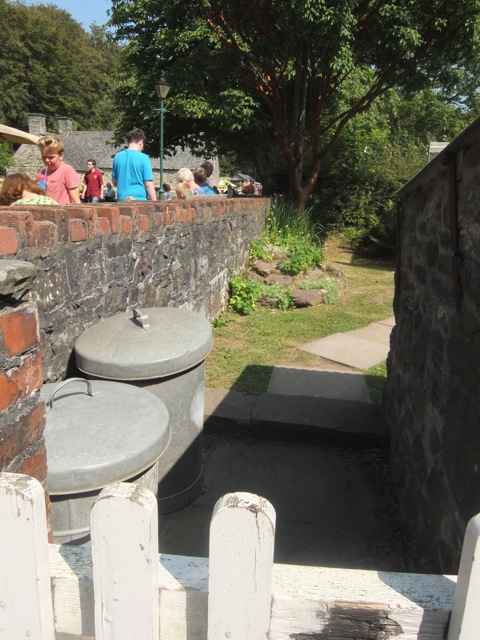
Where does the footpath in the 1985 garden lead?