All posts by wearecardiffguest

“Men, women and children – all aboard the Premier Ship” – Dan

dan_tyte_new_web

The Ship of Dreams

Men, women and children,
All aboard the Premier Ship.
Made with Malaysian gold,
And souls sold.

We’re the kings of the world.

They call it the ship of dreams,
The hottest ticket in town.
First class to be seen,
Third class where they’ve always been.

Even God himself can’t sink this ship.

In the engine room the coals burn red,
The Bluebird’s wings clipped by ambition.
But lips are bitten and hope is high,
That for this crew the limit’s the sky.

Watch out for the iceberg.

Because when the bottom falls out of the boat,
The gold corrodes.
Empty seats float along the waves,
And the feeling is blue because more could have been saved.

Women and children first.

Even if she’s underwater for a hundred years long,
My heart will always go on.


Dan Tyte is an Executive Director at PR agency Working Word. He’s interviewed rock stars, ghost-written Guardian features, had a Western Mail column where he wrote on anything from stag-dos to the mayoral system of Reykjavik and contributed to a Lord Sugar-approved Amazon No#1 best-selling book on social media. His debut novel Half Plus Seven, comes out on Parthian Books in spring 2014. He’s on Twitter @dantyte and currently lives in Canton. 

He was originally featured on We Are Cardiff in December 2010 – read Dan’s original We Are Cardiff entry

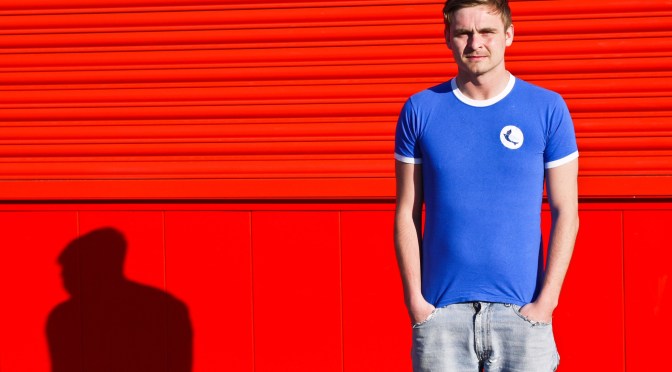
Dan was photographed at Cardiff City Stadium in Leckwith by Doug Nicholls

***

“Unity Festival’s visiting acts always comment on how much they love coming to Cardiff” – Ben

Ben Pettitt-Wade photographed by Adam Chard

For the last nine months I have been planning and organising Hijinx Theatre’s annual Unity Festival – a two week event that sees a variety of award winning inclusive arts companies descend upon Cardiff. I have to say I’m exhausted! We’re a Cardiff-based inclusive arts company with a very small team. In reality we don’t have enough staff or resources to be doing this, thank goodness for volunteers! But every hour spent is worth it for Cardiff, the arts and the performers.

Having worked in Liverpool, London and Seville (albeit briefly) and Cardiff, I can honestly say that Cardiff is on a par with these cities in terms of the inclusive art scene and the work being produced, but it’s the audiences that differ. I’ve sat in packed 1,000 seat theatres in Seville watching a piece of inclusive dance, we wouldn’t get that in Cardiff, and that’s something we are trying to change through Unity Festival. We believe in the work we present and believe it should be enjoyed by everyone.

We started in 2008 with an audience of 1,500 people and year on year the festival has grown in both size and ambition to become one of the largest inclusive arts festivals in Europe, with more than 7,000 people enjoying performances in 2012. Last year will always be unforgettable. For the first time we received £100,000 of funding from the Arts Council of Wales which meant we could start thinking big and turn what were pipe dreams into a reality. We brought Back to Back Theatre from Australia over for the Festival; they performed for three days in the middle of Queen Street. It was incredible.

This year we’re lucky to have secured the same funding and as a direct result of the Paralympics we are welcoming more home grown acts than ever before. Our mission is to build on the Festival each year while staying true to its core – to provide a platform for the inclusive arts, offer more opportunities within the spotlight for disabled artists and expose their amazing talents.

For the first time, Cardiff audiences will be able to enjoy spectacles including modern fable The Iron Man (a colossal iron puppet the size of a double decker bus) from London-based Graeae Theatre Company, who can be credited with kicking off the whole movement in disability arts in the 1970s. As well as Three Acts of Play from Candoco Dance Company, UK pioneers of inclusive contemporary dance; it will twist your perceptions of who can dance and who enjoys it!

We are also showcasing international acts, Sevilliano flamenco Cia Jose Galan, back by popular demand following a near sell out last year and jaw-dropping acrobatics from French company Cirque Inextremiste. I saw this show in Marseille and I guarantee it will blow you away.

More than anything I love the feel good vibe that the Festival creates and can’t wait to experience it again. Our visiting acts always comment on how much they love coming to Cardiff, how friendly people are and the great reception they get. So, people of Cardiff, I’m asking you to come and see for yourself the brilliant theatre dance, music and comedy on offer and help make this year the best yet with the biggest audience!

Ben Pettitt-Wade was born in London, grew up in Carmarthenshire and has lived in Riverside for the last six years. Following completion of a drama degree, Ben’s acting career was cut short when he broke his ankle in rehearsals; he then joined Spare Tyre Theatre Company in London where he co-ordinated inc.Theatre, a training course for learning disabled actors. It was here that Ben discovered a passion for working inclusively and specifically in drama with learning disabled performers. Since then he has amassed over 10 years experience in this field, in Cardiff, London and Seville. Ben is responsible for the Hijinx Academy, the Hijinx Pods, the community projects,  forum theatre pieces, and the Unity Festival. He currently lives in Riverside.

Unity Festival runs from 12-22 June 2013, and offers both free and ticketed performances across the city at Wales Millennium Centre and Sherman Cymru. Visit www.hijinx.org.uk/unity for a full programme or see @HijinxTheatre on Twitter. 

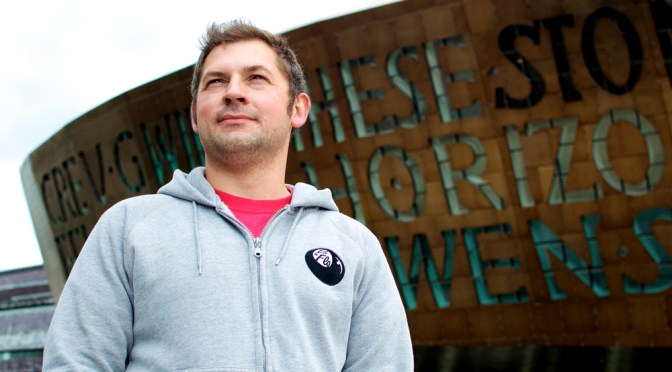
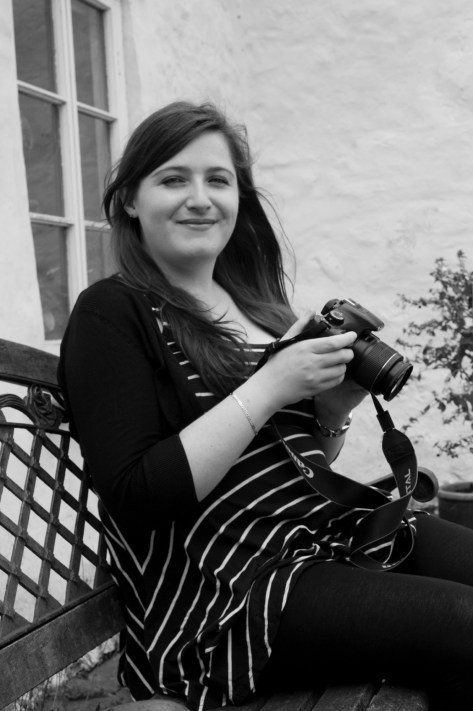
Ben was photographed in Cardiff Bay by Adam Chard

***

“Cardiff owes a debt to its industrial history” – Stuart

stu_herbert_web

In the 1790s, the ironmasters of Merthyr Tydfil decided to build themselves a canal to bring their goods to market quicker, and on a larger scale than was previously possible along the turnpike. Their target markets were abroad, and they needed a port where they could transfer their goods from the canal barges onto ships to carried out into the wider world. Land surveys determined that the easiest route for this canal was south down the valleys past Pontypridd to the coastal plains beyond, where the River Taff flowed into the Bristol Channel. Cardiff at the time was a small town clinging to the shadow of its ruined castle, neither capital city nor important port. It lay on the route on this little canal, and more importantly to the south had miles of abundant saltmarsh – the perfect place for the ironmasters to build their seaport.

The canal was the Glamorganshire Canal, and the sea port of the ironmasters became known as Sea Lock Pond.

Although the canal continued to operate through to the end of 1951 (in increasing states of disrepair), new industry soon meant that new transport methods were needed. Iron and tin quickly gave way to coal as the main export of the valleys, and during the 1800s and early 1900s five private railroads sprang up to compete for the business of bringing this black gold down to the massive docks that were built to the east of Sea Lock Pond to try and meet the demand.

Cardiff grew rich, prosperous and influential as the middleman in all of this trade. The profits to be had from the coal trade were immense for the time (did you know that the world’s first £1 million deal was done in Cardiff’s Coal Exchange?) and they paid for many of Cardiff’s wonderful parks and its magnificent Civic Centre, and much more besides.

Without this trade, the Cardiff we all know and love today would be a very different – and probably much smaller – place. And yet, the debt Cardiff owes to this industrial history seems to be largely unknown to the good folks of Cardiff, and it’s one that is seldom clearly acknowledged whenever there is an historical exhibition put on in the city centre.

Perhaps the reason why is because this story doesn’t have a happy ending – not for the valleys anyway.

By the 1960s, most of this trade had ceased, having been in decline since the 1930s, and the docks closed down. Over the next 30 years, as the coal mines of the valleys were declared unprofitable and also closed down, the towns and villages of the valleys sank into a deep decline that they have yet to recover from.

It wasn’t just the coal mining that went. None of the industry that lined this industrial corridor at its height exists today. The Merthyr iron forges, the world’s two largest tinworks, the many deep coal mines, the chainworks factory, the chemical works, the bakeries, the power station, and much more besides … every last one of them has closed. Little has come in to replace them.

Today, Merthyr Tydfil is normally mentioned in the media because of its terrible unemployment rates and benefits culture, and things aren’t much better in many of the former coalmining towns and villages that dotted the canal’s route. The valleys had a very small population before the mines came along, and although the mines are long gone, the people have stayed in the places they have made their homes in. It’s difficult to see how their fortunes will drastically improve in my remaining lifetime, as the days of mass employment in heavy industry show no sign of imminent return.

Cardiff too fell on hard times for several decades, but thanks in part to the influx of European funds to transform the former docks into Cardiff Bay, and the money that has been attracted by the setting up of the Welsh Assembly Government, Cardiff’s fortunes have turned out quite different from the valleys. Indeed, Cardiff instead is competing to be one of the top shopping destinations in the whole UK, and its council has announced ambitious plans for a new business district to further boost the local economy.

I’m originally from Yorkshire, a proud area that makes a point of teaching all of its children its major history, which dates back to Roman times. You have a proud and unique history too, and I’d urge you to put it proudly on display before it becomes lost and forgotten.

If you want to learn more about this industrial history, then I highly recommend reading the excellent two-volume set “The Glamorganshire and Aberdare Canal”, by Stephen Rowson and Ian L. Wright, available from Black Dwarf Lightmoor. You can also see some of my own writings about this at my Merthyr Road photography project.

Stuart is an amateur photographer who was first struck by the ruins of South Wales’ industrial past back in 2007 as he commuted past them every day to and from work. Over the last five years, he’s been slowly exploring and blogging about a history that he’s worried has already been forgotten. You can find his work at his blog.

Stuart was photographed at the Melingriffith Water Pump in Whitchurch by Jon Poutney

***


Dirty Protest, The Real Valleys: “Treorchy is a small town at the upper edge of the Rhondda Valley” – Rachel Trezise

If you’ve been on a train in or out of Cardiff recently, you may have noticed an enormous billboard just outside Cardiff Central promoting a television show of dubious – well, dubious everything – called MTV – The Valleys. As yet another example of lazy, poorly executed ‘reality’ brain mush that misappropriates everything about the place we live (the valleys are part of south Wales, after all, just like Cardiff is), you can imagine how annoyed we were to see it was being produced.

If any of you have watched the programme, you have our sympathies. For those who have managed to avoid it and are as angry about it as we are, then take hope from local underground theatre group Dirty Protest, who are reclaiming the valleys through an event being held on 25 October 2012 called ‘The Real Valleys’. The event is being held at the Bunkhouse in Cardiff, 7.30pm, tickets £5. For more anti-MTV valleys discussion, read this Radical Wales article and please support The Valleys Are Here campaign.

To show our support for the real valleys and these events, we’re publishing our first ever non-Cardiff story – Rachel Trezise, about her home town of Treorchy.

Treorchy is a small town, (pop. 8,105) at the upper edge of the Rhondda Valley, 14 miles north of Cardiff, cushioned on all four sides by great looming mountains that turn ablaze every spring and summer. It’s famous for three things; the commanding grey stone of the Edwardian Park & Dare theatre; its 1913 construction funded entirely by mine workers, a male voice choir founded in 1883 and described by Anthony Hopkins as ‘the master choir of them all’, and a seminal album by Max Boyce called Live at Treorchy, recorded in the town’s rugby club in 1974, (in the presence, I might add, of my stout-drunken grandmother).

Aside from brief stints studying in Ireland and teaching in America, I’ve lived in and around Treorchy all my life, growing and learning amid the hotchpotch of the old and the new, the melting pot of Welsh, Anglicized and immigrant culture: swimming in the sheep dip at the foot of the Bwlch, bunking off school in the sunken bomb shelter under the rugby pitch, drinking frothy coffee in the Italian ‘bracci’ long before Britain came to terms with the word cappuccino, staging-diving through band sets at the Pig and Whistle, hanging out in the library reading Flannery O’Connor, or tattoo magazines in my brother’s tattoo parlour. My first short story collection Fresh Apples was inspired, in part, by the yips of Treorchy Comprehensive School pupils drifting through my study window.

Early on a Sunday morning I roller skate in the park where, as a child, I learned to tread water in the open air paddling pool, where I first tasted salmon in a friend’s unwanted sandwich. I use the food trays and lager cans left by teenagers for floor markers to practice my weaving. I like eating Victoria Sponge at Wondersuff on the High Street. There is nothing more homely or satisfying than finding oneself cwtched-up in bed at 11.04 at night, hearing the whistle of the last train from Cardiff pulling into the railway station; the day ended, permission to fall fast asleep granted.

Rachel Trezise’s debut novel In and Out of the Goldfish Bowl won the Orange Futures Award in 2001. Her debut collection of short stories Fresh Apples won the inaugural Dylan Thomas Prize in 2006. Her debut non-fiction work Dial M for Merthyr won the Max Boyce Prize in 2010. Her current novel is Sixteen Shades of Crazy. Her second collection of stories Cosmic Latte will be published by Parthian in 2013. She hails from Treorchy.

***

“Cardiff Food Project has changed the way I think about food, photography and of course, Cardiff” – Lauren

lauren_mahoney_web

I grew up in the Vale of Glamorgan, Penarth to be exact, and although it was a great place to grow up in, as I got older I started to feel disconnected, and longed to live somewhere else. When I finished school at sixteen, I decided to skip sixth form and head straight to Coleg Glan Hafren. I still – to this day – believe this was one of the best decisions I have ever made. It got me out into the world and gave me a chance to make new friends. In fact, it was at Glan Hafren that I made friends for life. All my friends there grew up and lived in Cardiff, and most of them still do.

After college, many of them went off to university and I stayed around to work, do some travelling and generally trying to figure out what I wanted to do. At some point, I needed to start making some decisions and one I really needed to make was the choice to go to university. I knew that economically it would make sense to study in Cardiff, I had job security and all my friends were here, so I moved to Roath and went back to college. Then at the grand old age of 23 (believe me, when the majority of your classmates are 18, 23 feels really old) I started university and never looked back.

Now, I am about to embark on my third and final year, I had one more decision to make – do I stay here after university? Or do I sail off into the sunset and see where the wind takes me? It was a tough decision, but I have spent my first 25 years of life here, so I think it is time to sail for a bit. However, I needed to remind myself of what Cardiff has given me over the years, and I wanted to create something that could represent that.

So this led me to creating a project that I could really connect with. I spent a few weeks going over ideas and came up with the Cardiff Food Project. I wanted this to be a blog that offered people a chance to find a new market or a new little corner of Cardiff they may have never knew existed. Through the blog, I have found new places and opportunities, and it has changed the way I think about food, photography and of course, Cardiff.

I’ve learned so much in the two months I’ve been running it, and I know I still have a lot more to learn. It has provided me with the confidence to try my hand at new things. I have set up a supper club, and am working on a new photography and travel website, and I hope to continue my writing. I have also become more aware of what is going in and around Cardiff and my local area. It has opened up my world to new possibilities and new connections, and really the only thing I have to thank for that is Cardiff.

I still have plans to head off in other directions, plans to work and live in different parts of the world. However, no matter where I go, Cardiff will always be home.

Lauren Mahoney is currently an event management student, often dodging the ‘typical’ students of the Roath area on her way to work. When she is not doing any of those three things, Lauren is working hard on her blog cffoodproject.blogspot.co.uk and her new travel and photography website (not yet launched) and getting involved in as many food, travel and photography projects as she can.

Lauren was photographed at Gelynis Farm by Ffion Matthews

***


“It’s refreshing to see how many talented DJs, producers and promoters we have” – Lubi J

lubi-j-web

Despite being born in England, I’ve always considered myself an honorary Welsh girl. I moved to Cardiff when I was four years old, so have very much grown-up feeling Welsh and I even started to learn the language again a few years ago. I grew up in Rhiwbina and have a lot of weird and wonderful memories from there as a child, going to Parc-y-Pentre on my roller boots (or ‘Parka P’ as we used to call it), and up the Wenallt for bonfires, as well things like Rhiwbina Junior’s old headmistress Mrs Harry’s leather trousers, stiletto shoe and Diet Coke obsession!

I left Cardiff for Staffordshire Uni to study the media, and then returned with a newfound love for the city in 2002. Since then I’ve lived in many of the boroughs that surround the centre; namely Roath, Splott and Grangetown. I love Roath and Splott. The local shops, pubs and eateries are excellent. Albany Road and Clifton Street have some great independent shops; as a DJ, D’Vinyl and The Record Shop have a plethora of gems waiting for you to hunt them down, plus there are the charity shops too!

Right in between Splott and Roath are the lanes that run behind the Blue Dragon Hotel on Newport Road. There’s a constant supply of amazing art here, much of it done by close friends representing the Cruel Vapours crew. I used to sit and watch in the sun when I lived on Elm Street – the most colourful street in Cardiff.

I now live right in the thick of it, on High Street. Despite being in the middle of a busy town centre, I love living here. The location is ideal – just a 10 minute walk to the Radio Cardiff studio where I present a weekly music show and a stone’s throw from a number of quality haunts.

One of my favourite places in town has to be the indoor market. Being able to buy fresh produce without going to the supermarket is a blessing, and you can always guarantee great banter from the people that work there! There’s also the weekend farmers market and Wally’s Delicatessen offering amazing treats when you’re feeling a bit more flush. Catapult Records, in the Castle Arcade is an essential shop for any DJ and to have the oldest record shop in the world, Spillers, definitely makes me feel proud as a vinyl lover!

DJing drum and bass and also funk and soul in Cardiff for a number of years has meant I’ve been able to play in some great clubs and bars, some are still around, like Clwb Ifor Bach and Milgi’s, but some have been shut down. This is one of the things that is always disappointing to see, as a DJ and a punter. The Emporium still stands as my favourite club of all time and living opposite its empty building, I’m constantly reminded of the great times I had in there and how gutted we all were when it was shut down. The bouncy wooden dancefloor (which we all thought would give way at some point) will never disappear from my mind! The Toucan club, despite having a number of different venues, is somewhere I loved playing in and I’ve always wondered if it would ever find another place to open up again. I could mention many others… As a clubber, the old Natwest bank down the bay now known as The Vaults has to be the best venue around right now. Backroom gave it legendary status bringing some of the worlds best house and techno DJs to Cardiff with a real family-run atmosphere.

Whether a venue closes or the nights stop though, Cardiff always manages to brush the dirt off and keep putting on good nights for clubbers, bringing some of the best DJs from all over the world to this tiny capital city. It’s also so refreshing to see how many talented DJs, producers and promoters we have. We’re literally bursting at the seams with talent and this is something I heavily try to promote through my show on Radio Cardiff (which is a community station, so, it’s all about giving something back).

For me, Cardiff does quite well in catering for all musical preferences so you really can’t complain. Similarly, if you love food and cooking, you can enjoy any kind of food here. Too skint to eat out? Grab some dragon sausages from the market and have a BBQ over the Castle grounds! That really is a feast fit for any Cardiff carnivore!

Lubi J is 31 and has been DJing for nearly 12 years. She presents a weekly music show called ‘System Check’, on Radio Cardiff, Tuesdays from 9-10pm (www.radiocardiff.org) with local DJs and producers regularly live in the studio and can sometimes be found playing drum and bass or funk and soul in some of the bars and clubs of Cardiff. She has a passion for cooking which is shared in her food blog, ‘This week I have been mostly cooking’ (http://thisweekbeenmostlycooking.tumblr.com/) and she also has a fine collection of trainers and hats.

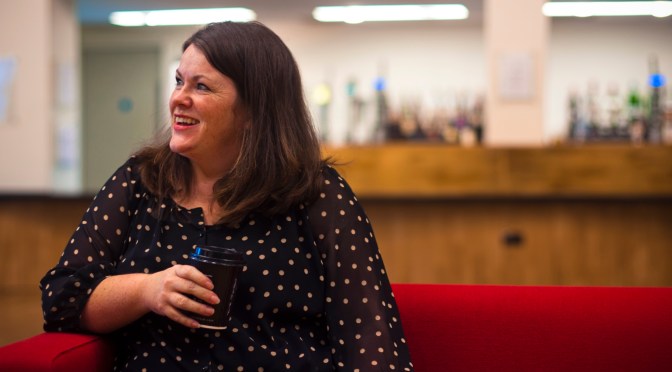
Lubi J was photographed in Roath by Doug Nicholls.

***


“Over the last 25 years, the Sherman has been a part of my life” – Katherine

katherine_chandler_web

I’ve lived in Cardiff for 42 years. So in thinking of a place that felt special to me, I had lots of choices. I love Donkey beach in Penarth, a secret little place under Penarth cliffs that my Nan and Gramps took me and my sister when we were little. I love the sea around Cardiff Bay and the docks. Bute Park, Roath Park, Victoria Park. Cardiff has good parks. I like sitting on Platform 7 on Central Station looking over to the Brains Brewery sign and the smell of the hops. I could have talked about lots of places that make Cardiff my home but I really wanted to talk about a place that has been part of my life for the last 25 years and I hope will continue to be so for the next 25 – Cardiff’s Sherman Cymru.

My first visit to the then Sherman Theatre was in 1985. I was 15 and had come on a school trip arranged by the English department to see Macbeth. I remember having to sit within hands reach of my teacher because my concentration wasn’t great and it was long. I was bored and fidgeting and desperately wanting to get back on the bus. When it ended I was relieved.

The next time I came to the Sherman was in 1987. I was being interviewed for a administration placement on a government Y.T.S. Scheme. I had left school with no qualifications to speak of so my choices were limited. I remember there was a matinee on. As I was lead backstage and down to the administration offices, various characters passed me by covered in copious amounts of blood, running from one side of stage to the other, backstage calls sounded out and dressing room doors opened briefly exposing a mixture of discarded costumes and everyday clothes. A blood curdling scream echoed through the maze of backstage corridors as I met the General Manager, ‘Sweeny Todd’ she smiled, ushering me in.

I began my placement the following week and my relationship with The Sherman Theatre began.

My placement was only for a year or so and as the end of the scheme approached I was dreading having to leave I felt like I’d found somewhere that I fitted. A permanent job came up in the finance department and I was offered the chance to stay. Although I worked in administration I spent all the time I could with the production team. I often volunteered to work on productions for the experience and did a lot of work for the Youth Theatre productions. It started to dawn on me that my heart was in the more creative roles in theatre and so after seven years I left the Sherman Theatre and went to Welsh College to train to be a Stage Manager.

Over the last 25 years or so the Sherman has been a part of my life. I’ve worked there and experienced making and watching some great theatre. This year Sherman Cymru are producing a play I’ve written called ‘Before It Rains’ and so my relationship with the building continues.

I couldn’t be prouder.

Katherine Chandler’s first play was a musical comedy called The Bankrupt Bride that was produced by Theatr na n’Óg in 2009 and toured nationally. She has had a long-standing relationship with the company and her play We Need Bees, a children’s play for the under-sevens, is currently on tour. As a writer, she has also had short plays produced by Dirty Protest and Spectacle Theatre. In 2011 one of her plays was selected by Pentabus Theatre as their We Are Here 2011 winning script and was developed in association with Sherman Cymru. Katherine is the recipient of an Arts Council Wales grant to write a new female-led comedy and is under commission from National Theatre Wales to develop a new piece of work with them. In early 2013 Katherine will be on a studio attachment at the National Theatre (England). Before It Rains runs at Sherman Cymru between 25 September – 6 October 2012. Katherine currently lives in Penarth.

Katherine was photographed at Sherman Cymru by Jon Pountney

***


“Life and Death In The Diffusion City” – Plangu

plangu_web
17:00

Step off train.

In Cardiff.

But am I Cardiff? Is Cardiff me?

One year to find out, one journey to commence.

Problem: where’s the exit?
Resolution: straight ahead, I should have seen it.

Walking.

Man: where is Platform 2?
Riposte: I am sorry, I don’t know. Are you on Facebook?

An awkward silence like moss on a Norweigan tree in June. Is this the Day of Thunder?

I feel lost. Draw me a metaphorical mind map and I’ll lay down on your molten train tracks.

17:15

Exit the train station.

Flashing neon lights of the Burger King. Fast food generation nation. I think of fresh cod and trout, but this ain’t no rainbow city.

Me: Excuse me, where can I see a map for directional advisement?
Man: You don’t need a map, you need a new hat.

A languid finger points to a direction collection encased in grimy glass and ripe for intro-outro-meta-spection.

I walk 5-10 meters. Symmetry achieved.

17:45

Walk walk walk, stop, walk walk, stop.

St Mary’s Street, carnival and revellers. Sundown smile, my vision becoming multi-peripheral.

An Asgardian clock encased in glass, tick tock tick tock. Time flies when you’re coke and rum.

Friday the day of wages.

Factory workers reminisce of steel shaping shifts, blackened hands and tankards of ale.

Estate agents close a sale, suits pinstriped and pressed for success at half past wine.

Boozer, the Borough, Yates the wine joint.

Our money is the all the same and the drink takes the blame… or close acquaintances.

Closer yet further still, to whit the steel worker motions to a call centre executive with a closed fist and stiffening shoulder ensemble.

Conflict in Cardiff. Welsh Warriors. Fear flights through the five boroughs but I see no painted baseball clowns, only enraged dragons wearing culture crowns.

18:40

Drunk and a stumble. The Isle of Hayes.

Waterstones has a buy one get one half price.

Reminder: I’m here to learn, academia awaits.

19:30

Roath. Elegant two bedroom apartment; both en suite, but who’s counting?

Full media connection, but I need to interface with me.

This year is my journey, I need to make Cardiff my city.

I bite into an apple and open my Mac.

An email for an internship; please sir, can I have some more? Disaster interaction: the editor vexed with my corrections of his holy words. My direct style of communication is not in relation to the egos borne of procrastination and Big Ideas.

Culture: what is it? I am a force for my own stylings; drip drip drop drop, I need a trip to the shop.

20:05

Open my journal.

Words spill like snow in the winter from the requisite clouds and their multiverse formations: Afraid. Excited. New. Old. Castle. Take away food. City. Capital. Uncle Torr.

Entrance to the scene.

Roommate: I am your roommate.
Me: I am your roommate.
Roommate: We are at A, let’s get to B.
Me: And then C and D.
Both: This feels right.

Nods and smiles and flowing conversation covering a complete collection of crazed recollection. Squared. Rooted. Rebooted. Nostalgia nightmares of animatronic bears.

22:09

Speech slurring, world whirring.

Roommate: How about that 2 Fast 2 Furious?
Me: Yes! I own it on digital video disk, truly the filet of the franchise.
Roommate: Bond now assured and let me be clear; we are friends in concrete absoluteness, to which cannot often be said over such brief interaction. Rare.

01:11

Walking home to Roath.

Roommate has long since expired ‘pon a corner of the castle. Grassy knoll, well don’t we all? Life and death in the Diffusion City.

I look up to the sky, the stars aligned I see Oslo, Norway.

Focussing my spiritual and atomic distribution here I am in Cardiff, Wales.

I access, accept, and assimilate my fate for one year less one month. A beautiful city with opportunity aplenty and unto much learning to be anything less than a fleeting yearning.

We Are Cardiff? Yes. Yes we certainly are.

A writer, poet, artist and polemicist, Plangu, originally from Oslo, Norway, resides in Roath where he is undertaking a year of study at Cardiff University. Plangu’s debut short story collection, ‘Grenene Av Våre Trær’, is due for publication in late 2013.

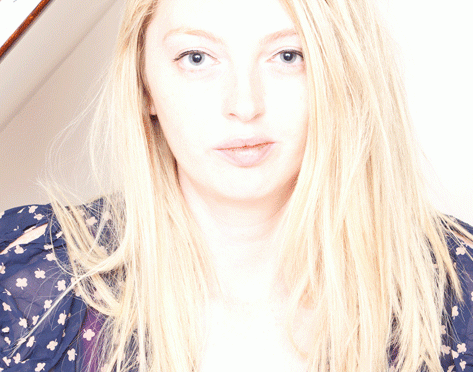
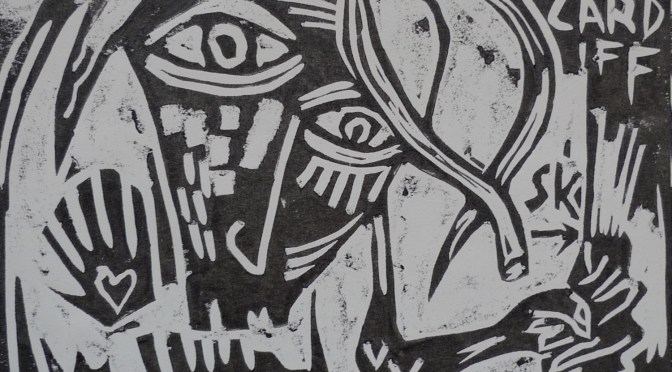
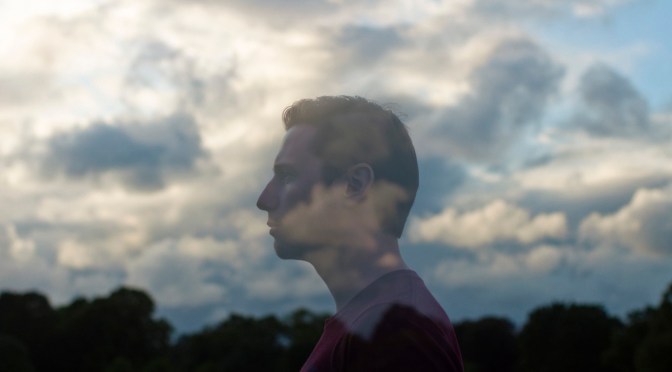
The image above is a self portrait by Plangu.

***

BAG YOURSELF SOME WE ARE CARDIFF SWAG! Visit our new online shop

We Are Cardiff on Facebook / Twitter @wearecardiff / We Are Cardiff: Portrait of a City documentary

“Cardiff is gentle, real and always grounded” – Amy

amy mcclelland

As I write this, I am sitting in my front room in Cathays. I can hear those seagulls we all hear on the roof and can smell “student cooking”. A thought comes into mind. No matter how hard the council tries to ‘Keep Cathays Tidy’ (and I know how hard they try) … it never really is tidy. I am starting to feel that somehow this is meant to be. Discarded pizza flyers and nibbled bin bags appear to be part of the shabby chic ephemera which typifies Cathays.

I love Cardiff. It is gentle, real and always grounded, no matter how many students, well-oiled rugby fans or naked cyclists pass through its streets.  When I tell people that I live in Cardiff, they always say ‘’I have heard that Cardiff is meant to be a great place to live’’. They are right. Having happily lived here for nearly ten years with my partner, I always speak extremely highly of this wonderful town. Where else in the British Isles can you walk in a beautiful park, see a man banging sticks on a bin, see absolute stag and hen hedonism, an Indian City Hall wedding and the delights of a Norwegian church all in one day?  Walking through Cardiff offers so many delights besides the great culture, architecture, museums and shops. If you look carefully enough, you may get to see its hidden treasures, like the teenage PDAs outside Blue Banana, the lady with the hat and black boots who spends hours dancing in front of buskers, the RAC man who seems to be everywhere, the religious preacher with his speakerphone or the almost edible kittens upstairs in the market. In Cardiff, no matter how crowded and busy things get, there is always somewhere for you to escape to. There is always a haven. One of my favorite havens in Cardiff has to be the ‘Summer House’ in Bute park. Just a five minute walk from my office or the town centre, it is the perfect place to sit and breathe, be it the middle of winter or the peak of our wet summers. Full of children with sticky fingers rushing around panting dogs, people getting lost in books and mums and dads on health kicks with bike helmets on, you can never be bored.

I first came to Cardiff to study Psychology in 2003. My sister loved it so I figured I would too. Being from Birmingham originally, Cardiff initially felt small and a bit old-fashioned. In my mind, I would stay for the three years of my degree and then go with my partner to somewhere more ‘exciting’. However, one night, as we walked under the bridge by the Hilton, my friend said ‘’Amy, I think you will find your Karma here’’. Little did I know, he would be absolutely right. I can’t see myself settling anywhere else anytime soon.

Cardiff has many wonderful resources. It is clever yet humble and gives often without wanting anything in return. May our wonderful town live on. Thanks Cardiff, you have been good to us.

Amy McClelland is a local Psychologist who runs the Cardiff Sleep Clinic ‘Sleep Wales’ and ‘Optimis Psychology’. Away from her office, she is a passionate linguist, likes singing, collecting her niece from nursery, yoga and spending free time in the College House chatting to Salvo, Dan and Michaela. Her favorite place in the world is the Blue Marlin in bar in Ibiza.

Amy was photographed in Bute Park by Lann Niziblian

***


“Cardiff’s buildings may change, but the feel of the city never does” – Bazz

bazz_web

That famous Thomas Wolfe quote – “you can’t go home again” – doesn’t really apply when you’re referring to Cardiff. Buildings may change, but the feel of the city never does.

When I was growing up, to take a trip down to Cardiff Bay seemed nothing short of ‘danger tourism’. It might just be my over-active imagination embellishing these memories, but the Docks were like the set of a post-apocalyptic film back then: derelict warehouses seemed to be everywhere. Now it’s one of the gems of South Wales: a hive of family-friendly activity as well as late-night revelry.

The Hayes, in the town centre, used to be where you went to get your bike fixed (Halfords), or your photos developed (Jessops, which had a little robotic man in its shop window that haunted my dreams for a worrying period of time). In late 2009, I came back from a long trip to Australia to discover the retail Mecca that is St David’s 2, built over that once-dreary site; a centre so impressive that people from as far afield as London prefer to come here to do their shopping.

The fear of missing out is a powerful one. If you’re coming back to this city after moving away, you’re not coming back to the small village where nothing ever changes; where everybody shops at the local petrol station. You’re coming back to a city where exciting things are happening, be it in sporting, cultural or business terms (or all three). I’m appreciative of the fact that I’m living in Cardiff at a time when it’s experiencing a renaissance.

Some people are quick to drop everything and leave for another city, or country, and in some cases that’s understandable. For me, I have cultivated many friendships over the years that I would find hard to turn my back on so easily. Many of these were formed at places such as the gym in Sophia Gardens, which hosts the richest tapestry of characters I’ve ever encountered. One of the more outlandish individuals is a Phil Collins lookalike who accessorises a skimpy leotard with a bumbag. I’ve made some great friends there (though not so much with Leotard Man, for obvious reasons), and the storylines that have emerged from within the four walls of a single weights room have convinced me that I will one day write a book on these people.

I went to Ysgol Gyfun Gymraeg Plasmawr in Fairwater. It’s an amazing school. There were only three years there when I started because it had gone from being a lower school to a new, standalone institution. It meant that everyone knew each other, which was definitely not the case in the rest of Cardiff’s huge schools. My little brother goes there now, and to hear of all the developments it’s undergone since I left (including, to my eternal jealousy, an astroturf pitch and a new gym) reinforces my belief that the Welsh language continues to grow in the city.

Most of my friends in their mid-twenties are teachers, and I realise that my teachers in Plasmawr – back then, all around the same age that I am now – were still finding their way; their experiences as educators were just as new as ours were as pupils and, on reflection, they did an impressive job. English classes were a highlight, and my teacher Mr Jones was an inspirational presence who had a profound effect on the path I chose upon leaving school.

I wasn’t the perfect student by any stretch of the imagination, and my friends and I were prone to the odd displays of smartarsery. In history class one day, our new teacher immediately regretted asking our disruptive group if one of us wanted to take the lesson, because one of us stood up and did just that. But those are the good memories you take with you.

Studying for my undergraduate degree in Aberystwyth some years ago, I encountered certain Welsh people from outside of South Wales from whom I got the impression they thought people from Cardiff were somehow ‘less Welsh’ than them. Now most of them live here. A microcosm of North Wales can even be found in Canton, adding to the melting pot (or, better yet, fruit salad) already inherent in Cardiff’s DNA.

Three years ago, I was lucky to be accepted into Cardiff University’s International Journalism Masters programme. In a large group of students, I was the only Welshman (and one of only three Brits) on the course, and the UN-like environment of the ‘newsroom’ was incredible. It was interesting to see these foreigners’ perceptions of my hometown too. Maybe they were just being polite, but they seemed utterly sincere when they told me they loved Cardiff. It was a unique experience at the Bute Building in Cathays Park.

My favourite part of Cardiff is the sprawling Pontcanna Fields. There aren’t many cities that can boast a park where you are literally surrounded in all directions by greenery, and it’s one of the prime examples of why the city is one of the greenest in Europe. You can even see Castell Coch from the fields, which emphasises Cardiff’s accessibility to other distinctly non-cosmopolitan regions. Whether I’m there walking the dog or running with my friend, this place has a calming effect on my soul.

As a youngster, I had no reason to go to Cathays or Roath – now I’m there regularly. It is the bohemian heart of the city, and the elite unit of Cardiff’s intelligentsia that is my quiz team has often been known to storm the competition at the magnificent Pear Tree bar on a Sunday. (In the past, we’ve been affectionately referred to as the ‘Seal Team 6’ of quiz teams – mostly by ourselves.)

I want to be here when Cardiff reaches its tipping point and gets the global recognition it deserves as one of Europe’s finest capital cities. It won’t be long.

Bazz Barrett works in PR and lives in Pontcanna. He blogs for therugbycity.wordpress.com, tweets as @bazzbarrett and can sometimes be found avoiding leotard-wearing Phil Collins lookalikes in the gym – a workout in itself.

Bazz was photographed at the War Memorial in Alexandra Gardens by Ffion Matthews

***


“This is still the place I want to be” – James

james-nee1-web

This is the place…

I’ve always thought there are two types of home: the one you have, and the one you want. Roath was definitely the latter for me. I moved here from Stoke in 2002 and straight away it felt right. In a short space of time I met an incredible group of friends, and this, together with my love of the city, gave me a sense of belonging. Aged 23 I thought this is the place I want to be.

Recently I’ve begin to question the choice I made 10 years ago. There are those friends who move away to bigger cities – some come back, some don’t. And there are those who never make the journey and ask themselves that meaningless question, what if? Big cities are naturally more conducive to creativity, offer more opportunities, and provide a bigger network to plug yourself into to find out what sparks, if any, may fly. Of course, you know this, but still, what if?

When I find myself thinking about this, I put on my running shoes and go to the one place I love more than any other in Cardiff – a home within a home – the Rec (aka the Roath Recreation Ground). I must have run, and walked, around this small park hundreds of times, and spent countless hours there lying under rare summer sun until my pale skin turns pink. It’s hard to convey why I love it – after all it’s just a park – bit if pressed I would say it’s a combination of the space and the skies above it. I’ve seen the most amazing sunsets, and formations of clouds and light, over the Rec. It may sound pretentious, but I feel like those skies have sheltered me over the years whenever I’ve been feeling low.

The final key ingredient that makes the Rec so great is the people who inhabit it. On any one night you can watch people playing rounders, rugby, football, cricket, or just reading, talking, and drinking until the sun goes down. It’s a reminder of how vibrant and eclectic this city is – I remember seeing one football game where each player wore the football top of their country of origin and no 2 shirts were alike. Having a garden is a luxury, but it’s not essential in Roath, as there is always the Rec.

When I’ve finished my run I always turn off my iPod and walk across the width of the Rec towards the Community Centre. I don’t think about work the next day, or what I’m going to do when I get home. I try not to think at all. Instead I just listen to the evening and look around me. It always gives me a sense of calm, and reminds me of how lucky I am to have this on my doorstep. Moments like this brush away all of my doubts and reaffirms that this is still the place I want to be.

James Nee works for The Festivals Company (where he directs the occasional promo and is the Director of ffresh) and is the creator of ernest – a collective of artists based in Roath who make short films and sketches. He currently lives in Roath.

James was photographed on Roath Recreation Ground by Jon Pountney

***


“Rhiwbina is a great place to see what community spirit is really like” – Beth

bethan-rees-web

You always realise how much you miss home when you leave. When you come back, you realise that home is the thing that’s been missing. When I left for university six years ago, I was relieved to leave home at home and get on with living somewhere else. However, coming back to Cardiff has been the best move I could have made. When you live here you don’t realise how great you really have it; with the fantastic range of things to do, mixture of places to visit and the friendliness of Welsh people. But there’s one place in Cardiff I class as ‘Home Sweet Home’.

If you’re looking for somewhere friendly, cute and a little bit different, I’m going to big Rhiwbina up to you.

Yes, it is thought of as being a slightly older person’s hang-out and yes, it may not be your first destination choice on a Saturday morning but there is a lot going on. Dr Who was filmed here, nostalgic festivals are held here and community spirit is second to none so why wouldn’t you want to visit?

Picture this…

It’s a miserable Saturday morning (let’s face it, the Welsh weather has been somewhat of a letdown) and you don’t fancy a venture into central Cardiff battling the crowds. Instead, you decide to take a trip to Rhiwbina to the north of the hustle and bustle. With the choice of Coco’s Hairdressers for a quick snip, Aquarius Revived for a nice beauty treatment and Fragrant 227 for a relaxing massage, you find you’re already feeling refreshed.

But all that spoiling and relaxation is hungry work … which is where the Olive Branch Cafe and Bookshop comes in. Friendly staff, a comfortable atmosphere and delicious Carrot Cake awaits you. This is always a first choice stop off for a bite to eat and a quirky Maltesar–based milkshake!

After you’ve had your fill of tasty homemade food and attractive lattes, take a stroll to Rhiwbina library to browse the display of books, have a walk around Caedelyn Park or why not see what vintage home shop The Nest has in stock? If, however, you’ve decided your day so far has been thirsty work, visit one of the many pubs in Rhiwbina like the Butcher’s Arms (where there’s a farmer’s market every Friday morning), The Deri Inn, The Mason’s Arms and The Nine Giants.

With excellent links to the city centre and only 10 minutes by foot to Whitchurch village (with its selection of nice eateries and shops), Rhiwbina is somewhere to spend more than an hour of your time and a great way to see what community spirit is really like.

Beth Rees is a keen writer, poet and film lover with a very sociable side. She loves meeting with friends, going to Zumba and sitting in her pyjamas with a big slice of cake after a hard day’s slog. She writes a poetry blog (http://shakespeares-sister.tumblr.com/) and would love to write her own book someday. Beth lives in Rhiwbina.

Beth was photographed at the Olive Branch in Rhiwbina by Kayleigh Ancrum

***


BAG YOURSELF SOME WE ARE CARDIFF SWAG! Visit our new online shop

We Are Cardiff on Facebook / Twitter @wearecardiff / We Are Cardiff: Portrait of a City documentary