Jenny moved to Cardiff … because of Human Traffic

This week’s up close and personal comes from an old raver who moved to Cardiff in 1999. Her inspiration: Justin Kerrigan’s clubtastic Cardiff-based flick, Human Traffic. Here’s Jenny to tell us more.

I can still remember the first time I saw Human Traffic. Sounds ridiculous, but that film changed my life. I was living in Exeter and I messed up my A level exams, and so ended up with shoddy grades, unable to get into any of my university choices. I only just managed to get into Reading, but I didn’t like Reading at all. Most of my friends were off travelling, and I just didn’t seem to click with anyone there. One night, my flatmates suggested we watch a film before we went out. One of them had this new film, Human Traffic, on video (VHS!!! Imagine). I’d heard vaguely about it but couldn’t afford to go to the cinema back then, so hadn’t seen it.

We watched the film in the communal area (which was basically the kitchen), all wrapped up in blankets, sitting on uncomfortable kitchen chairs, smoking spliffs and drinking beers, totally absorbed in the whirlwind 99 minutes of clubs, drugs, pubs, and parties, all set in this magical narnia called Cardiff. The soundtrack was amazing, the people seemed friendly, the city like a neon playground inviting you from club to house party, back to club.

I realise, obviously, that the film’s not without fault. The dialogue is clunky sometimes, the storyline abjectly ridiculous. But it’s not really about any of that, so none of that matters. It’s about capturing a moment in time. It’s about being a certain age, being part of a scene, when you might never have really belonged anywhere before. And by those standards, it might as well be Citizen Kane. That’s certainly how I felt about it.

Also Danny Dyer. It is most definitely about Danny Dyer.

I was super fed up with Reading, and my friend Pete was at uni in Cardiff, and so during the first term I bought myself a railcard and took the train there to visit. There was some event on at Solus in the student union – maybe Carl Cox, or something? The entire union was covered in camo netting – it was everywhere. By this point, drugs had entered my recreational lexicon. I hid the pills in my bra and we distributed them amongst us when we got in there. Pete’s flatmates came with us too, they were still in that slightly awkward initial freshers phase, where you sort of have to hang out together because you haven’t met your tribe yet, but they were all lovely, if awkward.

I was off my face, ended up snogging this cute blonde that lived in a student flat a few buildings away from them. The music was a mixture of trance and hard house. It was epic, driving music, with enough weird psychedelic sounds to keep your brain tweaking while you danced and stamped away, blissed out.

Pete and his flatmates ended up meeting loads of new friends that night – we all went back to someone else’s flat in Talybont South, where they produced endless amounts of weed and bongs, lungs, shotties. I never really liked weed so opted to just keep drinking booze and smoking fags. We hotboxed ourselves in that tiny living area until it started getting light, when we all stumbled back to Pete’s flat, shading our eyes from the dazzling October skies.

We couldn’t sleep, of course, so after a few hours fitfully rolling around on the floor, Pete decided we needed a fry up and then to go back to the pub. We didn’t bother showering – I think I just about managed to brush my teeth – and back out into the wilds we went, all wearing sunglasses, clutching cans of Oranjeboom, heading up to Cathays to The Warm As Toast Cafe (Twat … RIP!) for ‘breakfast’.

After we’d managed to hold down the food, Pete started getting a second wind. We headed for the nearest pub – can’t remember which one it was now, one on the way into town. It might have been Inncognito, which later became Cardiff Arts Institute. It was late afternoon by this point and they had DJs setting up in there. We alternated between pitchers of beer and pitchers of cocktails, and although it’s almost impossible to get pissed the day after a massive session, the day-after drinking always felt so nice: like a big cushion around your come down. (I would find out years later was actual real come downs were like: when you’ve got an unforgiving 9-5 and you haven’t slept all weekend and by Wednesday you think everyone hates you and wtf does your life mean and literally want to fall into a hole and die).

Feeling slightly more sprightly, we decided to head into town. It was only about 5pm at this point and all the shops were still open, so I got a whistle stop tour of the most important independents: Hobos, for natty threads; Catapult, for all your dance music; and Spillers, for indie, rock, and everything else. I bought a London Elektricity CD from Catapult (I still have it!) and a Spillers t shirt which I wore over my shirt for the rest of that night.

We went for a burger in the Gatekeeper, and Pete bumped into some friends from his course, who were heading into Clwb Ifor Bach, which really was a ‘Welsh club’ back then: we were only allowed in as we went in with some Welsh speakers, and I got given a membership card to sign that promised that I was learning Welsh (something I’ve still not managed to master, despite having lived here for nearly 20 years now – good job they don’t check up on you anymore).

The night gets hazy after that. Endless trips to the damp loos, as Pete got some charlie off someone in the queue. Sneakily smoking spliff on the dancefloor. I can’t even remember what the music was now, maybe some sort of indie night. The crowd was completely different though. Fewer students. More young professionals.

We got to bed around 2am and slept til about 3pm. I woke up already late for my train, and had to get a taxi to the station. I made it with seconds to spare. I got a Burger King when I was back in Reading and slept through all of my Monday lectures.

And that was the first of many such weekends in Cardiff. I was back in Cardiff every weekend during that first term. I bumped into Meic again (the blonde guy I’d snogged that first night), and soon we were an item. Eventually realised there was no point in travelling back and forth all the time. My heart was in Cardiff. Not necessarily with Meic – we split up after a few months – but in the city. Pete moved in with his girlfriend so I took his room and moved in with his flatmates. Turns out we were a tribe all along!

I thought I might apply to Cardiff Uni, but my grades hadn’t been great, and I didn’t really know what I wanted to do – I just knew I was much happier doing anything in Cardiff than I had been in Reading or back in Devon.

I gave up on the idea of uni altogether and started working. Like lots of people, I guess, I was temping, doing all sorts of different things, and then just sort of fell into working in events. I think I got to have the best of both worlds, back then: I hung out with students all the time. I even went to a couple of lectures, just to see if I’d enjoy it. But I didn’t really.

My memories of those days revolve around the nightlife. I made so many good friends on nights out – people I’m still close to now. Friendships forged in sweaty hugs and toilets and on dancefloors across the city. I even ended up meeting some people that had been extras in Human Traffic itself – extras in the house party scenes towards the end. They told me they’d wanted to make it as realistic as possible, so they were all smoking spliffs and drinking beers. TRUTH.

The venues were key. The Emporium, for example – where I spent so many nights – was where part of Human Traffic was filmed. You can even see some of its posters in the background of the scene where Jon Simm tries to blag his way into the club – apparently this scene was shot in the manager’s office.

Then there was Welsh Club. The Toucan. The Hippo. The Model Inn. Club M. Club X. Gretzskys. Metros. Apocalypse or Vision  or whatever it was called by  the end (it then turned into Primark … and is now some other high street chain shop). The Student Union – Solus upstairs, and Seren Las downstairs. The Philharmonic. Evolution and the party bus from town to the bay. Barfly. Sugar. Moloko. The Point. There was some place behind a fancy dress shop on Clifton Street we’d go to for after hours parties. And we used to go to everything: techno, drum & bass, the reggae parties down the Bay. Hard house was more of a push for me but I’d still go.

There were some nights we wouldn’t leave the house until midnight. These days I can’t remember the last time I was even awake at midnight without there being a baby crying or a dog with the runs demanding to be let out of the house. How things change!

Venues open and close. Unless you were around Cardiff at the start of the 2000s, you probably don’t even recognise half those places I’m talking about. The union is all coffee shops now. I read something recently about how students and young people don’t rave or drink or take drugs anymore, and it made me sort of sad, double sad, for them – that they won’t experience all those amazing things – but also myself. I miss those days. I miss being young and carefree and not having kids or a mortgage to worry about and being able to spend all night roaming around the city, smoking rollies with tramps and going back to random houses for parties.

Don’t get me wrong, I wouldn’t change my life now for the world. I just wish I’d revelled in those days, in that time a bit more. Also it was a weird time in terms of the internet – right early days, so it’s not like I can just flick through Facebook albums whenever I feel nostalgic. I barely had a mobile phone at that time, and I certainly didn’t have a digital camera until nearly a decade later.

As for Human Traffic now? I actually haven’t watched the film in ages. It’s a treat that I save up for myself when I’m poorly. I love doing that really boring thing of “I know where that is!” when they’re in some of the outdoor scenes. And I know I’m not the only one that really loves it: because I still see articles about the filming locations or interviews with Justin Kerrigan popping up every so often.

***

Jenny Jones is an events manager who dreams fondly of her youth. She currently lives in Fairwater.

Wanna read more?

Peas

Over 1000 properties lay empty in Cardiff

Data journalist Dan Clark continues his series of investigations for us: today, he looks into the number of empty properties in the capital.

A total of 1,318 private sector properties in Cardiff laid vacant in the last financial year (2015/16), according to new figures released by the council. Currently in the city, almost one in every 50 properties is vacant. Across the whole of Wales, there are 23,000 private properties that lie empty, a figure which has risen from 19,612 in 2012-13.

The Cardiff data, published in response to a freedom of information request, shows that 166 homes have been empty for over 5 years and 39 for over 10 years. Grangetown was the parish with the highest volume of vacant properties, recording 233, although it wasn’t clear from the response why it was so high here.

Furthermore, as of June 2016, there are 205 empty council properties. The most popular categorisation of these are ‘routine voids’ (77 per cent), followed by ‘low demand’ (5 per cent). Properties classified as ‘routine voids’ refers to empty homes that require minor repairs and safety checks.

Apologies for the stats overload, but your basic take away from this is that Cardiff has a lot of empty properties. My first thought was that perhaps the demand just wasn’t there for them, but that couldn’t be further from the truth. As of 1 January 2017, there were 7,893 applicants on the Council’s housing waiting list.

So, what is being done? Cardiff Council have a scheme called the ‘Housing Enforcement Empty Property Policy‘, designed to help tackle the issue. Two of their main objectives are:

  • To bring back into use as many empty properties as possible
  • To limit the effect of empty properties on the Community, Council and Owner

According to figures published in the policy, the Council are currently returning an average of 62 vacant properties a year back into use. Some of the reasons cited as to why they become vacant in the first place include, dilapidation, abandonment, unresolved ownership, property holding and care holding.

Earlier this year, plans were passed for a new £2bn “garden village” on the outskirts of the city. As part of this, almost 6,000 new homes would be built. Of that number (5,970 homes), 30 per cent would be affordable housing – half of that being social rented homes and half low cost homes. But that’s still only around 1,800 homes in total, with no further details that might help people on that housing waiting list.

Having investigated the number of empty homes that already exist within the city, building so many new ones seems like an unnecessary cost. Would it not be more beneficial to spend more resource on the empty properties policy first and increase the number being brought back into use each year?

Michelle Collins manages the Empty Homes Wales project by United Welsh, a not-for-profit social landlord with over 25 years of experience in housing and development.

She said: “Seeing homes that are left empty to go into disrepair stirs up many emotions and feelings, especially at a time when Wales has a housing crisis, with 12,000 new homes needed each year to meet current demand.

“Transforming empty homes into habitable spaces is an innovative way to provide much-needed homes and help homeowners to protect their assets.”

Refurbishing a property may seem daunting, but help is available. The Empty Homes Wales project uses an innovative leasing model that doesn’t require any financial outlay from the homeowner.

Empty Homes Wales leases properties to recoup the cost of the refurbishment, then it’s up to the homeowner – United Welsh can carry on leasing the house on your behalf, you can rent it yourself, or sell up. The rental income received during the term of the lease is used to cover the cost of the refurbishment work.

Michelle added: “We work in partnership with homeowners to overcome any barriers they may face, such as inexperience of leasing property or lack of information around refurbishment standards or contractors.”

More information on housing in Cardiff:

***


Catch this family friendly Cardiff Christmas show, made by feminist theatre pioneers: The Giant Who Had No Heart In His Body

If you’re looking for some heartwarming, family friendly theatre to warm your cockles before the big C hits this year, head to Chapter on Friday 22 and Saturday 23 December! Likely Story Theatre’s newest work – The Giant Who Had No Heart In His Body – includes grand tales of adventure, once forgotten fables, and that anecdote your uncle always tells at Christmas. No matter what they are about, stories can’t just be told – they have to be caught. Thankfully story catchers Agi and Dot are doing just that. Watching from their home in the clouds, they scout the sky for stories and catch them before they float away on the wind. Now the pair face something they’ve never faced before: telling their own story. Will they be able to pull it off? Only time will tell…

This is a lovely Christmas show that takes on an Norwegian fairytale using a magical mix of puppetry, live music and humour. GET YOUR KIDS THERE (grown up ones too!), THEY WILL LOVE IT.

WHEN AND WHERE
Friday 22nd December, 6pm (British Sign Language interpreted performance) &
Sat 23rd December, 11.30am and 3.30pm.
Chapter Arts Centre, Market Rd, Cardiff, CF5 1QE Tickets: £5 / £17 family ticket (4 tickets including at least 1 child)
Info: www.likelystory.org.uk
Tickets: www.chapter.org


This heart-warming show was created by Likely Story’s founders Hazel Anderson and Ellen Groves, with the help of their young children.

“We were developing a piece with my son Toby in the room,” Hazel explains, “we were playing with ideas and getting really excited when Toby started to cry because we’d left him, our audience, behind. We did the piece again but, this time, we built up the energy more slowly and bought him with us. It meant we created a scene with a completely different feel.

“It was a good reminder that the audience wants you to play with them, not just for them.”

Motherhood hasn’t just had an effect on this particular show, however, as Likely Story acts as a flagship company that demonstrates how creative organisations can foster the talent of mothers, and how people can create theatre as a family.

“In a professional setting you so often feel like you need to apologise for your kids being in the room,” says Ellen “now we’ve changed that from being seen as a burden, to being a gift.”

With both kids and grown-ups helping to shape The Giant Who Had No Heart In His Body – and with tickets only £5pp or £17 for a family of four – the entire family can see a show that is just as funny and fascinating for the over 70s as the under 7s.

“In the mix of a very commercialized Christmas, this is a show that aims to bring families closer together with play, love and lightness. It’s a show that is created with a lot of everyday objects, so that families can play and recreate it at home” says Ellen.

Hazel explains: “It’s a show that kids will laugh at, adults will laugh at, and they will both laugh at each other laughing.”

Likely Story Theatre was founded in 2006 by likely ladies Hazel Anderson and Ellen Groves. It was created on the simple philosophy that the women shared: the belief that storytelling is magical and that stories are best brought to life through the imaginative use of ourselves and everyday objects.

***

Writing the city: a Cardiff love story

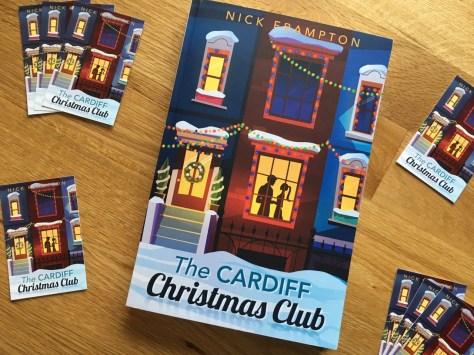
Writer Nick Frampton talks to us about his life in Cardiff, moving to the city for the first time and why he decided to set his novel The Cardiff Christmas Club here.

I first moved to Cardiff at age 22 to study for my master’s degree. Like many people I fell in love with the city and ended up staying long after my degree was finished with.

Some 12 years on, Cardiff is still the largest city I’ve ever lived in. I grew up in a small village in Devon and before Cardiff the only other city I’d lived in was Durham, where I went to university. Of course I say ‘city’ but Durham is in many ways simply a town with a beautiful cathedral. It’s less than a third of the size of Cardiff and rarely feels busy – it’s a sleepy place populated almost entirely by students.

To many, Cardiff is a small city — even I can recognise that. I love that you can easily walk from one end to the other, and that with the exception of match days— and the annual Christmas shopping frenzy— it rarely feels crowded. But to me, it still feels large.

I love the excitement of cities: the ready availability of bars, theatres and shops. Growing up in a village with only a church, a sawmill and a long closed post-office for entertainment, even a nearby corner shop still seems decadent. But the vastness of cities is strange to me. I know a lot of people in Cardiff, but can still walk around without seeing anyone I recognise. In the village I grew up in, people stop and talk to me for no other reason than I look exactly like my dad, a man who at one stage or another would have taught them or their children. It’s a different world, and even after 34 years of it, it still seems that way to me.

When I started writing, cities became an unexpected theme throughout my work.  My first novel The River was a fantasy title set in a world where humans are born fully formed in the waters of an enormous river. The first place people run to is known simply as The City, and it is a place of shelter and safety, but also hidden danger.  Soon after I wrote a dystopian short story Adam 0532, where the boundaries of a futuristic city became the means through which the population is controlled.

When I decided to venture into the real world and write a romance novel, my first thought was where can I set this? Fiction, like film, is dominated by the big hitters; London, Paris, New York, San Francisco. Just as aliens are only interested in destroying the Golden Gate Bridge, the Eiffel Tower and Big Ben in disaster movies, we’re sold the same idea on love. Fictional love is largely the domain of far-off cities, full of mystery and adventure. It’s that or sleepy English villages much like the one I grew up in. Where according to every TV detective show I’ve ever seen, I’m a statistical miracle having not been murdered by the age of 18 collapsed face first in to a Victoria sponge.

Setting my book in Cardiff felt like a sweet (if tiny) rebellion; a proud middle finger to our London-centric society. Life does go on outside the M25 and actually it’s rather good. I’ve always thought of Cardiff as a fun city; somewhere people know how to enjoy themselves. We work hard here, but work isn’t everything and that’s something I like to channel in life as well as in my writing.

The Cardiff Christmas Club has Cardiff at the heart of the novel. The characters met here in university and simply stayed, as many – myself included – have done. There’s a lot in the book that will be familiar to Cardiff residents; like the joy of running over the bouncy footbridge into the wide expanse of Bute Park, stumbling down Chippy Alley takeaway in hand, ice skating at Winter Wonderland and watching the sunset in the bay.

After spending a few years writing about fantasy cities, full of danger and deity-rivers, writing about a city I lived in for over a decade was actually a relief. Rather than agonising over how a street might look for hours, being able to just look it up on Google Maps certainly made my life easier.  My husband’s obsession with moving flats also helped. In the four years we lived together in Cardiff we moved four times. Over the years I’ve lived in Cathays, Roath, Butetown, Canton and Pontcanna; and so finding homes for my characters was a breeze.

Cardiff also has a lot of really unique features that are a dream to write about. My lead character Katy loves the city’s arcades and has always dreamed of living in a house with the Victorian tile and checkerboard hallway so distinctive to Cardiff. I guess writing about somewhere you love it’s easy to put a lot of yourself in to a character. Sometimes more than you realise until you read it back! I hope when people read the book they have that same feeling of rediscovering their city through a character’s eyes.

***

After just over a decade living in Cardiff, Nick now lives with his husband in a village of 500 people in Devon. But Nick still returns to Cardiff often.

The Cardiff Christmas Club is Nick’s second novel and is available as a paperback from Amazon and as an eBook from all major eBook retailers. 

The novel tells the story of Katy Winters, who finds herself at the centre of a love-triangle between ex-boyfriend David and handsome farmer Rhodri; a member of the newly formed Cardiff Christmas Club.

We think it might make a great gift for that special someone in your life … find out more:

Aaaand the usual from us:

The number of homeless people in Cardiff is on the rise

This is data journalism student Dan Clark’s first in a series of investigative pieces for We Are Cardiff: looking into the number of homeless people in Cardiff.

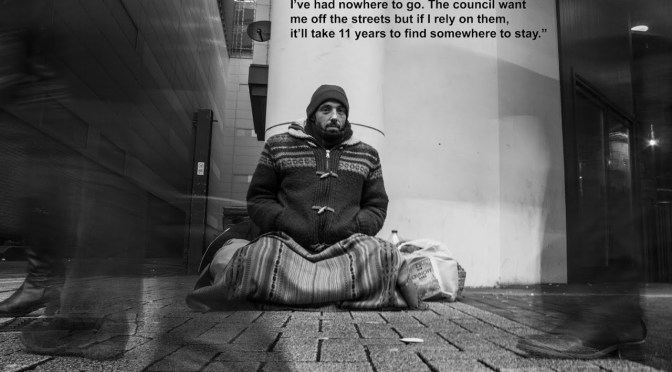
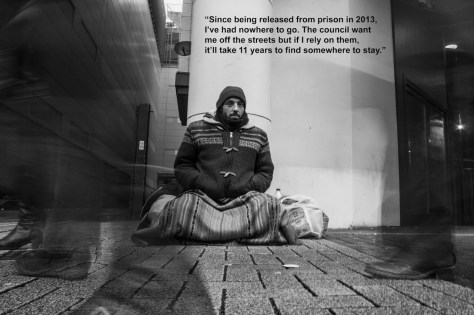
Photo by Ben Blyth Photography, from his Behind the Streets project

The number of people sleeping rough in Cardiff has increased by 18 per cent from this time last year, according to statistics released by The Wallich homeless charity.

Monitoring of rough sleepers was undertaken by Rough Sleepers Intervention Teams (RSITs) working for the charity.

For those of us who live in Cardiff, the problems surrounding homelessness are obvious. It is almost impossible to walk through the city centre and go more than five minutes before spotting a rough sleeper. From a personal point of view, since moving to the city in 2016, the noticeable increase has been undeniable.

As you can see, the number of rough sleepers being supported is increasing, which has consequences. A Freedom of Information Act request to Cardiff council revealed that between 1 January 2015 – 15 May 2017, a total of 19 homeless people died on Cardiff’s streets.

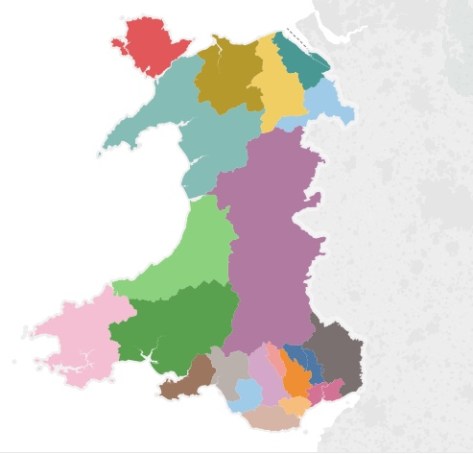
Cardiff’s problems appear at the national level, with the number of rough sleepers having increased in almost all local authorities over a 12-month period. The data, collected by RSITs and released by the Welsh Government, gives a one night snapshot of those sleeping rough across Wales. The below map shows the year-on-year comparison in individual local authorities: click on it to explore the statistics.

I spoke to George, 32, who is a former factory worker and has been homeless for just over 2 years. “I lost my job and just couldn’t afford the rent. In the end, I had no one else to turn to so ended up on the streets”.

Asked whether he believed that the number of rough sleepers had increased, he answered: “It certainly does seem that way”. George went onto clarify that he couldn’t say for certain if it had in Cardiff specifically, as he often drifted from city to city, and had not been in Cardiff long.

George added that the kindness of charities and the public is always appreciated, however small those gestures may be: “It might not seem like much to normal people, but something as simple as a warm meal or a thick duvet is seen as a luxury to us lot. Something small can help improve your mood and make the day seem a bit brighter”.

On 27 October, the Wallich was lucky enough to partner with mattress retailer Leesa Sleep, who donated 40 brand-new mattresses to two of its Cardiff hostels. International Welsh rugby player George North and World Champion Cyclist Becky James who are ambassadors for the charity also attended the event.

Mike Walmsley is Corporate Fundraising Manager for The Wallich. “We are so grateful to Leesa for this incredible donation and to Becky and George for taking the time to visit our hostel and speak to our residents,” he says. “A lot of our people will have had to ‘make-do’ for a long time with second hand clothes, charity shop furniture and food bank vouchers. Some rough sleepers may not have slept in a bed for months. Having something brand-new that gives someone a good night’s sleep shows a person that they are valued and that they deserve nice things. This has a positive impact in helping someone back on their feet after experiencing homelessness.”

If you’d like to do something to help homeless people in Cardiff this Christmas, we wrote this handy guide:

Dan Clark is currently studying for a Masters in Computational and Data Journalism at Cardiff University. He moved to the city in 2016 and since then has fallen in love with the place. Thanks Dan!

***


Roath Farmers Market

If you’re after fresh produce in Roath, the Farmers Market is the place to head to. Great prices, local producers – each week you’ll find up to 30 producers selling the best in fresh, local Welsh and organic food. Photojournalist Veronika Merkova went along to snap some of the treats on offer.

If you’re hungry, you’ll also find delicious home-made ‘world’ foods representing the diversity of Cardiff, from bread and cakes, fish and meat, flowers and fruit and veg, to farmhouse cheese and Welsh organic whisky – the first certified organic whisky in the world.

Roath Market

Every Saturday 9.30am – 1pm
Mackintosh Sports Club, Keppoch Street

CF24 3JW (opposite Gate Arts Centre)

Veronika says: “Visiting the farmers markets around Cardiff was a great experience as I found it an alternative that is needed. We have big chains and supermarket sourcing our food and we usually don’t know where they come from as well as the quality isn’t the best that we can get. I was very excited to see the range of vegetables and fruits that the farmers provide. The actual quality was amazing too and the taste was nothing like shopping from a super market. It is also a very nice feeling of supporting the local community. Both Roath market, even tho a little bit smaller, and Riverside market were full of stalls and lovely people that would be happy to tell you all about their product.”

See the full photoshoot at our Facebook page: We Are Cardiff – Roath Market photo gallery

More info: Roath Market

***


Cardiff’s birds: autumn migrations

Rowan Dent writes for us about autumn migrations and the birds in Cardiff.

Pied wagtail

Autumn in Cardiff sees the city filled with birds returning from a feast of butterflies and berries in northern Europe and Asia. Like me, they are strangers to the city but seem to know where to make their home.

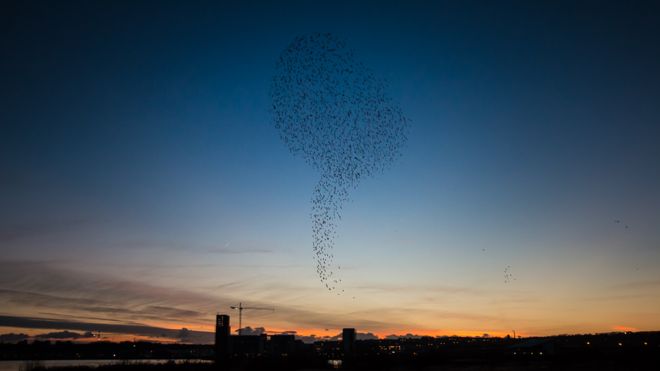
Come winter, even the centre of Cardiff becomes host to little pockets of wildlife. Pied wagtails roost in the clogged gutters and chrome-plated arms of Cardiff city centre’s newest buildings on the Hayes. Dark-eyed Canada geese can be found in Roath Lake. Take a stroll through the red-gold trees of Bute Park to Blackweir and you might be lucky enough to spot a few lusty sea salmon leaping upstream as starlings create magic eye patterns with their sculptural murmurations.

https://www.instagram.com/p/Bab1TSsDXtx/?taken-at=798401977

If you venture a little further afield the rewards can be surprising. At Lavernock Point 8km south of Cardiff, you can spot rare migratory birds like fieldfares and redwings across the Bristol Channel (not far from where the Welsh government is threatening to dump 300,000 tonnes of radioactive mud dredged from Hinkley Point).

Curlews, redshanks, dunlins and oystercatchers feed on Newport Wetlands, using their elegant pointy beaks to sift through the mud for worms and grubs. I’ve never heard them but twitchers claim that at Cosmeston Lakes just outside Penarth you can hear the eerie booming of bitterns at dusk.

This extraordinary hejira is an ancient phenomenon. 3,000 years ago, Homer and Aristotle noted that birds fly across the seas every winter and the ancient world was filled with fanciful ideas about where they went. Aristotle and his students believed that swallows hibernated, for example. Or that the birds that arrived for the winter were the very same birds they had seen all summer long, just wearing a muted winter wardrobe.

The magnificently entitled 1703 pamphlet “An Essay toward the Probable Solution of this Question: Whence come the Stork and the Turtledove, the Crane, and the Swallow, when they Know and Observe the Appointed Time of their Coming” claimed that when birds disappeared in autumn, they went very far away. About 384,400 km away in fact. To the moon.

Since then, ornithologists have used tracking devices to uncover the web-like paths of migration across the world. Navigating by the stars, magnetic fields and polarized light patterns invisible to humans, migratory birds follow a complex internal map which enables them to cross oceans and continents without getting lost.

When the time comes to migrate, many birds enter a stage of hyperphagia, where hormones compel them to store extra fat to use as energy while travelling. Some bird species double their body weight in the weeks leading up to migration. Even caged migratory birds will start to anxiously look in the direction of their eventual destination. It might be the lengthening of days or the cooling air, but somehow they know it’s time to leave. There’s even a word for this in German: Zugunruhe, literally ‘journey disquiet’.

Murmuration of starlings over Cardiff bay wetlands reserve at sunset / Nick Dallimore

And as they take to the skies, flocks create elaborate strategies to protect each other from predation and exhaustion, keeping the youngest birds safe in the middle as the older ones take turns at the front where the going is toughest. Curiously, migratory birds actually have smaller brains than resident species, proving once and for all that bigger isn’t always better. As well as using magnetic fields and natural landmarks, they can even smell when its time to land. Migratory birds know no borders. Home is where there is food, space, sanctuary.

As I settle into my new nest in a city which is both foreign and familiar to me, I am comforted by the chatter of our northern visitors. It seems to me like a glorious gift – even as the days grow dark and bitter cold our skies and seas are filled with fireworks of feathers and song.

Rowan Dent is a freelance copywriter and poet who likes pigs, Oxford commas, and origin myths. She lives in Canton with her partner and a garden of baby vegetables.

***

The history of Clarence Bridge and William Harpur

My latest post for Caught By The River was published recently, for my Wandering the River Taff column. In it, I explored the history of Clarence Bridge, which connects the wards of Butetown and Grangetown. I always end up doing about ten thousand percent more research than I can fit in the columns, so get ready for all the interesting extra bits I couldn’t cram in.

The basic history of the bridge is documented in the piece:

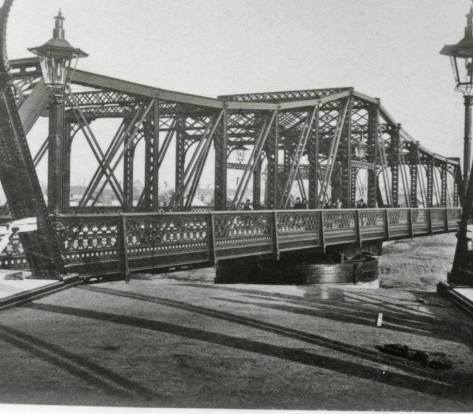
A wooden swing bridge went over the Taff, about a hundred or so metres south of where the bridge is today, joining ‘Lower Grangetown’ to the Docks. This bridge connected the areas from 1861 to 1890 – the period when the docks started booming. Increasing numbers of people started using the bridge to get to work from Grangetown, but the Taff Vale Railway Co leased the bridge privately, and started charging for its use.

(Map: Glamorgan XLVII, surveyed: 1878 to 1879. Published: 1885)

Towards the top right of the picture, you’ll see James Street running horizontally across (it’s where you’ll find the police station today). If you stretch that line out directly to the left, you’ll find the current location of Clarence Bridge.

I did quote from the wonderful Grangetown Cardiff’s history section in my column, but I didn’t manage to get all the details in. On the day they introduced the toll, local residents rioted and threw the bridge’s gate off its hinges and threw it in the river.

The Times reported that 1,000 men took part in the protests each day against the railway company. There had been “upmost good humour” for the most part, as 200 police stood by, but then there was direct action. “They rushed at the newly-erected toll gate and tore it from its hinges, throwing the structure in the river.” The first gate was replaced the following day, as well as a sentry box for the toll-keeper. The toll house was also damaged. The paper later publishes court reports of three men who were arrested for causing the damage, costing £5 – Cornelius Dacey, William Smith and William Webb, all under 23. Police were also after another man called William Drew, who was heard to shout “Go it boys, that’s right, pull it off!” The court was told of “200 armed navvies with iron bars up their sleeves.” The three were found guilty and the judge expressed sorrow at having to sentence them to a month’s hard labour.

Eventually the Cardiff Corporation relented to the chaos and built two proper public access bridges – Clarence Bridge, which spanned the River Taff, and the James Street Bridge, which spanned the Glamorganshire Canal. You can see both these bridges appearing in maps from 1898 onwards. Also note the original wooden swing bridge has disappeared – been dismantled by this point, leaving Hamadryad Road cut off abruptly by the Taff.

(Map:Sheet 263 – Cardiff (Outline) Published: 1898)

If you want to see the location of the original wooden bridge, head to Hamadryad Road on the Butetown side. You can’t reach the Taff directly as there’s a big fence up, but if you face the water, you’ll be standing roughly where that original bridge was – well over 100 years ago. It had cost £60,000 when it was originally built.

Grace’s Guide shows the original plans for the bridge, which was designed by William Harpur. I’d never heard of him before, but turns out he’s a fairly important figure in Cardiff’s modern history.

Some more lovely photos that were posted in the Cardiff – Now and Then Facebook Group by David Lawson:

Clarence Bridge construction, 1898


The original Clarence Bridge, mid swing

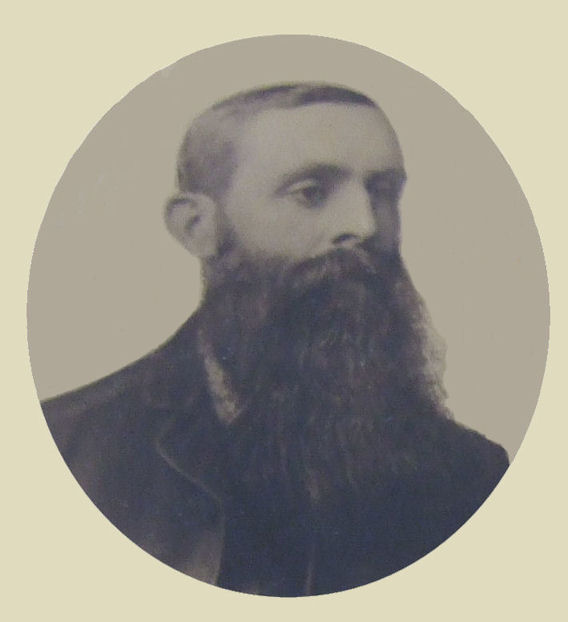
William Harpur, the bridge’s engineer, is not really a household name, but modern Cardiff has his fingerprints all over it. He was appointed Borough Surveyor in 1883, and as such had final and ultimate say over all proposed street layouts and individual buildings that were going up through the city’s boom years.

If you’ve walked down Castle Street, visited Cardiff Indoor Market, or been to Roath or Victoria Parks, you’ll have first hand experience of his work. There’s also the civic centre at Cathays Park, the widening of the Hayes and Working Street. He built the city’s first municipal hospital (the Hospital for Infectious Diseases – later Landsdowne Hospital) and also the Pumping Station – now an antiques market.

Harpur was also engineer to the tramways department, and carried out the construction of the track for the electric cars. As his obituary so delicately puts it, his mark is left on the lay-out of every inch of modern Cardiff: all the plans of new roads, buildings, bridges etc having had to receive his approval.

William Harpur – 1853-1917, Cardiff city engineer and surveyor

Bit of a hero, William Harpur. Good beard too.

Read all of my entries about the Taff in my Caught By The River column

***

How to help Cardiff’s homeless people: Christmas 2017 edition

Over the past couple of years, the incredible Project Shoebox has gathered hundreds of boxes from you generous people to gift during the cold winter months. This year Project Shoebox isn’t running again, HOWEVER, some charities that support homeless and vulnerable people are running their own collections. So you can still donate and support. Also big thanks to Mali who has tirelessly pushed Project Shoebox in the city. Much respect.

There’s plenty to show the number of homeless people in Cardiff and across the UK is increasing. The Wallich publish figures of the number of people they support on a monthly basis, and while this isn’t an absolute figure, you can see the rough trend.

You can find out more and donate money to the Wallich here: https://thewallich.com/donate/

If you would like to donate money to Women’s Aid, you can do so here: https://www.justgiving.com/cardiffwomensaid

You can also donate directly to The Huggard Centre: http://www.huggard.org.uk/how-you-can-help/donate/

Llamau are collecting gifts and care packages. Gifts can be dropped off at the Llamau office Mon-Thur 9-5 and Fri 9-4.30, with a cut-off date around the 11th December.

Llamau head office address: 23 Cathedral Road, Cardiff, CF11 9HA (029 2023 9585)

Here’s what’s on Llamau’s Christmas wish list: feel free to buy other things, if you think they would be suitable. Llamau support men aged 16-24, women of all ages, and children up to age 16.

  • Sweets/chocolates/biscuits
  • Watercolour painting set
  • Adult colouring books
  • Stationery/pens/pencils/folders/colouring pencils
  • Calendars/diaries
  • Cook books
  • Hairdryer/brushes/hair accessories
  • Men’s toiletries
  • Perfume/aftershave
  • Women’s Toiletries/bath fizzers
  • Make up/nail varnish
  • Socks/beanies/scarves/gloves/umbrellas
  • Pyjamas/slippers
  • Headphones
  • Purses/wallets/backpacks
  • Hot water bottle
  • Soft furnishings/cushions/photo frames
  • Small alarm clock
  • Cookware
  • Children’s toys/ books/pyjamas/games/puzzle books

Maybe get some inspiration from this homeless care package:

If you have any other details of ways people can support homeless and vulnerable people this Christmas, please leave a comment below and share this article.

Peas

WACx

***

The man who ate Cardiff

Lee Eynon of Füüdblog tells us how he ate Cardiff.

It all started as a terrible mistake.

The novelty of Man Vs Food hadn’t worn off yet, and me and Pete thought we could handle the (now defunct) North Star pub’s giant burger challenge.

It was a very, very big burger. The size of a dozen quarter pounders.

After half an hour of glumly shovelling room temperature grey mince into our mouths we finally realised how wrong we were. While our respective other halves tried not to dwell too much on the terrible relationship choices that had led them there, I came to a realisation; food can be funny.

That’s how Füüdblog was born. I wrote about the experience of debasing myself with that sofa-cushion-sized behemoth of a burger to get a laugh – and it worked.

Cut to four years later and it’s been a bit of a ride. I’ve found myself invited to restaurant openings, quoted on WalesOnline, judging a sandwich competition, becoming embroiled in the odd Twitter barney and even helping brew a beer.

I’ve also experienced a new side to the city I call home, and I’m grateful for that.

People can be a bit down on the Cardiff food scene. It’s true that we’ll never be a London – we won’t even be a Bristol for a few years yet; there are too many boring chains in the city centre, we don’t have a Michelin Star standard restaurant and yes, we’re all a bit tired of new burger places.

But our food scene does have passion, guts and an incredible collaborative spirit.

Maybe it’s born of being such a small city, but everywhere I look I see small Cardiff food and drink businesses working together, pooling their skills and knowledge and trying out new things, whether they’re breweries, bakeries, butchers or bars.

Meeting the people who make up this amazing, ballsy, giving community is by far the most rewarding thing about food blogging in Cardiff.

Our local food and drink industry is full of people literally living their dreams – people who have had the courage to quit a relatively safe, comfortable 9-5 lifestyle to pursue something they love.

Not that I’m trying to romanticise it – speak to anyone in the business and they’ll tell you it’s a daily battle. From exorbitant business rates to no-shows and fake TripAdvisor reviews, there’s no shortage of obstacles to making a living feeding and watering others.

But you know what? Speak to Phil from Dusty Knuckle, Rhys and Adam from Crafty Devil, Shauna and Sam from Hangfire or a dozen others and I guarantee that they’ll tell you it’s been worth the blood, sweat, tears, burns and heartache.

And that’s why I think it’s worth writing about what they do.

My Top 5 Cardiff Eats

Picking my five favourite things to eat in Cardiff is like trying to pick my five favourite songs – basically impossible. But if I absolutely HAD to choose, then in no particular order:

  1. Blas-Y-Mor, Dusty Knuckle, Canton

Its name may mean ‘taste of the sea’ but it’s just as much a taste of Wales – the Dusty Knuckle team are obsessive about using the best quality Welsh produce on their wood fired  Neapolitan-style pizzas. This cockle, bacon and samphire crowned masterpiece will have you on your feet blasting out the anthem after a couple of bites.

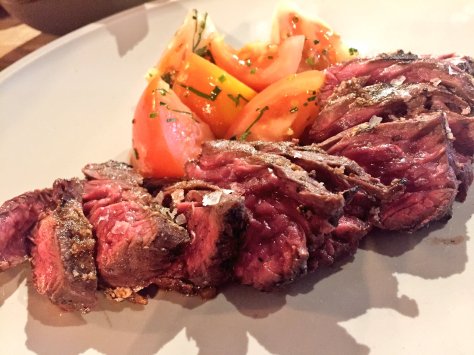
  1. Steak and Chips, Asador 44, City Centre


You can get steak and chips in Wetherspoons for about a tenner. You can also do this at Asador 44 with their lunch menu. One will be a tasteless slice of shoe leather. The other will be a thick, juicy slice of heaven on a plate that you’ll want to eat in silence with your eyes closed. You can probably guess which is which.

  1. Pit Boss Plate, Hangfire BBQ, Barry

Remember when you were a kid and you wanted to have all the variety pack cereals at once but you weren’t allowed? Well imagine finally being able to do that, only with meat. The PBP is a taste of everything that has quite rightly made Hangfire Southern Kitchen famous – barbecue, cooked low and slow the way it’s meant to be. Their restaurant may be in Barry, but the Hangfire ladies cut their teeth in The ‘Diff and they pop-up here enough that I reckon we can still call them our own.

  1. Chocolate Brownie, Pettigrew Bakeries, Victoria Park

“A chocolate brownie can’t be that good can it?!” – try saying that after eating one from Pettigrew’s. You won’t be able to. Partly because your mouth will be stuck together with the gooiest, richest, most magnificently chocolatey lump of loveliness you’ve ever tasted, but also because you’ll realise just how wrong you were.

  1. Chicken Curry (Off the Bone) and Chips, Dorothy’s, Caroline Street


(photo from TripAdvisor)

Better than any kebab and surprisingly palatable while sober, this is a true Cardiff staple. You have never truly tasted life in the Welsh capital until you’ve sunk one too many pints of Brains on match day, meandered your way up to Caroline Street and devoured a polystyrene cartonful of this glorious stodge.

Follow Füüdblog! @FüüdblogFüüdblog website

Big thanks to Lee for this great round up of his best Cardiff eats! Now who fancies a trip down Chippy Lane??

***

New business klaxon! Welsh Cheese Company brings the finest Welsh cheeses TO YOUR DOOR!

How exciting is this! The brand new Welsh Cheese Company (run by a founding member of the awesome Barry Horns) is launching on Monday! They’ll be selling the very best artisan Welsh cheeses online through their website, working directly with 12 cheese producers, and stocking over 50 cheeses. They’re also doing a subscription service called Clwb Caws and a range of hampers and gift boxes – just in time for Christmas! 

Cardiff-based musician Tom Pinder – who plays the sousaphone in Welsh Supporters’ band The Barry Horns and the trombone for world famous performers such as Paolo Nutini – is about to embark on a new adventure after founding The Welsh Cheese Company, an online retailer selling the very best Welsh cheeses.  You can check out the produce at www.welshcheesecompany.co.uk, or on Twitter @welshcheeseco. 

WHY CHEESE, TOM?

Tom decided to create the company when he realised Welsh cheese doesn’t always get the attention it deserves:

“Over recent years I’ve been getting more and more interested in the sourcing and the quality of the food I eat, and as a non meat-eater I’ve been particularly interested in the dairy side of my diet.
I’ve been eating a wide range of amazing Welsh cheeses from the delis in Cardiff, and local farmers’ markets, but I was frustrated that I couldn’t get all of the Welsh cheeses I’d come to love from one supplier, so I thought I’d do something about that and start a business that would bring together cheese from my 11 or 12 favourite Welsh cheese producers in one place.”

Since founding The Welsh Cheese Company, Tom has enjoyed getting to know the producers behind his favourite varieties. He is now keen to introduce more people all over the UK to these cheeses.

“The producers are so passionate about the cheeses they make, but Welsh cheese often seems to be a bit overlooked somehow. Some of the English cheesemakers are great at publicising themselves, and promoting themselves online, but some in Wales don’t seem to be as well known, despite often being even more critically acclaimed than their English counterparts.”

One of the most important parts of The Welsh Cheese Company’s mission is to tell people the story behind the cheeses it is selling. The website will have lots of information about all of its cheesemakers, and the farms that each cheese comes from:

“We’re working directly with producers, and buying direct from the farm, so we’ll be able to get cheese to the customers in the best possible condition.”

Tom isn’t stopping at cheeses, either: The Welsh Cheese Company will offer a glorious selection of other Welsh produce to compliment its cheeses:

“We’ll be offering a range of hampers and gift boxes, all full over the very best Welsh artisan food and drinks, to suit every budget. From gin to chutney, and from beer to chocolate, there will be something for everyone!”

Meet Tom Pinder, he’s great

The Welsh Cheese Company’s founder Tom Pinder is well known in Wales as a founding member of the Welsh football team’s official supporters’ band, The Barry Horns, but his career in music has taken him on many other adventures, including travelling the world with acclaimed Scottish singer-songwriter Paolo Nutini.

“It’s taken me all around the world,” he says. “The tour of the last Paolo album took us to New Zealand, Australia, South Korea, South Africa, Canada, the USA several times, and most countries in Europe. Our last tour was to South America just a few months ago.” He plans to continue performing with Paolo as much as possible, as well as continuing to play with the Barry Horns at Welsh international football matches too.

“The Barry Horns has been a big part of my life over the past 7 or so years. When we started the band it was just a small group of close friends who had played in Cardiff bands together for years, but it’s grown and grown and been an amazing experience. The Euro finals in France last year were absolutely incredible.”

Tom has been working primarily as a musician ever since finishing his music degree at Cardiff University in 2002.

“During university I was in a couple of bands, and when I graduated I moved into a two bed house with the six other members of one of the bands, and we toured round Europe and the UK for a few years. In 2006 that band came to and end, and I decided I should try to get a proper job. I worked briefly in public affairs in the Bay, and then more music opportunities came along, so I started touring with Get Cape Wear Cape Fly, and then with Paolo Nutini, and that’s been my main job since then really.”

Alongside the touring, Tom also set up a music rehearsal studios business in Cardiff around six years ago, called the Cardiff Arches. That’s still going strong and has been his main preoccupation when he’s not touring. With the new cheese business taking off he will be handing over the running over the studios to colleagues.

“I’m very excited about The Welsh Cheese Company and it’s refreshing to be doing something outside of music – although I remain as passionate about music as ever, and will always continue to play in bands,” he says.

***

Twelve Cardiff Instagrammers you have to follow …

Ten Cardiff Instagrammers you have to follow …

In case you’re of this persuasion, yeah, we be grammin. Follow us @WeAreCardiff.

@ShotByGoldcut

26 year old Abdullah Yahia has to be one of the most inspiring fashion photographers working in the city, destined for big things. Follow him for ethereal landscapes and his forthcoming film work …

“The world breaks everyone and afterward, some are strong at the broken places.”

abdullahyahia.uk

https://www.instagram.com/p/BZcNBekDN9w/?taken-by=shotbygoldcut


@harplington

Okay, she’s not strictly based in Cardiff, but she comes here to shoot a lot and her wildlife photography is just wonderful! Big shouts!


@xeno.v

For unexpected angles of this wonderful city of ours, get on 18 year old xeno.v (aka Qureshi)’s feed. He posted one of our most viewed IG photos of last year – the beautiful shot of the ‘Cardiff eye’ from Winter Wonderland last year.


@ilovesthediff

For ongoing documentary of what’s happening in the city, follow Chris’s feed. Also does a tidy line in tees and other merch. ilovesthediff.com 


@butepark

The official feed for the Bute Park Arboretum – Cardiff’s premier park with a nationally-significant tree collection! Follow them for adorable hedgehog photos and the life and times of our wonderful park. bute-park.com

https://www.instagram.com/p/BVzW7jsFfPk/?taken-by=butepark

@thecardiffcwtch

If you wanna see endless delicious posts of life around Cardiff mixed in with fashion, food and a mischievous Golden Retriever pup called Bungle, the Cardiff Cwtch is your gal! thecardiffcwtch.com

@avantgardevegan

While we’re talking about food, there’s one Cardiff blogger you have to follow, and despite what his name might suggest, this is food that even omnivores will be desperate to devour. Don’t believe me?? Just head over to 25 year old Gaz Oakley’s feed and see for yourself… avantgardevegan.com  /  YouTube for Recipe Videos


@igerscardiff

It’s a bit of a no brainer to say you should be following @igerscardiff … collaborating Instagrammers who meet in Cardiff. Photowalks, Socials and Competitions and part of the Igers Network! igerscardiff@gmail.com

https://www.instagram.com/p/BYvgO8wBxRs/?taken-by=igerscardiff

https://www.instagram.com/p/BV1b8GfBZ0m/?taken-by=igerscardiff


@sianrockingtheshots

Beautiful shots from around the city – filtered!


@photoj_lorna

Lorna Cabble is one of our fav USW-graduated photojournalists! Follow her feed for news of projects around south Wales. m.facebook.com/LornaCabblePhotography


@senedd

It’s pretty cool that our National Assembly has its own Instagram feed … follow for events around the building and the bay, and to follow the law-making and government-scrutinising process in action! assembly.wales


BONUS!

@ZeldaPooch

We couldn’t finish without including our very own rescue dog, Zelda. We rescued her from Cardiff Dogs Home last week, and she’s quickly becoming an Instagram star! I mean, we would say this, but we think she’s adorable. If pets on IG is your vibe, follow her! (More about how we got Zelda here: Meet Zelda)

***


A blog about Cardiff, its people, and the alternative arts and cultural scene!