YAS KWEEN, you heard right: there’s a new three dayer in town, with a massive line up and in a gorgeous location! The Big Love Festival will take place from 29 April – 1 May in Baskerville Hall. And it looks set to be a doozy.
Maybe you should just watch the video? Yeah. Do that. Then let’s talk.
Looks good, right? The line up is crazy, the location is amazing, and it’s only an hour from Cardiff! WINNING!
Imagine a festie-holiday at the wildest resort on the planet, where you can sleep in hotel rooms, gypsy bow-top caravans, yurts or under the stars: where you can rave till dawn in the dining room, wake up and go for a swim, have a sauna and explore the woodlands. Welcome to Big Love!
Big Love is an independent three-day festival/holiday camp set in and around a huge country mansion hotel, steeped in festival history and located in 130 acres of the lush scenery of the Wye Valley in Wales. Pretty nice, eh?
The food will be curated by Cardiff Street Food, so you know you’ll be well fed over the weekend …
Early bird tickets are already sold out … so get your groove thing on and book now!
Guest blogger Ffion Eirug is rocking a nice climate change vibe with this post about Earth Hour. In case you don’t know what it is, this Saturday, homes and businesses across Cardiff will be blacking out (not in the usual Cardiff night-life sense!). Here’s why …
At 20.30 on Saturday 19 March 2016, homes, businesses and landmarks across Cardiff will go dark for WWF’s Earth Hour: the annual global celebration of our brilliant planet! The celebration goes beyond Cardiff – millions of people across the world will unite by switching off their lights for an hour to show they care about the future of our planet. The aim is to inspire individuals, businesses and governments to take action to tackle climate change.
Earth Hour first began in Sydney, Australia in 2007 and it is now the world’s largest grassroots movement with over 7,000 cities in more than 172 countries and territories joining last year to create a symbolic and spectacular lights out display.
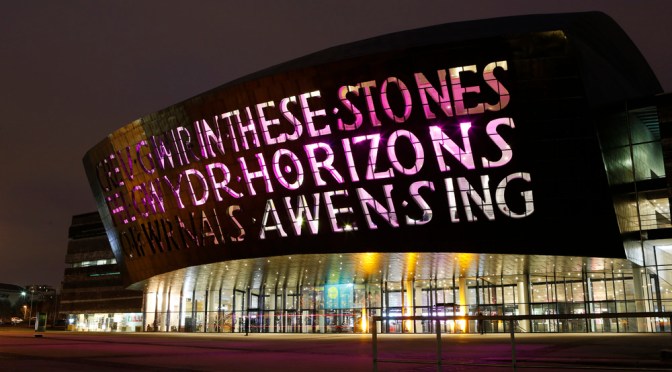
People and organisations across Cardiff are great supporters of Earth Hour. Cardiff Council is one of 21 councils across Wales that’s supporting the campaign. The Council will be switching off the lights at many of its buildings, including the New Theatre, Cardiff Library and St David’s Hall. Landmarks such as Wales Millennium Centre, Cardiff Castle, National Museum Cardiff and the Principality Stadium will join thousands of international landmarks such as the Eiffel Tower in Paris, Times Square in New York and London’s Big Ben in supporting Earth Hour.
It’s great to have the support of some of Cardiff’s best-known businesses too: Admiral, Arriva Trains Wales, John Lewis, and Spillers Records, plus Marriott and Hilton hotels will all be joining in. In addition, a number of schools and universities in Cardiff are taking part, including Ysgol Pwll Coch, Radnor Primary, Willows High School along with Cardiff University and Cardiff Metropolitan University.
It’s not too late to join in the celebration and show your support! Sign up to Earth Hour and switch off your lights on Saturday 19 March at 20.30.
What you do with your hour is up to you, but here are some ideas:
– a candlelit supper,
– a candlelit games night,
– head to the Brecon Beacons Dark Skies reserve to do some proper stargazing!
To find out more about Earth Hour, check out the website or come and see us in Chapter Arts Centre between 5.30pm and 8.30pm on Friday 18 March. Join the conversation online at the WWF Cymru Facebook page and following the hashtags #LightsOutCymru and #EarthHour on Twitter and Instagram.
Join in the fun and show your support for our amazing planet!
Every single suburb of Cardiff offers something different. But there’s something about Roath … Ellie Philpotts went along to investigate one project that certainly makes the area special.
As readers of We Are Cardiff, you probably know just how vibrant this city is. Every day brings something new, while no resident has the same experience of living here. Plus, each suburb has its own cultural quirks. Where better to demonstrate this than Roath?
As a relative newbie to Cardiff, since moving here in 2014 to start English Lit and Journalism at Cardiff Uni, I’ve only ever lived in Cathays. Despite this, my favourite district has always been Roath. The place has it all – more international cuisine than you realised you could ever squeeze into a road (City Road, I’m looking at you); a beautiful lake, park and botanical garden; a tangible community spirit, with events such as the annual Made in Roath and Made in Spring festival; and now, of course, the Actual History Museum of Roath.
I’ve got to confess – I didn’t know much about this project, until We Are Cardiff’s wonderful founder, Helia, asked me pop along to do a piece on it. After as much research as I could do without ruining the suspense, I went along to the museum itself, and here’s what went down…
After getting kind of lost on the way (slightly embarrassing considering how close I live), I arrive at the address on Werfa Street, pretty soaked by that common thing called Cardiff rain, but excited to find out more. I’m offered a very warm welcome by the main curators, Dr Glen Roy and Sir Alfred Street, and before long we’re chatting away over a brew.
The first thing I want to know, from the horse’s mouth, is what it specifically is that the Actual History Museum of Roath represents? I’m told, ‘we bring knowledge to the ignorant, and open people’s eyes to the wonders of Roath. A lot of people know the aesthetics, of things like cafes, but they don’t think of the history much.’
Well now I’m intrigued. The Actual History Museum of Roath is a local project redefining Roath in a witty and unique way – leave your definitions of ‘truth’ firmly at the gate. The museum itself is in a garden shed at the Werfa Street home, featuring an interesting range of trinkets and artefacts which collectively form the north-eastern district’s rich history.
There are murals asking ‘what became of the Lake Roath Monster?’, plus maps, cave paintings and some rather amusing songbird rivalries with Splott…
The famous Roath vs Splott song goes as follows:
‘More beer landlord, I’m a happy fella, When I’m drinking in the Roath Bierkeller, When I was young I travelled far, I once went to Llanedeyrn, The people there smelled funny, And really did my head in,
(Repeat chorus)
Oh Roath it is a lovely place, The pies are always hot, Unlike those bits of gristle, That they call pies in Splott,
(Repeat Chorus)
Oh landlord bring a flagon and we will make an oath, To the greatest of all countries, The place that we call Roath.’
This little hideaway and its connections play a vital role in Made in Roath, seeing visitors frequently flock to find out more about the true history of the place. The team behind the Actual History Museum of Roath all go by very Roathian names – there’s Dame Shirley Road; Dr Glen Roy and Professor Sir Alfred Street – and are keen to make Roath be considered independent. There’s no question about it – they certainly think it’s the pride of the capital, but this is taken to new heights with ideas such as their ‘Roatherendum’. 400 voted, with only eight preferring to stay dependent within Cardiff. Independence now!
A photograph from the Museum’s collection: Sir Lancalot Werfa, ever the Explorer of Roath, was already planning his next adventure with Sir Donald Street’s grandfather Sir ” Jimmy” Quality Street. This adventure never took place, due to his failure to successfully return from his Roath Recreation Park Crossing (1908, permission Actual History Museum Roath).
Although of course unofficial and unrecognised by the government, the polls became quite the talking point around the close-knit community, and it seems even further afield – making it onto Radio Wales and Wales Online.
The Museum embodies the wacky charm that would surely only work on the good people of Cardiff. Engaging everyone by bringing a very new slant on what it means to be a Roath resident, I don’t think I’m alone in hoping the team keep up their open days; quirky Youtube videos and Made in Roath starring role for years to come. I’m just not sure their old rivals in Splott would agree…
PS – They’re expecting you to perhaps be a bit confused at first.
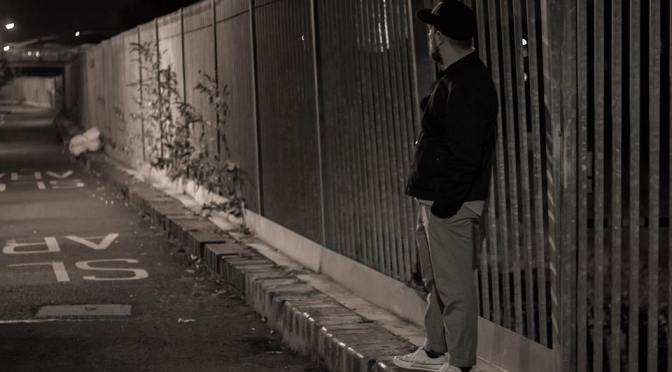
In 2013, Cardiff-based photographer and Ffotogallery tutor Michal Iwanowski set off on a 2,200 km journey from Russia to Poland. He travelled on foot, with a camera as his sole comrade, in solitude. He took a series of photographs on that journey: a project called ‘Clear of People’, which is currently running as a Kickstarter where you can preorder a copy.
70 years before, Michal’s grandfather and uncle had made the exact same journey, but their circumstances were very different. The men had spent a year in a prisoner-of-war camp in Kaluga, in Russia. Their daring escape was followed by a three month trek to Wroclaw, where their family were. The men struggled against constant cold, hunger and exhaustion, they moved under the cover of the night, avoiding any contact with people. Driven by their longing to return home, and having escaped death on numerous occasions, they eventually made it to Poland, and to safety.
Michal’s trip was inspired by the fugitive odyssey of his family. He returned to Russia with a map and notes inherited from his uncle. He embarked on a similar journey, faithfully retracing every step, and just like Tolek and Wiktor before him, he steered clear of people along the way.
Here are some notes he inherited from his uncle:
The escape (1945)
A few kilometres in we started worrying they might already be looking for us. Suddenly Tolek noticed a boat tied to a large pale, floating on the Oka. The boat was small, but a boat nonetheless. The four of us wrestled the pale, and as it gave way, we jumped onboard and set off. Paddling with a plank ripped off the seat, we slowly steered away from the wretched Kaluga.
We made it across the river relatively quickly, considering it was much wider than Wisła. When we got close to the other side, we lay low and let the boat float some two kilometres down with the current before disembarking onto the sandy shore. (…) We walked until the break of dawn, sticking to the plan we’d only move during the night in order to avoid contact with people. (…) After eating half a rusk each, washing it down with hot water boiled over the fire, and smoking a cigarette, the first two went to sleep, while Tolek and I kept guard. We had agreed only two of us could sleep at the same time.
The resulting images are stark and beautiful. “It seems that in recent years the notion of the journey within landscape photography is more frequently focusing on personal rather than global stories, bringing to attention individual experiences and narratives that are otherwise often lost. I find this very refreshing,” says Michal.
Michal studied Documentary Photography at the University of Wales, Newport, graduating in 2008. His work explores the relationship between landscape and memory, looking for histories, individuals and traces about to fade, which explains a lot about this project.
‘Solitude was crucial to this project,’ says Michal. ‘Inability to share experiences and thoughts on a daily basis meant that I had only my camera to validate those. That kept me very focused and aware. Well, most of the time. Avoiding people, on the other hand, meant that I often lost track of time. There was no one there to remind me it was 2013 and people used mobile phones to find directions. For miles on end it was only trees and stones, most likely looking exactly the same as a century before, with names scratched into their bark, dating back to 1950s. It was a grand illusion, although I found myself constantly confronting black and white images from my memory, and translating them into the scenes I was seeing. Strangely enough, distant past didn’t feel that distant anymore.’
Support Clear of People and preorder a copy on Kickstarter now (a snip at only €42), as a treat yo’self gift OR the perfect present for the art lover in your life.
The Clear of People series was previously shown in exhibitions in the United Kingdom, Lithuania, Belarus, Georgia and Poland. The photographer has been participating in international shows since 2004.
Every month, I hand over the We Are Cardiff Instagram feed to a keen local, who snaps away, chronicling their month in our fine city. That’s what normally happens … until it got to February and I realised I hadn’t asked anyone to manage the feed. So, unluckily for you, you’ve got a month’s worth of my nonsense instead.
During February, I mostly:
started a new job which requires some train travel (hence the multiple pictures of Cardiff Central Station);
visited the Indoor Market;
yomped around Cardiff Bay and the wetlands a lot;
saw some nice sunsets;
djed at an anti-Valentine’s party (the Mary Bijou show, pictured above)
learned that Keith the fish has a degree. First class, no less!
Hope your Februaries were as fun as mine,
Helia
x
PS do you fancy taking over the Instagram for a month? Email We Are Cardiff and tell us why we should give it to you. Do it!
Ellie Philpotts headed along to some Cardiff Student Action for Refugees (STAR) events to see what good they’re whipping up in the local community.
It probably hasn’t escaped your notice that Cardiff is a seriously welcoming place to live. The diversity of city living is clear to see, as it seems like on every corner you’ll always be greeted with a friendly face and the choice of either a cup of tea / shish kebab / bara brith / kimchi stew / proper Italian wood-fired pizza. Or all five of them if you feel like it. At the same time. Because why not.
Demonstrating the best of this is a team of Cardiff University students, who go by the name of STAR (Student Action for Refugees).
Student Action for Refugees is a national network spanning across 35 British universities. Everyone there is motivated by the common goal of helping to improve the lives of refugees and asylum seekers, by teaching them English, maths and other skills at weekly classes; fundraising and basically having a grand old time.
Speaking of which, there are plenty of ways to get involved, and you totally should. A recent way this was made possible was Peace Feast. The annual event sees members from all over the community gather together; eating a home-cooked meal or two and celebrating the role refugees and asylum seekers bring to the area. This year, it came to town on Sunday 21Feb at Cathays Community Centre. Since 2012, the day has remained a success, and this year was no different. Working alongside Bridges for Communities, an organisation passionate at swapping negative stereotypes in favour of forming friendships between cultures, Peace Feast got everyone talking and sharing experiences, over the universally-enjoyed medium of good food.
As good as Peace Feast was, it wasn’t the biggest event of STAR’s calendar – an honour which can surely only go to Refugee Rhythms.
Once again, Refugee Rhythms made a storm in the Students’ Union on Thursday 25 Feb. Again following its triumph from previous years, all of STAR’s volunteers put in the hours to ensure the smooth running what could only be called the best cultural celebration in all of Cardiff. Featuring a global array of cuisine, music and talent, it appears everyone came away wanting to take up some new instrument, even if you’re slightly tone-death, aka me.
Local groups Afro Cluster, who specialise in an afro-funk hip-hop feel, and Bass 12, who describe themselves as ‘a riot jazz style band’, stole the show, but a whole host of other musicians (many of whom double up as students by day…) were found gracing the stage.
If dancing off your food baby of hummus and falafel is your type of exercise, you were probably found at this week’s Refugee Rhythms. But if you couldn’t make it, remember there’ll be plenty of opportunities to give back to the local community. Like many cities, Cardiff thrives on its diversity, and that’s the way volunteers at STAR, plus a lot of others, want it to stay. Check out the Cardiff STAR website for more reiteration of how easy yet rewarding helping refugees is.
***
Ellie Philpotts is our writer on the ground in central Cardiff. Telling it like it is!
Many years ago, I used to work as the Saturday help in Cardiff’s much missed dance music store, Catapult Records (RIP). I met a load of interesting and talented people while I was working there, and one of those was Cayne Ramos – aka, The Organ Grinder.
He’s released a clutch of cracking underground house tracks in recent times, with Graft Volume 1 hitting into the Juno House top ten. As well as producing some fabulous music, he’s also djed around the world. I grabbed Cayne for a quick Q&A.
Q. Graft went into the Juno house top ten! Have you got plans for any other releases this year? A. Yes I’m planning Vol 2 for Graft now and hopefully Volume 3 for the end of the year. Also a few other releases with other labels, so stay tuned!
Q. Any DJing plans coming up? A. I have a monthly residency with Memorex, and we got some serious parties planned for this year. Plus a few overseas dates which are being confirmed in the next few weeks.
Q. What artists are you listening to a lot at the mo? A. I have a few artists that are doing it for me at the mo: house, Pascal Viscardi (Switzerland), Frits Wentink (Holland), Diego Krause (Germany). For techno, it’s Uvb (France), Fjaak (Germany) and Kamikaze Space Program (UK).
Q. What’s the best night out in Cardiff? A. Ha! I’ve got to be a bit bias here and obviously say Memorex, but there are a few good nights in Cardiff which are booking serious artists like Delete, CityBass, Groove Theory, Blue Honey, Rotary Club … if you haven’t already I’d strongly suggest you check out any of the events above
Q. If you had some friends coming down to Cardiff for the weekend, what would you do with them? Where would you take them? A. I’d take them to Caroline Street, Clark’s pie and chips and then a pint of Brains Dark at the Old Arcade … proper Kaardiff!
Then I’d take them on a little tour around Tiger Bay, explaining the rich history that Cardiff holds.
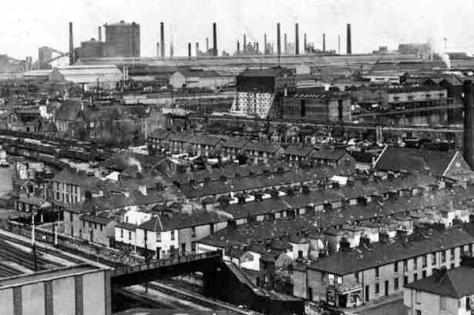
Looking into the history of our great city of Cardiff, there are a few areas that are long gone, their communities dispersed. One of those areas is Newtown, or “Little Ireland”, an area that sprung up in the early 1830s, but was demolished in the 1970s.
One of the things you may have heard about Newtown is that it was the location of Cardiff’s first race riot: a dubious claim to fame. Race riots aside, Newtown was the much beloved home of a close-knit community of mostly Irish immigrants. Here, we’ll explore some more of the history of the area.
In terms of location, Newtown occupied a small area, situated roughly between Splott and the area that was then known (and still is, by locals) as the docks. Early maps show Adamsdown (to the west of Splott) being part of Newtown, but for locals, the Newtown they lived in was just six streets: Tyndall, Street, Pendoylan Street, Roland Street, North William Street, Ellen Street and Rosemary Street. Today, that area is part of Atlantic Wharf.
“It all started with The Great Irish Famine during the 1840s. Thousands of people lost their lives and thousands more faced starvation and destitution. During that time Cardiff was going through rapid development and the Marquis of Bute made arrangements to bring over a large number of Irish families (mostly from west Cork) to provide the labour to complete the building of Cardiff Docks.”
The Marquis of Bute (he was the Second Marquis, in case you’re counting – 1793-1848) was already the richest man in the world at this time, with thanks to Welsh coal. In 1846, the Marquis shipped over 10,000 starving Irish as “cheap, passive labour to build docks and railways, undercut Welsh wages and scab on strikes” (the hard words of Dic Mortimer).
Regardless of the circumstances, after the Irish arrived in Cardiff (which had a population of 15,000 at that time), suddenly nearly 40 per cent of the town became Irish. There were other ‘Irish’ neighbourhoods of the city, but the Marquis settled many of them into purpose-built housing in an area that was close to the docks: thus, the Newtown community was born.
The area was cramped, to say the least. In its heyday, there were 200 houses, as Peter Finch writes; “jammed, insanitarily, back-to-back, in the sliver of ground between the main rail line and Tyndall Street. A warren of bedrooms used in relays above cramped, over-occupied parlours and damp, unventilated kitchens were home to more than a thousand desperate immigrants.”
Most of the men and some of the women initially worked on the the building of the docks. Once the docks were complete, the people of Newtown continued to work in or around the busy sea port of Cardiff.
The men became dockers, steel workers, foundry or factory workers. The women (the ones not at home looking after children) worked in some of the many other small manufacturing industries, like the Cigar Factory, or in local offices as shorthand typists and clerks, or in the retail industry as shop assistants.
Newtown had everything you’d expect any neighbourhood to have: several corner shops, plus a few public houses. One you may have heard of was controversially removed from its location a few years back, to be moved, brick by brick, to St Fagan’s: the Vulcan.
Another pub was the Duke of Edinburgh on Ellen Street, long since demolished and gone. At the centre of this photo, you’ll see a Newtown legend (in the flat cap): the boxer ‘Peerless’ Jim Driscoll, who returned to Newtown after his boxing career was over, to run the Duke of Edinburgh pub with his wife Edie.
Driscoll was British featherweight champion and won the Lonsdale belt in 1910, is a member of the Welsh Sports Hall of Fame, the Ring Magazine Hall of Fame, and the International Boxing Hall of Fame. He was born and lived on Ellen Street in Newtown, and even at the height of his fame, remained firmly rooted in his home community. You can probably judge the extent of his fame by his funeral. He died of pneumonia in 1925 (aged 45), and in excess of 100,000 people lined the streets in Cardiff to see the funeral procession. There was a military-led procession through the main thoroughfares of the city, and businesses stopped trading temporarily as a mark of respect.
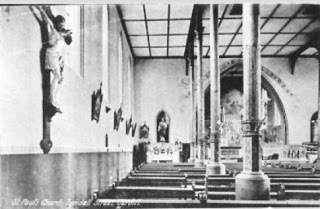
At Newtown’s core was St. Paul’s Roman Catholic Church, built in the 1870s, with a school attached to it. The locals prayed together, had their baptisms, weddings and funerals there.
Although the conditions might have been poor, residents remember the streets being alive, with a sense of fun and carnival always in the air.
“I have memories of Hancock’s Draymen with their two big shire horses delivering beer to the Fitzy’s Pub at the top of our street, and of being woken up most mornings by Sammy the Milkman who yodelled as he cycled his way through the street to make his doorstep deliveries,” remembers Mary Sullivan.
“Throughout the week we had a variety of tradesmen selling their wares. Gypsies would come around door to door selling pegs and lucky charms. Then there was the baker, the greengrocer, the fishmonger and Robbo, the ice cream seller on his motorbike, who was later replaced by Mr Dimascio in his van. I also remember Mr Cox who came over the bridge from Union Street to sell custard slices from the back of his green van. There was also the pop seller; the laundry man, the salt and vinegar man; the coalman and the essential ‘Jim The Ashman’ with his famous ashcart – keeping the streets clean.”
Despite this, as early as the 1930s, Newtown had been condemned as a slum, and the council planned to remove all the residents and replace the housing in the 1970s. Plans were brought forward after a young boy, Phillip Joliffe, aged 4, from North William Street drowned after falling from a bridge over the junction canal between the West and East docks. Most people living on the estate agreed the houses needed to be replaced, but they were divided on location: most of the older people wanted new buildings on the same site, but younger residents were keen to move to other estates in Cardiff.
The Council chose the second option, and in 1966 everyone moved out and the buildings were taken down, disbanding the tight-knit community that had existed for 125 years.
Dan O’Neill – columnist for the South Wales Echo – wrote an impassioned letter about the demolition of Newtown. “Today Newtown, ‘Little Ireland’, is as distant a part of our past as Troy except that there is nothing now left to remind us of that area seen in the minds of those who lived there as a sort of shining Shangri La,” he wrote.
“Irish mythology speaks of an enchanted land, an Isle of the Blessed. That is how the people wrenched from their homes thought in exile of their beloved Newtown.
They flattened the Duke of Edinburgh, the pub where Newtown’s most famous son, Peerless Jim Driscoll, breathed his last. The other pubs too. And the houses and St. Paul’s Church, built in the 1870s, the centre of the community. No need for a policeman in Newtown when the priest walked by. Hard men would touch their foreheads, fights would miraculously end.”
Peter Finch details the Newtown that stood just prior to demolition: “In 1966 it had 169 falling-down houses, two pubs and a garage. Half its population called themselves Welsh rather than Irish, but their names – O’Sullivan, O’Leary, Burns, O’Shanahan, Dwyer – gave away their origins. A proposal that the district should be rebuilt where it stood was unaccountably defeated. Families were dispersed to Ely, Pentrebane, Trowbridge, and Llanrumney. The community broken. In 1970 St Pauls, the church, the school and the presbytery, went too in order to make space for the Central Link Road flyover, the route from the changing city to the redeveloping bay.”
As Mary Sullivan remembers it: “Life in Newtown was at times tough, tempestuous and tragic, but there was a lot of love and laughter in those streets and – most importantly of all – an overwhelming sense of community.”
Somewhat remarkably, the strong sense of community survived, and compelled ex-residents to form The Newtown Association. Their aim was to record the history of the Newtown community, to keep its memory alive, and to provide the people of Cardiff with a source of educational archive material about the Newtown community.
You can see the archives of this project on the Newtown Association’s website, where they are still encouraging former residents to share stories and photographs of their time there. So if you or your family were from the area, get in touch with them!
In March 2004, the Association unveiled a permanent memorial to the significant part which the people of the community played in the development of Cardiff. Each year the Association celebrates St Patrick’s Day with a programme of events that includes a few minutes of quiet reflection at the memorial garden in Tyndall Street (just next to the Etap hotel).
Kevin Howell, Director at CIH Cymru, is here to talk the roof over your head. Bricks and mortar. HOUSES. If you’re struggling to find a home and care about the lack of affordable housing in Cardiff, read on about this campaign!
Hi! I’m Kevin. Here’s a question. How’s your housing situation? Are you:
Finding it hard to save for a deposit to buy your first home?
Struggling to find a house share in the location you want?
Living with the folks, but desperate to move out?
Stuck in a home no longer suitable for your growing or shrinking family?
If you answered yes to any of the above, then you are a victim of the housing crisis.
In Wales, house prices have increased by more than six times the average person’s income since 2008. Experts say we need to build 12,000 new Welsh homes a year. Last year we built just 6,955 hew homes; better than the year before, but far from what we need.
Across Wales the need for new homes is not distributed proportionally. It’s estimated that Cardiff requires nearly 30 per cent of the total projection. If you are already struggling to find a home in Cardiff, it’s likely going to get worse.
My organisation, the Chartered Institute of Housing, has joined up with several others – including Community Housing Cymru, Welsh Tenants, the Residential Landlords Association and Shelter Cymru, who agree that the housing crisis affects us all and the only solution is a political solution.
In Wales, the National Assembly (our law-making body – elections are coming up in May for this, folks!) has shown a great level of interest in housing, and the Welsh Government has shown good leadership in the last five years. It has introduced new housing laws, regulations and opportunities including tenancy reform, mandatory private landlord licensing, Help to buy Wales (supporting people to buy their homes), bringing empty homes back into use, and introducing a UK-first homelessness prevention duty, and all with cross party support.
I’m passionate about building on this progress, making sure that housing is a top priority for the next Assembly term too. The solution to the crisis is more investment and continued recognition of the role our homes play in our lives, in our economic, social and environmental wellbeing.
So what can you do to help? Well here are five things for starters:
When they come knocking, ask your Assembly candidates how they plan to tackle the housing crisis;
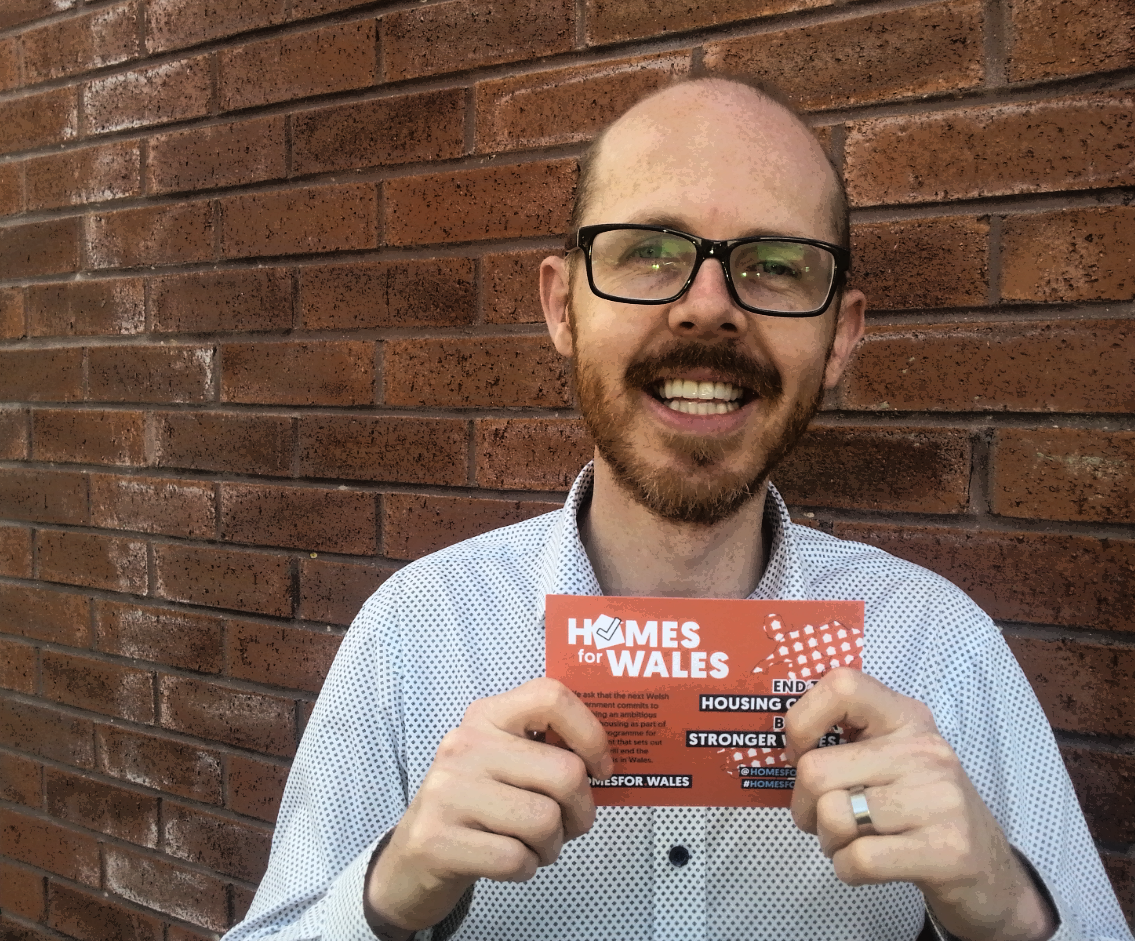
We want to end the housing crisis and build a stronger Wales. Housing is about much more than bricks and mortar – it is about people, communities, and infrastructure.
Please add your voice to the Homes for Wales campaign; the more the merrier, the louder and the stronger!
I’ll see you at the rally.
***
The Homes for Wales rally begins at 13.00 on Friday 4 March 2016, at the Senedd. The rally will march to the Hayes for an afternoon of campaign activity and fun. More information on the Homes for Wales website.
Love Total Recall? Who doesn’t. Want to help the refugees in Calais? Again, who doesn’t. Lucky for you, Pump Action Doll House Pop Up Cinema is in the mix to COMBINE these two diverse things into ONE NIGHT OF ACTION!
Roath’s own Pump Action Doll House Pop Up Cinema is immensely proud to be fundraising for Newport2Calais this March to help get well needed aid to the swelling humanitarian crisis on our doorstep.
The Roath Park Pub will once again be transformed into a cinema to screen the universally adored cult classic Total Recall starring Arnold Schwarzenegger. Donations will be taken on the door and a variety of cinema snacks including hot dogs and popcorn will be available.
All proceeds will go to Newport2Calais who organise regular aid runs to the refugee camps and are in desperate need of funding.
Vital stats:
Total Recall – being shown at The Roath Park Pub (170 City Road, Cardiff), 5 March, 19.00.
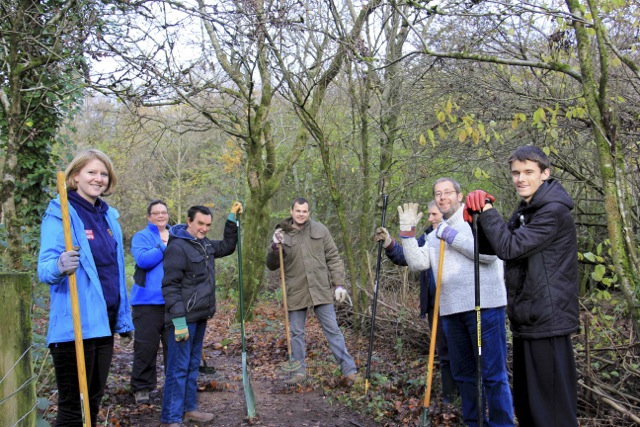
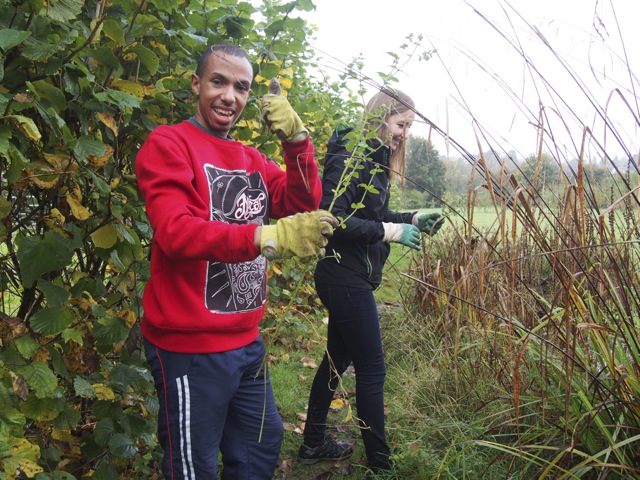
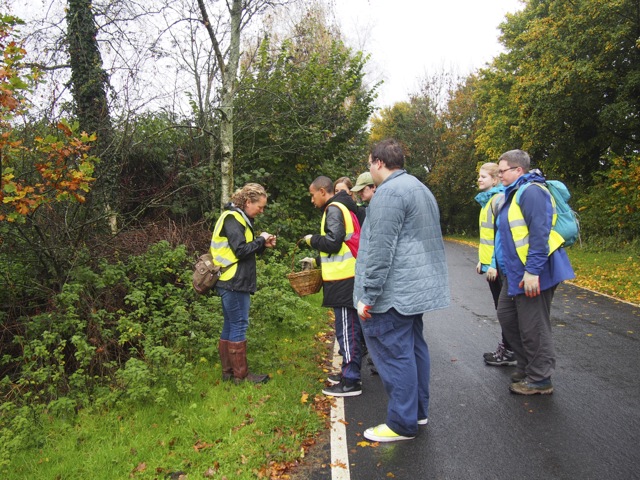
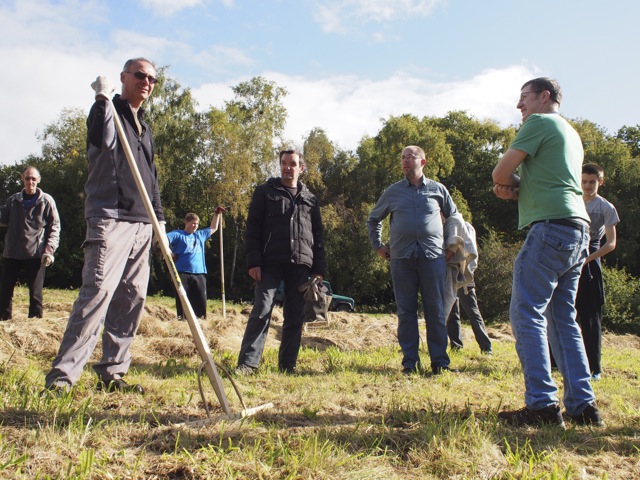
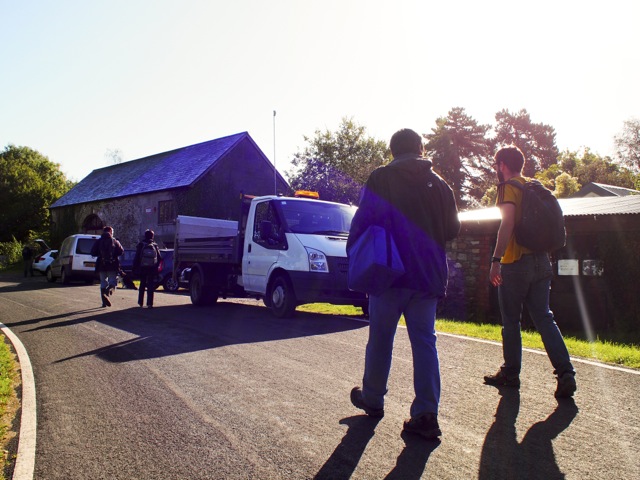
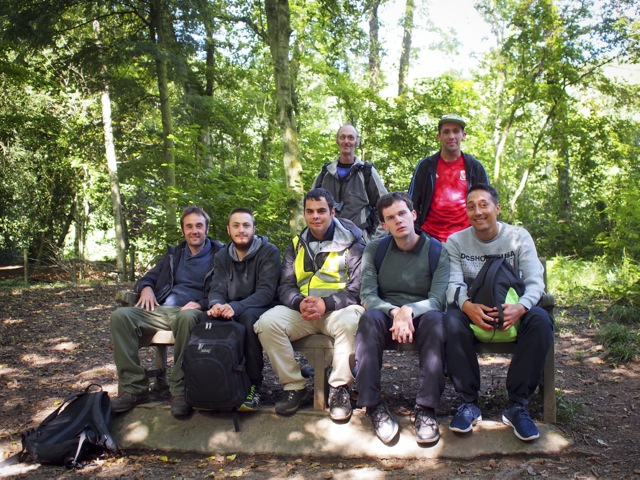
My day job is working for Cardiff based charity Innovate Trust, which supports adults with learning disabilities. My job role is volunteer co-ordinator on the Green Days project – a Big Lottery funded project that carries out environmental conservation work in Cardiff, the Vale of Glamorgan and Rhondda Cynon Taff.
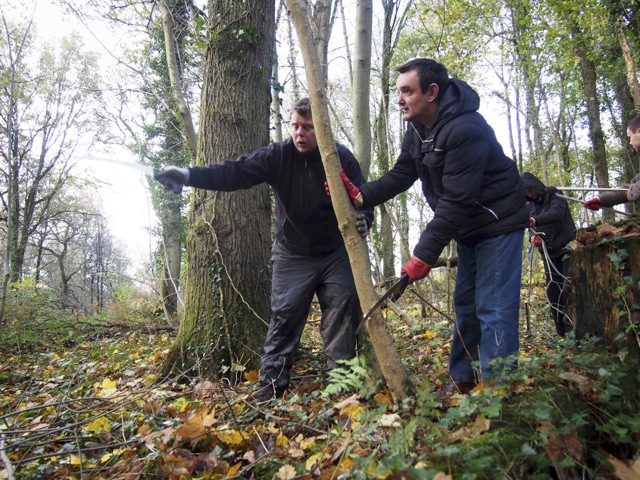
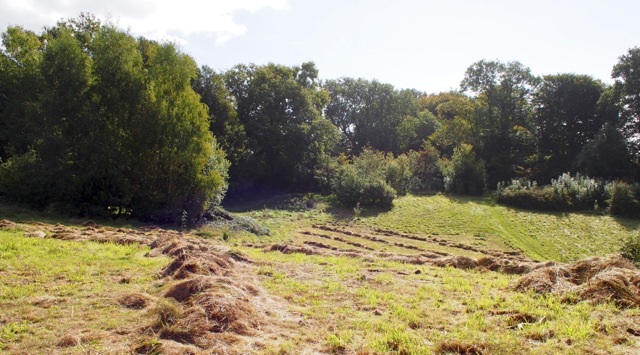
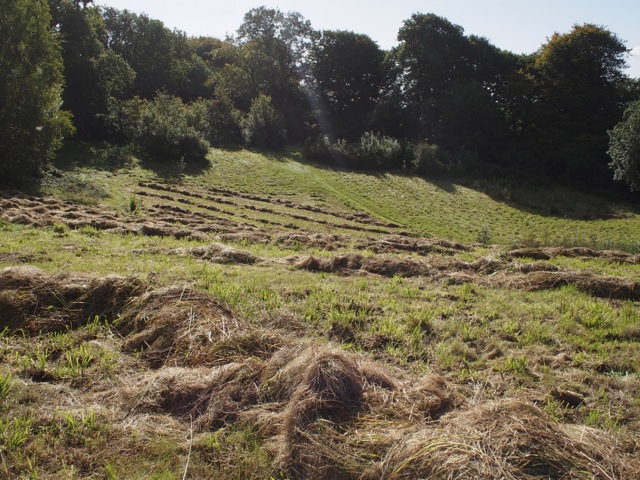
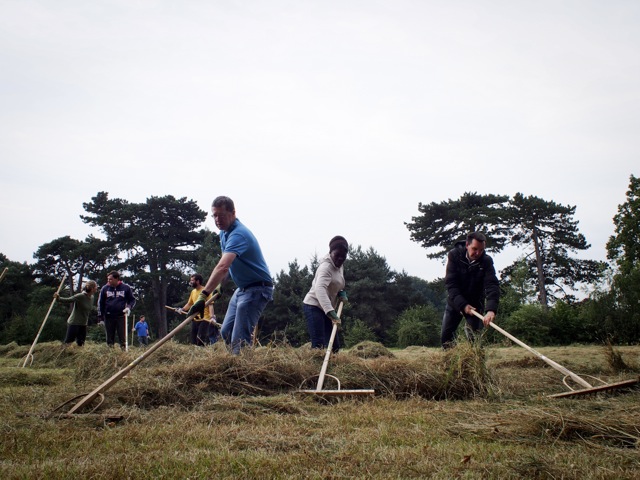
We work closely with the community park rangers, and the work that we carry out with them is becoming increasingly important as time goes on and council budgets are cut; we carry out all sorts of tasks such as coppicing, hay raking, invasive species clearance and biodiversity surveys.
And the locations are fantastic – we are so lucky in Cardiff to have such an array of wonderful outdoor spaces for such a compact city, I’ve lived in Cardiff all my life and the rangers have taken me to loads of places that I had never heard of! I’ve also learned so much more about the local wildlife from the rangers – I’m particularly looking forward to slow worm spotting in the summer in Grangemoor park.
We’re always on the lookout for new volunteers to join in with us on activities. If you think you would be interested in coming out with us, please contact Rob at rob.khoo@innovate-trust.org.uk or phone on 02920 382151
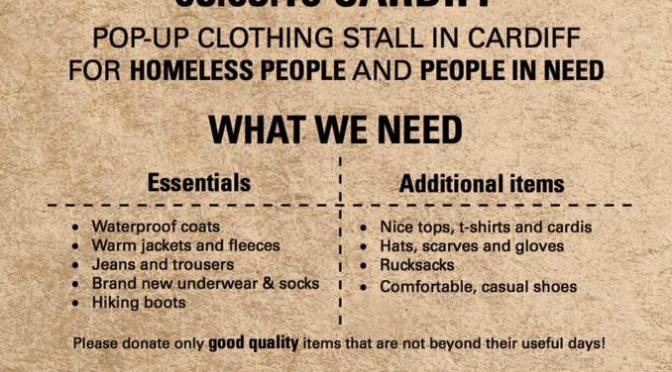
Well guess what – you’ve got another chance, this time, through The Street Store’s pop up, which is being run in Cardiff by the Sustainable Studio. It’s the first one in Wales. You can donate any unwanted clothes you have and help a person who’s homeless or in need.
What they need:
Essentials:
Waterproof coats
Warm jackets / fleeces
Jeans and trousers
Brand new underwear / socks
Hiking boots
Nice to haves:
Nice tops / t-shirts / cardis
Hats / scarves / gloves
Rucksacks
Comfy casual shoes
Please donate only good quality items that still have some life left in them!
DROP OFF POINT:
Friday 4 March: St Mary’s Street Market, 10am – 5pm
Alternatively you can take donations to:
The Sustainable Studio, Dumballs Road, which will be open 1/2/3 March – times tbc – check the SS website for details).
St Mary’s Street Market
The event is being held in conjunction with The Wallich homelessness charity who will be on hand to provide advice and support. The charity supports current and former rough sleepers as well as people who have moved into its hostel accommodation after losing their homes.
So get your stuff together and go donate! This is a great cause. If you’re looking for an excuse for a spring clean, then this is the perfect one.



























 We Are Cardiff
