“Cardiff is on the cusp of something quite brilliant” – Matt

matt-williams_web

I grew up in Aberystwyth and had spent most of my childhood, teenage and adult years there – I moved away for a short period during university to study in Canada, but I’d never been away for longer than seven or eight months at a time – so moving to Cardiff is probably my first big break away from home. I probably shouldn’t be admitting this at close to 24 years old.

I’ve felt close ties to Cardiff for a few years now. Many of my school friends ended up here and I was a fairly frequent visitor for that reason. During university I also managed to form some ties with the Cardiff music scene – inviting a few (locally) renowned Cardiff bands to play in dingy back-rooms in Aberystwyth and travelling down here on a semi-regular basis for gigs.

I finally moved to Cardiff in June 2010 after having spent six months travelling to and from the city to spend the weekends with my partner. Moving here had been in the pipeline for over a year before I finally made the move – Hannah and I had agreed that we would both move here once she’d finished a number of internships abroad, it seemed like a logical place for us both to look for long-term employment. However, it took me quite a long time to find work, especially as I had a good, secure job in Aberystwyth that I didn’t want to abandon for something less appealing. In the end I’m glad I held out to find a job I wanted, as I now have the privilege of doing a job I enjoy at Positif Politics. I work with a great group of people and it’s an exciting time to be involved in public affairs/politics – what with the Assembly elections in May 2011, and the vote on further powers in March.

I have a fantastic cycle route to work through Bute Park and along the river, and it’s a brilliant way to wake up in the morning, and to finish off the day – though with the nights drawing in I shall once again be relegated to the dreariness of a commute on my beloved Cardiff Bus (that’s a lie, we really don’t get on very well at all but there’s another story for another day). I feel privileged to live in a city with so much green space, I live almost exactly halfway between Bute Park and Roath Park and there are plenty of other spots to go hide in scattered around. The city is also surrounded by beautiful countryside – the view from Castell Coch is one of my favourite in the world.

Cardiff is also giving me the opportunity to further indulge my love of music. The annual Swn festival is a great chance to enjoy music around the city in a condensed format – it was brilliant fun this year. Going out to gigs in different clubs and pubs has allowed me to meet some interesting characters and make some fantastic new friends.

Cardiff seems to be a great place to be for music at the moment, I feel like the city is on the cusp of something quite brilliant with a number of fantastic bands beginning to emerge and a seemingly thriving community-based approach to the arts and culture. My particular favourite of the current crop of Cardiff based bands (like so many others) are of course the wonderful Islet. But the hard work and dedication of so many others is really at the heart of what is going on, and for that I thank all the citizens of Cardiff who try so very hard, and more often than not succeed in making this city a wonderful place to live and work. Apart from the buses. I hate the buses.

Matt Williams is 23 and a bit years old and lives in Cathays with his partner Hannah, close friend Grace and two Guinea Pigs, he works at Positif Politics in Cardiff Bay and tweets at @mdwaber, he can also be found online at LastFM. In his spare time he tries to attend as many gigs as humanly possible and dances badly to loud music wherever he can find it. He can also often be found somewhere in or around the city exploring on his bike.

Matt was photographed at the Pierhead in Cardiff Bay by Adam Chard

***

“We all gravitate back to Cardiff” – Cerys

cerys_furlong_web

I grew up in a small village eight miles outside of Cardiff. Cardiff was the big town we were allowed to get the bus to on Saturdays. The last bus home on a Saturday was ten past five! One of my last school trips in primary school was to Cardiff Bay- “Europe’s most exciting waterfront development”- the slogan sticks in my mind with the image of remaining piles of coal and remnants of industry amongst promised development. A few years later, along with my friend Paul, I was a school-rep on Cardiff Council’s Young People’s forum. We only went for the free sandwiches and time off school. At the time County Hall, Atlantic Wharf was virtually the only new building down the Bay. Little did I know then I’d be spending so much time there.

While I have amazing memories of Cardiff as a child- being smuggled into rugby matches at the Arms Park under my dad’s jacket and picnics in Bute park stick in the mind- by the time it came to go to university I knew I wanted to be somewhere else, learn new neighbourhoods, and new people. I only went as far as Bristol, but it was so big, so different, so vibrant and mixed –I still miss it sometimes. But strangely, being in Bristol only strengthened my love of Cardiff, and Wales.

I’d said I’d never come back, I probably sneered slightly at my friends who never left. A year or so after graduating I got a job working for an MP in Bristol. Although I’d grown up with actively Labour parents, and been a member of the party as a teenager, my membership had ‘actively lapsed’. Politics was far from my mind in Uni. I’d marched against the war, voted green, maybe even voted lib dem. It didn’t matter to my boss that I wasn’t a party member- she must have seen it in me. After a while, I wanted to do further study. I was really interested in the things going on in Wales, in Cardiff. Since I’d been away the Assembly had been established, there seemed a new momentum and purpose in Cardiff- like it had begun to realise its identity as a capital city.

I’d never actually lived in Cardiff, only in the leafy privileged green belt. It was exciting looking for somewhere to live, from Splott and Roath to Llandaff North and eventually Canton. I remember house hunting- we kept getting confused between City Road and Cowbridge Road East. Seems ridiculous now, but although I’d always said I was from Cardiff, I realised I didn’t know its geography, the short cuts, the hidden gems. I landed on my feet and have loved Canton ever since. I love living in a neighbourhood where you can walk to work, to parks, the shops, and back from town at two in the morning when it seemed like a good idea at the time. And I love living in a city where as well as all those things, you can be on the beach, in the mountains, or the rolling countryside in within half an hour.

Maybe a little bit of me felt like a fraud when I decided to stand as a Councillor for Canton two years ago- I’d only been living here for five years. But then it’s a neighbourhood where people do come and go, a mixture of old and young, new radicals and die-hards Cantonians. And now my home, and that of my family.

Friends from other parts of the UK still can’t quite understand how we still have such a close knit group of friends from home, from school, from Cardiff. That’s the thing you can’t pin down. We all gravitate back to Cardiff- we don’t want bigger, maybe we don’t even want edgier- it’s our comfort zone, I’m proud to say my comfort zone, and I salute you for it Cardiff.

Cerys lives in Canton, Cardiff. She works for the National Institute of Adult Continuing Education (NIACE) and is a Labour Councillor, representing Canton since 2008. Cerys has worked in education for the last six years, and been an active in Labour politics for far longer. You can follow her on twitter @cerysfurlong. She has one daughter and currently lives in Canton.

Cerys was photographed at Canton Library by Ffion Matthews

***

“I’m definitely not English and I couldn’t claim to be Welsh, but I do think of myself as Cardiffian now” – Noreen

Noreen by Ffion Matthews

I ended up in Cardiff by chance, really. I grew up and studied in France, and after doing my MSc research project at Aberystwyth University, I stayed in the UK to work. Various jobs and secondments took me all over England and Wales, until I found myself in Cardiff, and liked it so much that I stayed. It’s the place where I have felt most at home and where I can see myself putting down roots. I guess I’ve started doing that already!

I’m a city girl and I couldn’t live happily somewhere without theatres, cafes, and shops that stay open after 5pm. Because Cardiff’s a capital city, it’s vibrant, and has gigs, exhibitions, shows, workshops… There’s always a variety of things to do. It’s got great places to hang out and chill too. And it’s got the parks! I love Bute Park, walking past the Animal Wall to get there, and hula hooping near the stones. They’re such an easy landmark to meet people at, and, well, they’re standing stones, which is cool. This is the capital of a country that had Eisteddfods and bards and song and poetry as national traditions and institutions – and it’s woven into the fabric of the city.

I’m half Chinese from Singapore and also French and I like that Cardiff is fairly multicultural; also that the population is young because of the Universities, even though it means Friday and Saturday nights in town are a nightmare of rowdy drunken students. But hey, that’s part of what makes this city what it is. Despite the usual high street shops that are the same everywhere (and although I mostly moan about them, sometimes they’re convenient because you know exactly where to get what), the centre has a nice distinctive feel. Cardiff’s got a bunch of independent shops and also the arcades. I spent my teenage years in Paris, which has a number of arcades right in the centre, and I love them. It’s a shame about all the empty shops there – I would like to see them more alive and better used.

I’m a sucker for architecture and nice buildings, and that’s another reason why Cardiff appeals to me so much – it’s not just the WMC and the Senedd down the Bay: there is a great mix of beautiful buildings in town, and I love wandering around early in the morning or late at night, when there are no crowds of shoppers to dodge, and walking “with my nose in the air” as the French say, checking out the facades and rooflines we ignore on a daily basis.

Despite being the capital of Wales, Cardiff is a small city. It’s small in size, so that I can walk or cycle most places – and it’s pretty flat! Cycling around Cardiff makes me very happy indeed. It’s also small in population (well… for a capital city anyway) and I have found here a real sense of community and friendliness. Cardiff is like a village where when you meet someone, you can be pretty sure they’ll know at least one other person you know. I like that. I think that’s what’s contributed to my feeling settled quicker than in other places I have lived, and building a strong network of friends in a couple of years after I arrived – and that’s why I feel so settled now!

I’m definitely not English and I couldn’t claim to be Welsh, but I do think of myself as Cardiffian now. It would take a big event indeed to prise me away!

Noreen Blanluet is a self-employed creative business consultant, helping entrepreneurs and freelancers to take their business and their life to the next level. You can find her at www.beamazingtoday.co.uk and on Twitter @beamazingtoday. She’s living in Splott at the moment and is pondering moving to Roath early next year. Longer-term, her aim is to move to the house of her dreams in Cathays.

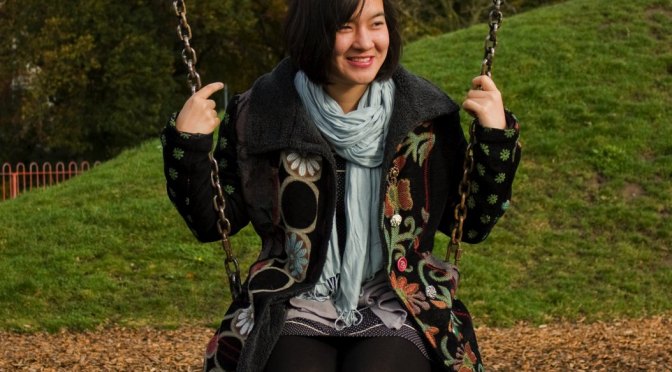
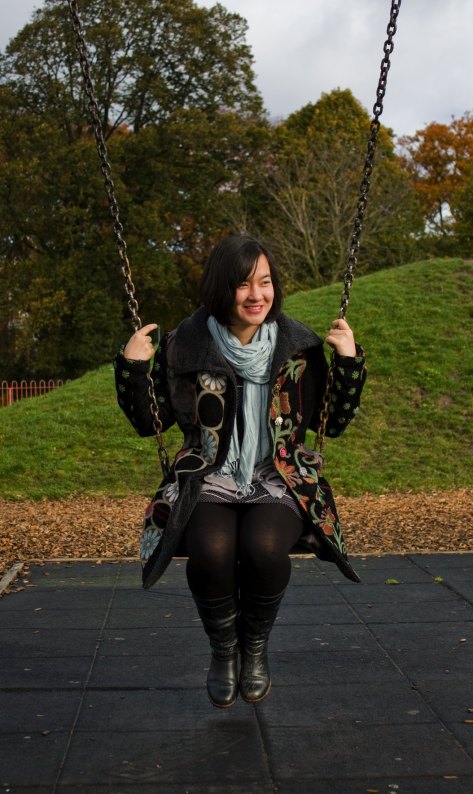
Noreen was photographed on the swings at Roath recreation ground by Ffion Matthews

Noreen by Ffion Matthews

***

“Thirty years on, I’m still here, and my identity has changed as much as the city itself” – Dave

The Cardiff I moved to in 1980 was a very different city to the one we know today: no Cardiff Bay, no Millennium Stadium, no St. David’s Centre (1 or 2) etc. etc. My job had relocated from London and, having no Welsh roots or connections, initially I felt like an outsider. But four employers and thirty years on, I’m still here, and my identity has changed as much as the city itself – I now can’t envisage ever living anywhere other than Cardiff, and I feel far more Welsh than English.

It would have been possible to live and work in Cardiff, to bring up a family here, and yet continue to identify with my country (or county) of birth. I know contemporaries who have done just that, whether by choice or by chance. The catalyst for me, though, was sport – football to be precise.

During the eighties, not content with being only a long-distance supporter of my home team (though I will never abandon them), I started visiting some of the local clubs in south Wales. It was the era of the ‘fanzine’, the publishing boom of those pre-internet days, and I contributed the odd article on Welsh clubs to various publications; in time I became a Welsh correspondent for a couple of titles, now long-defunct. Travelling around Wales every Saturday, visiting places and meeting people I would otherwise never have come across, I developed a sense of belonging in Wales.

Twenty years ago, just as Wales was re-asserting its national identity in many walks of life, I was persuaded that Wales needed its own football magazine. Little realising how much of my spare time the project would consume, I was also persuaded to get involved. With our own funds, a few of us launched a modest little publication called Welsh Football in 1991, and 143 issues later it’s still going, a niche, not-for-profit publication admittedly, but our national football magazine nonetheless. It’s just a shame that, nineteen years on, it’s still so hard to raise its profile amidst the blanket coverage of English football here – new readers regularly tell me “I never knew it existed”. And even worse, since Borders bookshop closed, we don’t currently have a retail outlet stocking the mag in the capital city !

As Welsh Football’s unpaid editor, feature writer, photographer and many other things, I still travel around Wales on a regular basis, meeting friends old and new. Though I put in a lot of time (and sometimes money too) what I get out far outweighs it: not just enjoyment of the games, but appreciation of the variety and beauty of Wales, and above all a sense of identity: yes, after spending more than half my life here, I definitely consider myself Welsh now (and I think I’m widely accepted as such by my native Welsh friends and acquaintances, too). And I even pass the acid test: when Wales play England, there is no way I can cheer for the ‘three lions’!

Dave Collins is an IT consultant. He also publishes Welsh Football magazine (‘the National Football Magazine of Wales’), a not-for-profit magazine written by, and for, lovers of football in Wales and published eight times per season. The magazine is available by subscription – see http://www.welsh-football.net or email welshfootball@lineone.net for details. He currently lives in Rhiwbina.

Dave was photographed by Simon Ayre

“My city has its ups, my city has its downs … bad boys, and bad girls, geniuses and clowns” – David (Verso)

versosmall

I was a babe in arms when I first came to Cardiff; however, my very first memory of it was when I was sat in the window seat of a bus going down a then almost squalid ‘Cathedral Road’. I distinctly remember asking my mother why all the lovely houses were boarded up.

My parents met at a dancehall down the docks. My father was a boy from the Merthyr Valley; born of Welsh, Irish and French descent. On my mother’s side of the family I inherited African, South American Indian, Italian, Irish and English; so to say I am mixed race is a bit of an understatement. However, I am a proud and patriotic Welshman and Cardiffian, along with the rich multi-cultural genetic rainbow of nationalities within me. It is worth noting the word Welsh is actually an Old English word meaning “foreigner; slave” and at first was applied by the Anglo-Saxons to all the native peoples of Britain.

I detail the race and cultural accent here because that is what makes me especially proud of Cardiff as a place unlike most others. I once spoke to a Nottingham born second-generation Pakistani man who could not believe his eyes on seeing that Sikh, Indian, Bangladeshi and Pakistanis were friends and next-door neighbours.

It may be of little consequence to the average white native, but for a man of another race, it does make a significant difference.

Cardiff is like a village that happens to be a city; and a county that feels like a country. Not that it is apart from the rest of Wales, it’s just that there are representatives from all parts of Wales, mixed with a lot of English, Irish, a broad mixture from sea-faring nations, and now from every corner of the globe. Such diversity enriches the experience of both dweller and visitor.

For some, Cardiff is like a practice for London or another city; and for plenty of others, a perfect place to settle. Many students end up staying for many years after their studies are complete; if not for the rest of their lives. Cardiff is a place that people return to; not run away from.

There’s something here to remind them of home, and many more things that their last home can never have. Although Cardiff is the hub of the creative and financial industries, it is unlike London; thankfully. People still smile and say hello, give you the time of day. They still say please, thank-you and excuse me… well, usually ;). It is a place where you can find enough people alike yourself to feel a part of a movement / tribe / community … from artisans to anarchists.

I love the stunning parklands throughout the city; and a real jewel of the inner city that is the oasis of Bute Park.

Also, the stunning and varied coastline and wild national parks all around us within walking/cycling distance; or a short train/bus/car ride away. Cardiff is a worldly city; despite its size and population. I would like to see it be ambitious and evolve to be considered among the best cities in the world. No city is perfect, nor ever will be. We have our share and experiences of the negative as well as the many positives. I recorded a song with a designer/musician friend, Matt Harris, which captures my perspective. It’s called, The City in Me (“My city has its ups. My city has its downs / Bad boys, and bad girls, geniuses and clowns”).

I was extremely disappointed when the winning design of Zaha Hadid was vetoed by the unimaginative old-order of councillors of Cardiff. The Armadillo is ok because of its nod to the industrial past. But we’ve been there, done that, and got the postcards. Neither am I too keen on the lack of creativity down at the homogenised, indistinctive Cardiff Bay.

What about the future? I would love to see our city reaching boldly into the future, rather than just clinging to its past. My hopes are high though. There are a decent number of creative folk, and an entrepreneurial zeitgeist running through the city right now fuelling a new agenda that doesn’t depend on the backward thinking policy makers in the greasy seats of power and influence

David (Verso) is a poet for non-poets and poets alike, creator of wordplays like ‘Cardifferent’, singer/songwriter, dancer, artist, visionary designer, innovator, businessman in the making… procrastinator in the doing. Find him on Scrib and Myspace. He currently lives in Canton.

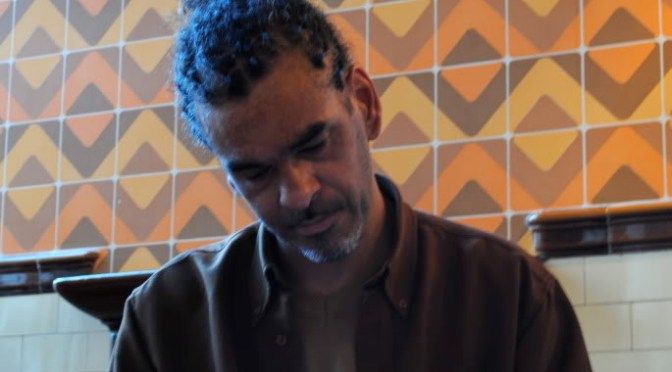
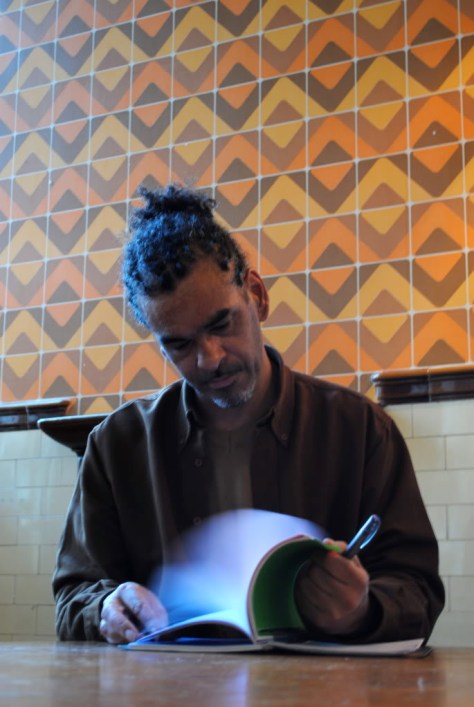
David (Verso) was photographed in Chapter Arts Centre by Adam Chard

***

Seasonal cheer

We Are Cardiff will be taking a break for Christmas and the New Year. Enjoy yourselves, be merry. If you’re really missing us have a look through the We Are Cardiff archives to see if there are any stories that you’ve missed.

We Are Cardiff is run by the good folks at hack/flash – find out who we are and read our latest posts over there, or follow us on Twitter.

See you on January 7th, 2011!

x

“My Welsh grandmother did not approve of our Kaardiff accent” – Keith

keith_underdown_web

I was born just before the birth of the NHS, in what became St David’s Hospital, which I think means I was born in the workhouse! I moved into a new council house in Ely in 1952; I was one of the tiny percentage of children allowed to pass the 11+ from Trelai Primary, which was new then and has been rebuilt since. Seven years in Canton High School completed my transformation from an Ely boy into a middle-class student at Sussex University in 1966.

Curiously, it was only on moving to England that I realised that I was Welsh and not English. I only had one Welsh grandparent and my surname comes from Kent. Actually, my Welsh grandmother did not approve of our Kaardiff accent and started the move to the RP English I now use.

I married an English woman (though an Aberystwyth graduate) and we raised two children in England. We gave them both Welsh middle names. Holidays were often spent in Wales and I would tell the children something of the history and of the language. Before going to sixth-form college, our daughter decided to use her Welsh middle name, becoming Carys instead of Ruth. She went on to gain a First in Celtic Studies at Aberystwyth, which was followed by research into the development of aspects of Irish and Welsh at Cambridge. So if nothing else I have added a Welsh-speaker to the language gene-pool.

My wife and I returned to Cardiff almost seven years ago and we have been learning Welsh since we came back. So I want to write about my experience as a returning Cardiffian. In fact, I’m going to explore the old cliché “Thank the Lord we are a musical nation”, which was trotted out ad nauseam in the Ryder Cup coverage earlier this year. I have been a choral singer for around 30 years, but the biggest singing occasions I have experienced have all been since returning to Cardiff.

The first occasion was the Gala Opening of the Millennium Centre. I had watched the building being completed on my bike rides down to the Bay and absolutely loved the way the architecture reflected the landscapes of Wales. I was determined to be there for the opening celebrations, not with the big-wigs inside but with the people outside. A choir of at least 1000 people gathered on Roald Dahl Plass on a very unsettled November afternoon to rehearse the programme with Owain Arwel Hughes. He understood the occasion and helped the choir to generate huge amounts of hwyl.

We sang through the rain and wind and went to find refreshment before returning well after dark and with the weather worsening. The concert itself was exhilarating and we gathered a huge crowd, standing about 12 deep in a semi circle behind the choir and listening with rapt attention despite the rain. The climax was the singing of “Mae hen wlad fy nhadau”. Everybody sang with immense passion and it was at that moment I realised that post-referendum Wales was now not just a clichéd “musical nation” but a real nation with world standing.

This is an immense change. Cardiff is a world capital and most people are far more self-confident in their Welshness, even if it is an Anglophone Welshness.

I have also been involved in two major musical projects run by WNO-Max, the Opera Company’s outreach team. For me they were hugely emotional experiences with an enormous sense of community. The first, The Most Beautiful Man from the Sea, involved a choir of 500 that filled the big stage in the WMC. In over three months of rehearsals we became a huge family. It was the first time I had to interact with an audience without being able to hide behind the score and it was a huge boost to my-self-esteem.

Last year’s “On the Rim of the World” was a much smaller affair but involved moving around and acting, something I’ve not done since I was about 11. The sense of community was enhanced by the number of children and young people taking part. The opera was taken up by all the major opera companies in the U,K but only in Wales was it sung in four part harmony! In fact, in London the English National Opera had to stiffen the adults with professional singers even to get it done in unison!

Recently I was part of 2000 strong choir at the concert to mark the opening of the Ryder Cup. We were there to add hwyl to the singing of our National Anthem at the end of the concert. The three members of my choir, Canton Chorus, nearest me were a woman of Kent, just arrived in Cardiff, a French woman who has lived in Cardiff on and off for several years and a Californian woman of Welsh descent and married to a Welshman but who had only been in Cardiff for a couple of months. All took part with enthusiasm and a lack of self consciousness that spoke volumes for the way they had been made welcome in Cardiff. Julia, the Californian, was struck by the involvement of so many young people both on stage and in the many choirs around us.

For me, it was a milestone. Since school I have had a mental block about learning the Welsh words to “Mae hen wlad fy nhadau”, I never felt Welsh enough to be able to sing it properly. However, I’ve almost cracked; the last line of the verse still foxes me but I’m almost there.

Apart from that, the occasion was a bit of bust from where I was but it was interesting to watch the part played by Prince Charles and see how the performers and audience responded to him. In fact, there were some massive breaches of protocol: he followed Carwyn Jones on to the stage and spoke after him. Several times the compere forgot to include him in the salutations, relegating him to one of the “Distinguished Guests”. I don’t think these were deliberate slights but take them as evidence that we are no longer in awe to the power of London. In fact, the comment by the compere that got the biggest cheer was: “Here in Wales we think of ourselves primarily as Europeans!”

Thank the Lord I’m a Cymro and we are a nation – a musical one at that!

Keith Underdown is a retired enterprise information architect who returned to the city of his birth almost seven years ago. Keith wrote his first computer program in 1969. Follow him on Twitter – @KeithUnderdown. He is a committed Christian, choral singer, allotment holder and cancer survivor. He currently lives in Gabalfa.

Keith was photographed at the Wales Millennium Centre by Adam Chard

***

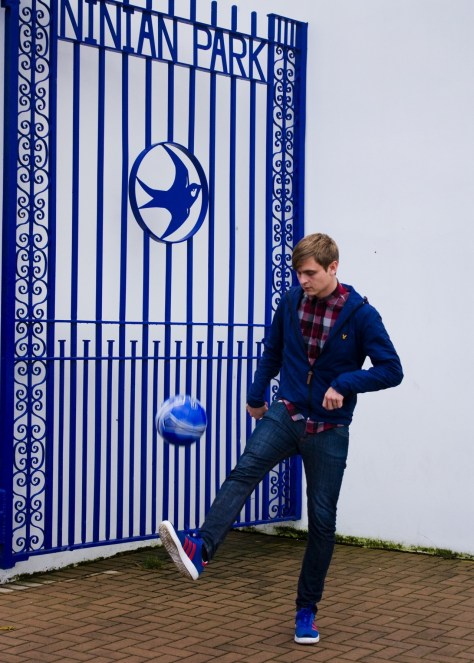
A lifetime of supporting Cardiff City – Dan’s story

dan_tyte_ninian_park1_web

Ninian Park. What a strange name. What a strangely alluring place. Its shabby terraces, corrugated iron and wooden seats had been my home-from-home for the past 20 years or so. My dad had first taken me down the City (as we call following the local association football team here) for a promotion party game against Crewe Alexandra in May 1988.

And from the moment I sat in the grandstand that day until the final whistle when grown men with bad 80s perms and tight stonewash jeans invaded a little piece of grass and danced around and hugged each and just looked so bloody happy, I was hooked. I wanted to be that happy. Every Saturday please. No more BMX rides around Splott or shopping trips to town with my mum for me. No way. I was going to the happiness factory to dance around, have a bit of a laugh and forget about my biology homework.

Turns out we didn’t get promoted every Saturday. Most Saturdays we lost and it rained and there was no dancing and very little hugging. I can only blame my father. Taking me to a promotion party for my first ever game was the equivalent of taking a girl to Paris on a first date. ‘Yes darling, I’m always this romantic’ you’d say as she gazed into your eyes at an intimate Michelin-starred restaurant on the banks of the Seine while a waiter brought over oysters and champagne and the band struck up Beethoven’s ‘Ode to Joy’, knowing full well next week she’d be lucky to get half a cider out of you at the Labour Club and she’d better keep quiet as there was a good singer from the Valleys on.

And then last year, after two decades of bad dates, the old place was no more. Knocked down flat to have houses built on it, while the City moved to a brand new state-of-the art piece of Meccano across the road in Leckwith. Like most Bluebirds fans, I had mixed feelings about the move. It was painfully obvious the club needed to move with the times and have a place to call home that was attractive to people other than sadistic football fans and which could ring the tills seven days a week through hosting everything from business breakfasts to Bar Mitzvahs.

But Ninian Park was home. Having moved around a hell of lot over the past ten years (student accommodation in Liverpool to shared house to failed house purchases with girlfriends to sofas) and with neither of my parents living in my childhood home, it was the place I felt most comfortable on Earth. And it was being taken away too.

Ninian Park saw some sights in its time. Crowds of 60,000. Pope John Paul II. Bob Marley. And me.

Dan Tyte is a PR Director at Working Word. He loves debut albums, tea and, as you probably guessed from the above, Cardiff City FC. He’s on Twitter @dantyte, writes a column about man stuff for the Western Mail, blogs for Wales Online Your Cardiff, wrote about music for the dearly departed Kruger Magazine and other stuff for other national mags. He’s currently writing his debut novel, which you’ll all be reading on Eastern European city breaks in 2015.

Dan was photographed at Ninian Park by Ffion Matthews

dan_tyte_ninian_park2_web

***

“Layers of memories have grown around my life in Cardiff, like rings on a tree trunk” – Katrina

katrina-kirkwood_web

My Cardiff.

Wet, black and red.

Growing up in London, that’s all I knew of Wales – constant rain, coal-black miners and dismissive comments by adults about red strikers.
And children like me being killed in Aberfan. Altogether a gloomy and dangerous place.

Then 30 years ago I had to come and live here, discovering Cardiff’s bus routes, libraries, supermarkets and DIY stores, its parks and people. Occasionally venturing into the even more threatening ‘valleys’.

The Cardiff NHS saw me through child-birth and the buggy pushed memories into my head as it navigated the streets, parks and shops. And babies brought friendships, but only to a point. My mum wasn’t around to babysit, I couldn’t go shopping with my sister, and my nan did not live round the corner. I shared no school-day memories with the swing-pushers beside me. And keeping up these crucial relationships kept the other mums too busy for an alien like me. We could thrive side by side, but we were different plants, growing from different stock, needing different nutrients.

Zoom past Thatcher, Major, Blair, Brown, the setting up of the Welsh Assembly and time working as a scientist, housewife, student and artist. Fast forward 30 Christmases, 10,950 days to meet people, four children, 1,560 weekly shops, and one broken marriage and I find Cardiff is my home. It’s the setting for most of my memories, the place I know best, the place I’m always glad to come back to, the place I’d never want to leave. The most constant factor in my life. I’m a fan.

Layers of memories have grown like tree rings. I walk its streets scanning each face, peering beneath the veils of age and discovering people I knew. Where did we meet? Was it…? Or was it….? Or were you…? But I’m sure I know you. And you’re sure that you know me. And one day our blurry memories may release the knowledge that eludes us now.

The streets are like the people – through the connections in my head, I see what my neighbours don’t see – my own good places and bad, my unique portfolio of connections.

But Cardiff doesn’t just hold the ghosts of the past. It constantly surprises me. Each time I walk down the hill, where I live, the light highlights something different. And I wonder how it’s taken me 30 years to see it. It’s familiar, yet unfamiliar. I can walk my local patch a different way each day.

It’s the same with people. Different circles suddenly reveal links I didn’t dream of, yet there are always new circles to explore. An unlimited source of new opportunities, new encounters, new possibilities for re-inventing yourself, new things to do. It’s big enough to vanish in, but small enough for cosiness.

I wouldn’t claim to be Cardiffian though. There are vast tranches of it where I never tread. Territorial, I fear to tiptoe beyond the boundary of my patch into the threatening unknown, as though I wore a label, “Alien, please target”. And after all, I haven’t read the Echo enough to be Cardiffian and I’ve worked in the valleys so much I’ve grown to love them too.

What am I then? Whatever my accent, I’m utterly, totally certain I’m not English. I don’t fit in over there. I’ve had 30 years without England and Wales has rooted in me, opening my mind, challenging my thinking, re-jigging my understanding, giving me a place to grow. I’d gladly be considered Welsh. Wet, black and red? How wrong can people be?

Katrina Kirkwood is now a digital and storytelling artist. She arrived here a very long time ago as a scientist working in medical research, turned into a mother, then an art student and now loves meeting an incredible variety of people throughout South Wales with her story-making work. You can find out more at her website, www.katrinakirkwood.org. Katrina lives in Penylan and makes a game of NOT having her photo taken.

Katrina was photographed in Roath recreation ground by Adam Chard

***

“Penguin on a down slope” – Tim

Tim by Ffion Matthews

I am childish.

I have an early childhood memory that I can’t shake off. It is of a penguin racing game where the penguins go up some stairs and then slide serenely down the chute to the bottom and then start back up the stairs… again… once more… + 1… repeat…again.

At that young age, philosophically, my budding pea-brain didn’t consider those king penguins to be trapped in the Labours of King Sisyphus and neither did I consider them chipper-as-it-goes stoic penguins from the wildlife documentaries. Rather, I just liked them and thought of them as simple penguins getting on with life, with steady ups and exciting downs – enduring, definitely doing their thing as long as my batteries lasted.

Cardiff?

My thoughts about penguins date from when I lived in Kent the county you might know as the Garden of England and my penguin racing game was purchased at a garden centre on the outskirts of Maidstone called Notcutts.

It has been lost somewhere since…

What of Cardiff?

When I moved to Cardiff five years ago in my first week in the city I saw Gavin and Charlotte out (I would later see Gavin and Stacey) and in the shop down the road found Penguin Pile-Up (pictured). In actual fact I bought Penguin Pile-Up fully expecting it to be the penguin racing game – I was wrong. The penguins in Penguin Pile-Up shuffle on a shifting outcrop and risk toppling at any moment.

In 2005 there was a big march in London about climate change. I went up on the train.

Is London Cardiff?

Back in my Cardiff home the march and the news coverage changed the way I thought about my environment, so even more profoundly did the groups I joined and the Cardiff people I talked to about climate change…

Cardiff Transition Project is Cardiff.

I like Cardiff. I like it heading for a pub after work on a Friday, when I might get an occasional weightless feeling like it’s pushing back at me with less friction than normal.

Penguin on a down slope.

Tim Fisher is a community organiser for childrens’ rights charity Tros Gynnal. He also is a keen project planner for Cardiff Transition, having organised Octobers Feed Cardiff event and recently received nomination to the Wales Green list for work with Canton Carbon Cutters. Plus he is an amateur writer, blogger and furniture decoupage-ist … don’t you know. Tim currently lives in Splott.

Tim was photographed outside Shree Swaminarayan Temple on Mardy Street in Grangetown by Ffion Matthews

penguins on a down slopy by Ffion Matthews

***

“We moved to Cardiff in 1971 – and have loved living here ever since” – John’s story

John Meredith Jones

Although I am a native Welshman, I had been working for the civil service in London for 30 years when I was relocated to Cardiff. Although apprehensive at first, my wife Mary and I bought a home in Whitchurch, and we moved permanently on St. David’s Day, 1st March 1971, and it has been our home ever since. It is good periodically to retrace and recall the path we have been privileged to tread. Retrospection often brings clarity to occurrences that have mystified us for a long time past. On reflection, it is good to be reminded that ‘our lives have fallen in pleasant places’ and that we have a most beautiful inheritance – in Cardiff – our happy home!

When we first came here from the metropolis of London, probably the most renowned cosmopolitan city in the world, Cardiff was a junior city, its status having been granted in 1905. It didn’t look or act like a city. Furthermore, it was only in 1955 that it was designated the capital of this small principality of Wales. In the early 1970s there was a general feeling that, although WWII had ended nearly three decades ago, Cardiff was still licking its wounds. There was a lot of demolishing and rebuilding evident. There was a lot to be done to justify Cardiff as a respectable city of stature, both nationally and internationally.

Regeneration has been the hallmark and the impetus throughout the last 30 years, in industry and commerce. White-collar employment has predominated, replacing big industries’ demands. Manufacturing is now directed mostly for home/domestic market. The building industry has generally been kept busy particularly with new construction and upgrading and modernising houses. Likewise the catering industry, due to the preference for spending holidays in the UK, rather than overseas, has benefited from the changed public decision.

Religion in the city has, of necessity, through falling number of adherents, undertaken a slimming exercise within traditional denominations. Congregations have united and many churches have been declared redundant. With the inward flux of new nationalities there has also been growth in new religions, and consequently, in the building of new meeting places and temples.

The siting of the new Wales Millennium Centre in the docks area in 2006 has attracted new clientele to the area. It is the venue for arts and cultural events, complementing the well-established St. David’s Hall. It is also the home of the Wales National Opera and Orchestra, and the headquarters of the National League for Welsh Children and Youth – the URDD. Coupled with the establishment of the National Assembly for Wales in 2006, the Senedd, all these new structures enhance the status of the waterfront and are a marvelous advertisement to spread the name of Cardiff abroad.

This city is well endowed by the Bute family (three generations), Lord Davies of Llandinam and his two spinster daughters, Roald Dahl and many other benefactors. Cardiff can boast of its Castle (as well as Castell Coch); its unique Civic Centre (arguably the best in Britain, if not in Europe); its post-war rebuilt Llandaff Cathedral (together with the remarkable statue of Jacob Epstein’s ‘Christ in Majesty’, and a completely rebuilt organ); and a greater acreage of parks and open spaces per head of population than, it is said, of any other UK city.

Cardiff has an enviable history for the excellence of its educational facilities, catering from the toddler to the oldest adults, ‘from the cradle to the grave’. The university has fostered a happy research relationship with Welsh industry and further afield. For centuries the educational system was geared towards producing professionals (teachers, solicitors etc) to satisfy English demands. With the comparatively recent legal equal validity of both the English and Welsh languages in Wales, it has undeniably caused recurring problems (in staffing and administrative matters), but also given marvelous opportunities denied to the Welsh language and speakers since – and including – the Tudor period.

Shopping in the city has been revolutionised during the time I have lived here. The establishment of large department stores in shopping precincts has resulted in the mass closure of the small-to-medium family retail stores. This has had an enormous social and economic effect on all the traditional villages and shopping areas. The old “corner shop” has virtually disappeared. It has also resulted in a plethora of charity shops as an alternative to a host of depressing empty shops – a Hobson’s choice for the shop owners.

I remember in earlier years there were only a few instances of violence or mass-misbehaviour in sporting events – an exception possibly was when Cardiff and Swansea were engaged in a football cup-tie! But recently, such bad behaviour has proliferated. Many reasons have been advanced for this, the foremost being as stated by our Prime Minister: “cheap alcohol is turning this country into the Wild West”! The majority would agree with him, I think; I certainly do, and like many others, now prefer to worship the sport from afar and watch the games that are televised. I would still visit live rugby matches though – they are civil and well regulated.

On reflection also, we have bidden farewell to all the street vendors who vocalised their wares in days gone by. The only daily visitor now is the postman and he is usually a silent dropper. The one I miss most is the daily milkman who delivered his “pinta milka day” invariably before breakfast and often before we were awake.

Perhaps one the greatest of all the changes during our 30 years in Cardiff (and indeed throughout the UK) is the change in attitudes, particularly in our personal relationships. The chords that bound together families, for example, are no longer as powerful as they once were. Economic demands were possibly the first to cause this rift – when mother had also got to seek paid work, often during antisocial hours.

One other constant irritation is the traffic congestion and parking facilities. The number of commercial and private vehicles on the roads has proliferated enormously and this is coupled with the poor state of road maintenance. This escalating problem will have to await another Solomon to resolve it. Meantime, I’m afraid, the holes in the roads, both the mains and the subsidiaries, will only get bigger and oftener.

Would I want to move from my present home in Cardiff? The answer is a loud and resounding NO! Thirty-nine years established here surely also qualifies me not to call myself a Cardiffian, and proud of this vibrant city.

I still remember about 25 years ago when crossing over in Niagara from the Canadian side to the United States, the caustic remark of the American officer who examined my passport – “Cardiff? where in heaven’s name is that?”

I recall also when we first arrived here we received a letter, properly addressed to Cardiff, which had been incredibly misdirected to the corresponding town in the USA. It was subsequently returned to us with the astonishing red ink addition on the envelope – “Try Wales”! Now I believe the whole world is aware of Cardiff, if only because of its international sporting connections with the Millennium Stadium.

It is also good to be reminded of our antecedents! To be reminded that it was a product of the 19th century industrial revolution. Were it not for the exploitation of iron ore and coal in the hinterland, Cardiff might still be a fishing village! Its remarkable wealth was the product of the extraction of those minerals from the earth’s belly at the vast human effort and sacrifices of the inhabitants of those three Welsh valleys. Yes, we should be proud of those men and women – and be grateful.

And to end, foremost in my mind is the old hymn –

“Count your blessings, name them one by one,
And it will surprise you what the Lord has done”.

I find this profound in its simplicity. Yes, give thanks where it is due – including, for 39 years of happy living in this part of Cardiff, and for the friendships we’ve found here.

John Meredith Jones was born in Braichgarw, Tal-y-bont, and gave a lifetime’s service to the civil service. He currently lives in Whitchurch.

John was photographed with his wife Mary up a hill somewhere in Wales, sometime in the 1950s.

***

“I packed my bags, without a job, without a place to stay, without any friends, and Cardiff embraced me” – Roopa

RoopaCheema small

Been there. Got the t-shirt.

I do not live in Cardiff. But I used to. I am from Canada and live in Toronto.

I hated to fly. I was not “afraid” to fly, meaning I was not afraid of terrorists or the plane crashing. I just hated the whole experience and so did my body. I would always find myself sick at the other end of my destination. I hated it so much, in fact, one summer I was willing to take the 36-hour train ride from Toronto, Ontario to Halifax, Nova Scotia (Canada is really effin’ huge). I thought to myself, “Roopa, if you don’t get on the 2-hour flight to Halifax now, you may never fly again.” I got on that flight in the summer of 2002, victoriously.

The next summer I braved the 8-hour flight and went to Cardiff.

I ended up in Cardiff because I had a met a Welsh guy in university. He was in Toronto on exchange. He made me fall in love with all things Welsh. He was very patriotic, but in an endearing way. We became very good friends. Unfortunately, before I was to make my way to Wales we had a falling out and I ended up in Cardiff without knowing a soul. You know what, though? I would not have had it any other way. Cardiff became mine and mine alone. I did not have to share those memories with anyone.

I arrived at the train station and hailed a cab to the Cardiff Backpackers where I had paid for three nights. I was ready to meet Welsh people and delve into Welsh culture, only to be driven through a very East Indian part of town! WHAT??? I am Indian! I did not want to see Indian people! I wanted to meet Welsh people!

I found a place to stay in Cathays via the Cardiff Free Exchange. I met my future roommates outside Cardiff Castle and trotted back to their home. I could not believe how cold it was in Wales. It was late April and the nights were freezing! I know. A Canadian girl who cannot handle the cold? Canada cold and Wales cold are two different colds: Canada is dry and Wales is damp. The cold got into my bones like no other cold. And because heat is so expensive in Wales my roommates only turned it on for one hour in the morning and maybe two hours in the evening. I even had to buy a winter duvet for sleeping.

Next thing I needed was a job.

I went to St. David’s Centre and looked around. I went to shops I recognised and landed an interview at The Body Shop (we have those in Canada, too). I continued walking around and found myself on The Hayes and in front of MVC. I had many years of music and video retail experience from Canada and thought they might like a foreigner who is into music. I walked in and heard U2. I am a huge U2 fan and I took it as a sign. I knew I was going to get that job.

My days at MVC were so much fun. The staff was awesome, the customers were nice (especially when they found out I was Canadian and not American), and I have never been hit on by so many men in my entire life! White boys in Wales sure do like their brown girls.

Going to Clwb Ifor Bach, drinking at the Owain Glyndr, buying jewellery in the arcade, visiting Caerphilly Castle, trying to understand why everyone thought people from Merthyr Tydfil were weird, stumbling around drunk and taking pictures on the stairs of Marks & Spencer’s, walking to and from Tewkesbury Street in Cathays to MVC on The Hayes are just some of the memories I hold dear of Cardiff.

Cardiff, to me, means overcoming a fear of mine and finding out more about who I am. I packed my bags, without a job, without a place to stay, without any friends and Cardiff embraced me. I have nothing but fond memories. Everyone was so nice.

In 2006, my old friend from Wales (the one I had had a falling out with) and I rekindled our friendship. I was over the moon because he and I were meant to be lifelong friends. Two years later, in the summer of 2008, I returned to Cardiff and found it as lovely as ever.

I fell in love again.

Roopa Cheema is a high school geography and dance teacher in Toronto, Ontario, Canada. She likes to rock out. She used to live in Cathays.

Roopa photographed herself wearing a Spiller’s Records t-shirt

***

A blog about Cardiff, its people, and the alternative arts and cultural scene!