Tag Archives: cardiff bay

Cardiff International Food and Drink Festival 2014 – photoblog

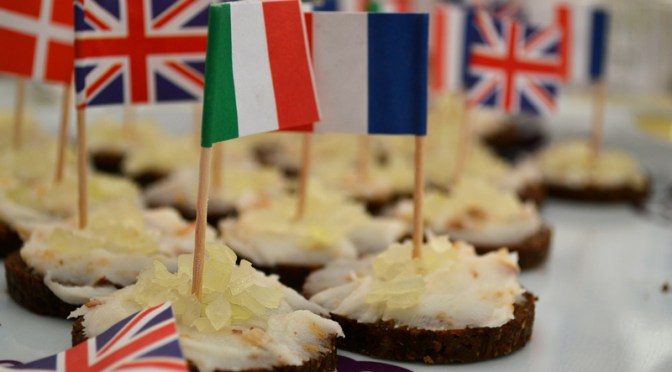
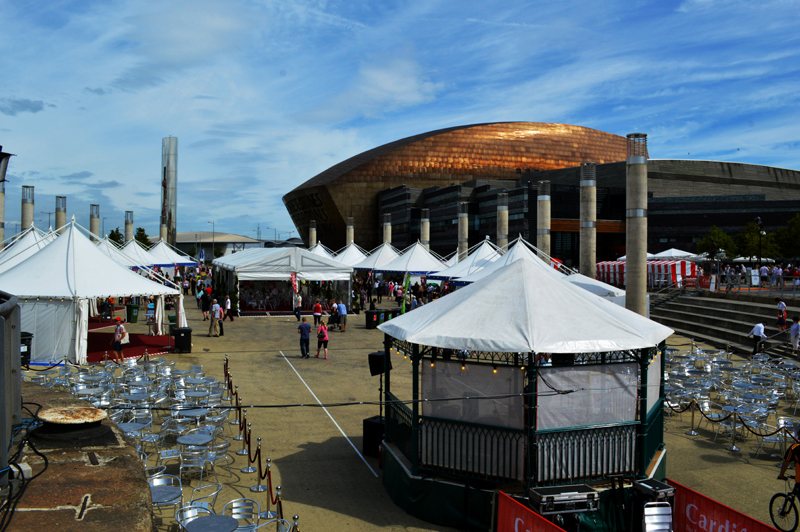
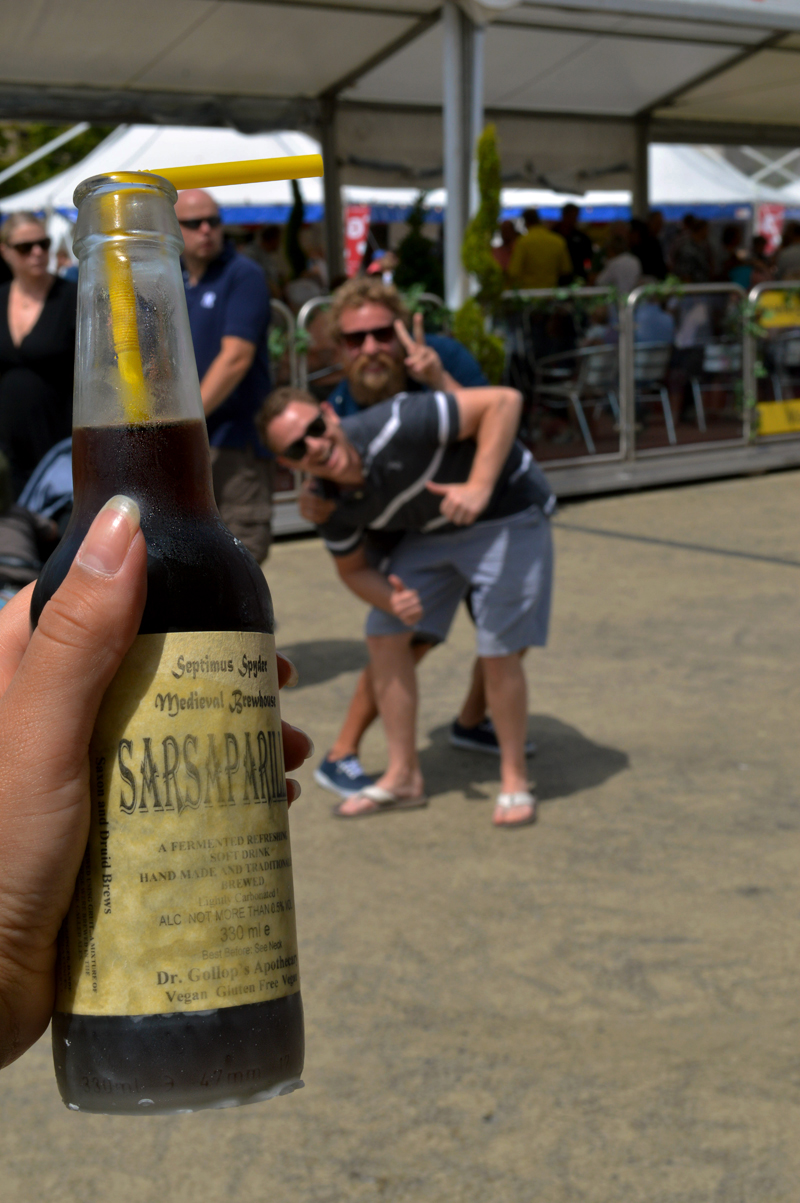
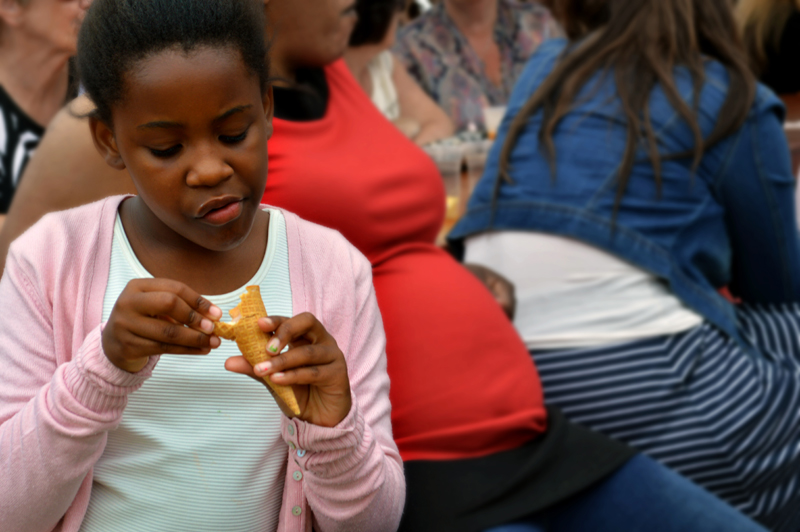
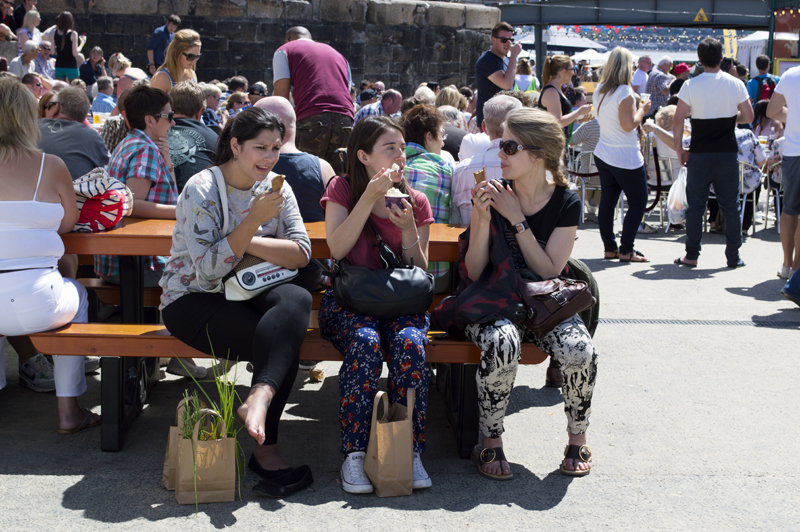
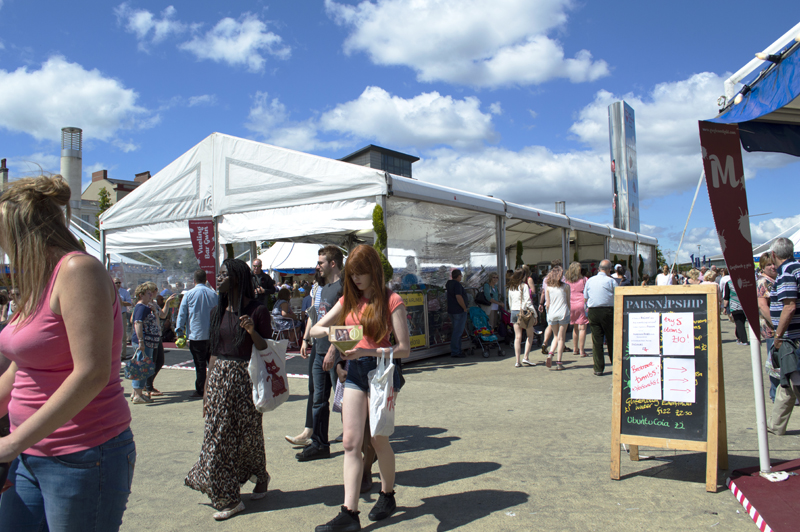
Did you make it down to Cardiff Bay last weekend for the Food festival? It was absolutely packed. We went along and ate some cheese. We also sent photographer Jessica Ventura there to enjoy the sunshine and take some snaps.

1small 2small 3small 4small 5small 6small 7small 8small 9small 10small 11small 12small

14small 15small 16small 17small 18small 19small 20small 21small 22small 23small 24small 25small 26small

27small 28small 29small 30small 31small 32small

Did you head down to the food festival last weekend?


***

More about Jessica: she’s a Brazilian student of design who loves photography, colour and  gastronomy. Currently she’s living in Cardiff and studying photography at the University of South Wales. 

100 days in Cardiff – The Doors of St Mary’s

We Are Cardiff contributor Jeremy Rees is recording his days in and around Cardiff with 100 photographs of local points of interest. We’ll be publishing some of them here on We Are Cardiff – and make sure you tune in to Jeremy as he presents the Saturday Soulful Breakfast on Radio Cardiff!

The doors of St Marys

st marys by jeremy rees

“The magnificent St Mary The Virgin Church in Bute Street is one of the areas most iconic landmarks, but I’d often wondered why its massive front doors had been closed off and why the entrance is actually at the back. I was there recently and asked the Vicar what the story was, I was surprised to hear that those doors have actually never been opened. In fact they are a facade with a stone wall behind them. Apparently at the time it was built the Anglican Church had a strict rule about fonts having to face the east and so the building was designed with the entrance at the rear, however the Marquess of Bute – whose money had paid for the construction – was most displeased that there was not a grand entrance on Bute Street – so the false doors were added to appease him.”

Thanks Jeremy! Catch you next time…

100 days in Cardiff – Corys Buildings

We Are Cardiff contributor Jeremy Rees is recording his days in and around Cardiff with 100 photographs of local points of interest. We’ll be publishing some of them here on We Are Cardiff – and make sure you tune in to Jeremy as he presents the Saturday Soulful Breakfast on Radio Cardiff!

Corys Buildings

corys buildings by jeremy rees

“Today’s photo is of a grand but long vacant building in Bute Street. Variously described on its frontage as ‘Corys Buildings’; ‘Merchants Place’ and (most intriguingly) ‘170 Knightsbridge’ the huge building has been up for sale for years and looks very forlorn in the shadow of the gleaming new Wales Millennium Centre across the road. I only ever see it being used when the BBC are using it to stand-in for Victorian London on Doctor Who or some such . It is crying out to be turned into a hotel, and I’m sure would make a mint if some multimillionaire hotellier would only take hold of it and give it a new lease of life. I’d do it myself if I was a multimillionaire. Ah, well… ‘This time, next year’ – as Del Boy used to put it.”


Thanks Jeremy! And make sure you all tune into Radio Cardiff, online or 98.7FM. Catch you next time…

100 days in Cardiff – The Non Pareil Market

We Are Cardiff contributor Jeremy Rees is recording his days in and around Cardiff with 100 photographs of local points of interest. We’ll be publishing some of them here on We Are Cardiff – and make sure you tune in to Jeremy as he presents the Saturday Soulful Breakfast on Radio Cardiff!

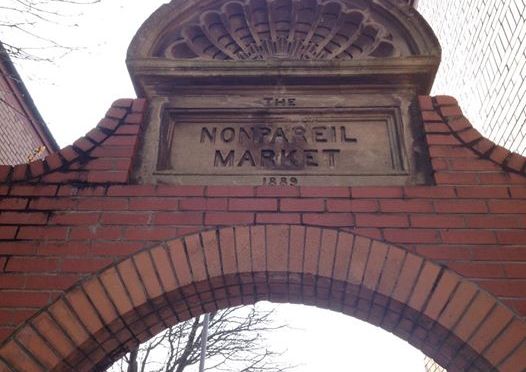
The Non Pareil Market

non pareil market by jeremy rees

A mystery… Nearby where I live in Cardiff Bay (The Docks as it’s still known to many) there is a arch into a small housing development. Inlayed into the brickwork is a stone from a much earlier time bearing the words ‘Nonpareil Market 1889′. I pass by this arch often and wonder what the market sold and what happened to it. Oddly though, I can find no record of it either online or in the local history books – but it is clear that I’m not the first person to try to find out. All I can glean is that Nonpareil was the name of a sugar plantation in Guyana, South America – I know that many Guyanans settled in Tiger Bay and the Docks so that may be a clue, but as to where the stone came from and why it’s there, that’s still a mystery.”

Do you know about the origins of the Non Pareil Market sign? Leave us your comments below…

“Butetown is my hometown” – Beatrice

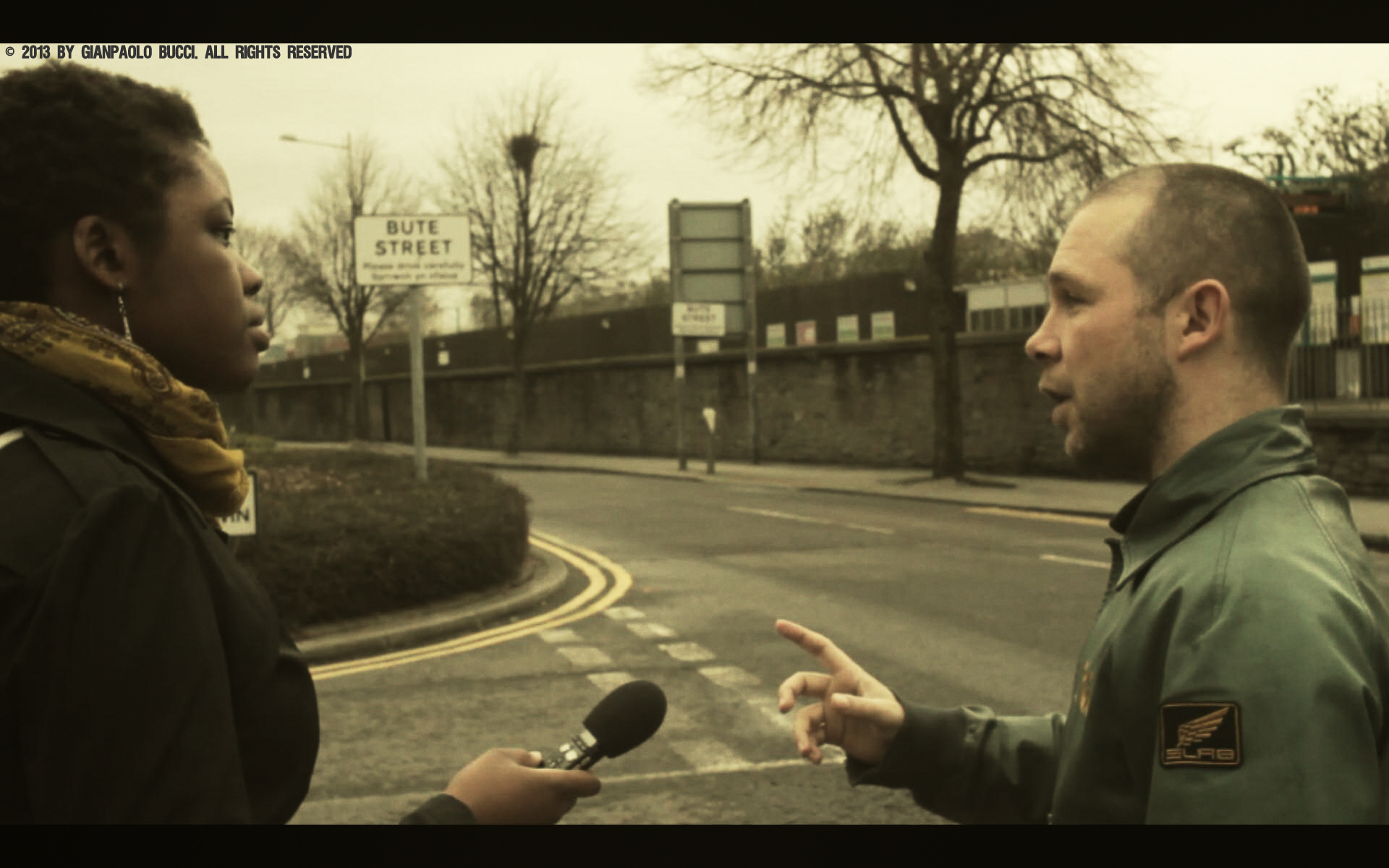
Gavin Porter Giving a tour of Butetown-by Angelo Gianpaolo Bucci

Butetown and me have never been more than acquaintances. As a journalism student at Cardiff University back in 2009, I used to walk down Bute Street only to head to the Bay, unaware of what laid behind the terraced houses that decorate the sidewalk: I would glance at the African shops and the colourful murales on the right hand side of the street and assume I knew something about the place.

I couldn’t be more wrong about it. I ignored that since the early 18th century Butetown has been the multicultural spot of the city, a place where people from different continents lived in the same Victorian house; nor I knew the first Yemeni and Somalis sailors making landfall to the Bay where also the founder of Britain’s first mosque in 2 Glynrhondda St, Cathays. I knew very few about Butetown up until March 2013 when I visited the Diff again after working in London. This time I was determined to learn more about the area for personal and professional reasons.

On the personal side I needed to know more about African culture and migration. Despite being in Italy from Congolese parents I haven’t lived in an African community and so my knowledge of the  continent and its cultures was limited to what I read, watched and was told. The hunger for information wedded so well with my professional soul as I started to work on a documentary on migrants from Sub-Saharan Africa.

Back in 2011 and throughout 2012 few trips brought me to Oslo, Brussels and Istanbul. And in these cities I couldn’t help but notice the urban isolation of African migrants. In Istanbul, tall, muscled men would appear during the day, selling goods on the Galata bridge over the Golden Horn and disappear when the sun sat down, like invisible presences. After doing some research and discovering how few has been written on these communities, I decided to work on a reportage called “Where we are”, with the aim of discovering and let emerge un(der)reported ethnic groups and cultures, baring two questions: are these groups isolating or isolated? How are people living there?

With these queries in mind and the will to avoid the same old representation of migrants, I began working with Gianpaolo Bucci, an Italian filmmaker who quitted his job at RAI, the equivalent of the BBC in Italy, to focus on social issues and human rights.

From a reportage confined to few European cities, the project became an ambitious multimedia documentary to be shot in 12 different cities of the world. It brings the name of (IN)VISIBLE CITIES.

Among those cities, Cardiff was the first stop and Butetown the main focus.

Butetown and me have always been acquaintances maybe because nobody properly introduced to each other. Our relationship status updated in March 2013 when the first episode of (IN)VISIBLE CITIES was shot and when I befriended with people who have lived in the area sometimes for their whole lives.

It was a long chain of people introducing us to other people that made everything possible. Never the “everyone knows everyone” expression was more adequate. Although Butetown might appear as a closed space, confined between a railway and the Taff river, it is a “town” where doors are literally always open. This works for historic institutions like the Butetown History and Arts Centre as well as for private houses. So shows the way Himmat welcomed us.

Himmat came to Butetown few years back after living in other areas of Cardiff and in Denmark. He’s originally from Sudan, but loves the idea of his two little girls growing up in an environment where children gather in the yard and don’t even notice whether they’re from Yemen or Somalia or Malta.

Race was never an issue for the Borge’s either, an eleven-people-family whose ethnical roots can be traced back to Malta, France, Somalia, India … just to name a few. So it’s entrenched their love for Butetown that one of the daughters, sitting in the loud and crowded kitchen a stone away from the Bay touristic restaurants, proudly told me she’ll never leave, because that’s her “hometown”.

Very few people told us about government benefits, how they have struggled to get where they are or crime, but those who did have diverse opinions on these issues. Some mentioned about how Butetown is considered or is a “tough area”, or has been isolated by the government or the place has been a safe haven for multicultural groups. But mostly we discovered intimate stories and African tradition we did not know about.

Like when we first met Maher, a single dad who lives near what was the historic Loudoun square. After recounting his tales of a former sailor coming from Sudan, he let us in his kitchen where we had a taste of Sudanese culture. Maher’s house was filled with a pungent and exotic perfume which he revealed being an incense women use before getting married. Back in the days, his mother might have used that too. He smiled when showing some pictures of his family and parents, especially his mom, who had two long excavation on her cheeks, apparently scarves resulting from a traditional mark made to differentiate tribes. He commented only by saying: “That’s what they do!” Like he wasn’t part of the Sudanese frame anymore.

This is something that happens to migrants and second generations: crisis and loss of identity. I experienced it myself when others were asking whether I feel Congolese or Italian. British actress Thandie Newton talked gorgeously about her identity crisis as a girl born from Zimbabwean mother and British father, in a TED Talk. But finding the same paths in people in Butetown just brought me closer and closer.

Hassan for example, was the youngest of the people we talked to. Born Somali in Denmark and now a happy resident of Butetown, he confessed he’s a bit confused about his cultural identity and hopes his children will have a clearer vision about this. Hassan is a poet, one of the group that together with producer Gavin Porter, created a two-day show on Somali culture in Butetown. The pièce, De Gabay, took place early in March and introduced to other people living in Cardiff a culture that is now embedded in the history of the capital.

I could go on and on talking about people met in Butetown and how they broaden the idea of (IN)VISIBLE CITIES, but it’s better not to spoil the contents of the documentary, that will soon be screened in Seoul in South Korea after being promoted in the U.S.

Not too long ago our chase for African migrants led us to Los Angeles and then continued as we crossed the US from coast to coast.

No question we’ll be back in Cardiff to show the documentary as well and catch up with what are now not only protagonists and makers of this adventure, but also friends.

Ngalula Beatrice Kabutakapua is an investigative journalist and photographer born in Italy but with Congolese roots. In her seven years spent working in the media she has collaborated with media companies such as The Guardian, L’Espresso, Radio France Internationale and the BBC. Focused on international development, migration and human rights issues, she has also been a staff member of the UN Department of Information and is currently an editorial trainer for the US-based NGO World Pulse. She is an active volunteer and works in Italian, English and French.

***


Street seen: on your bike

street-scene-on-your-bike-web

“I live in the bay, I like cycling up to the centre of town. It doesn’t take long. It’s so nice to be able to get around so quickly.”

As seen in: Riverside

Photograph by Helia Phoenix

***
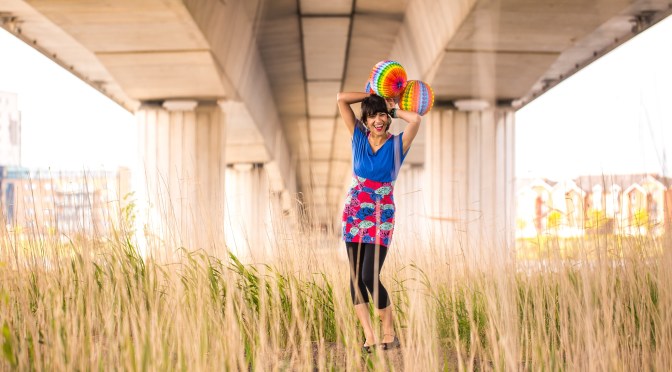
“That neighbourly feeling is what I love about Cardiff” – Helia

helia_web

I’ve thought about writing a We Are Cardiff story since I set up the site back in 2010, but could never decide on an angle. What to write about? What to focus on? Cardiff has been so many things to me, been the backdrop to so many events and decisions and happenings and versions and re-versions of myself. How can I pick one, two, a dozen from the swirling pool? And yet that’s what I expected from other people – and everyone else who has written for the site so far has managed rather splendidly. So perhaps it’s high time I stopped whining and did the same.

What is the measure of a place? How can you distil that essence into a single piece of writing? Memories, tissue thin, layers of a skin laid over and over the streets and alleys and roads and the same cracks in the pavement you avoid, day after day, year after year. From a new-born to a toddler through to university student to working stiff. Cardiff has been a lot of things to me. It’s where I was born. My earliest memories are dark and fuzzy – my tiny hands, pulling at the thick velvet curtains in my room on Pen y Wain Road. Running a stick along the railings in Roath’s flower gardens. Carrying water in my hands from the fountains outside City Hall to a puddle nearby where some ill-navigating frogs had abandoned their spawn. I was worried the tadpoles would die in there without the extra liquid.

Cardiff housed me during my student years. It was the comforting bubble that enclosed me as I stayed up too late, spent too much time in pubs and clubs and at house parties. It was the wall I banged my head against, trying to work out ‘what I wanted to do when I grew up’. It gave me answers.  (Sort of.)

And surely this is the measure of a city – a place that can transform and mutate and mould itself around you, no matter what stage of life you are at. Nearly all my university friends have moved away, and I’m asked on a regular basis how I can stay in the same city I’ve been in for so long. I try and explain, but I never seem to nail the answer. It’s not the same city it was when I was a student, or even when I was in my mid or late twenties. There are enough opportunities and diversity and change here to accommodate you, no matter what stage of life you’re at. It’s a different place now. It looks after me differently. I’ve found different things in it, and it’s brought out different things in me.

One of my favourite things about the city is how connected everyone is. New people you meet have random connections with people that you already know. They are someone’s ex-housemate, friends with someone’s brother, or they worked in Fopp together years ago. Although there’s a lot on here, the offerings pale in comparison to a larger city – our neighbouring Bristol, or a little further afield to London. But because our scene is smaller, it’s friendlier. You see the same faces over and over again, whether you’re at a metal gig, a film festival, a circus performance, a street fair, a club night, or an organic food market. And I like that. I heard someone describe Cardiff as Britain’s biggest village, and it’s that neighbourly, close feeling that I love about it.

Cardiff’s an amazing place to come back to. Of course, I get frustrated with it and I get tired of it and sometimes the smallness annoys me and my favourite bands don’t gig here and I want to leave it and move somewhere more romantic or exciting like San Francisco or the moon, of course. But when I get back here, I’m always filled with that intense sensation of how nice it is to be back. To return home.

I thought I’d finish with a list of my favourite things to do in the city. Who knows how long it’ll be possible to do any of these for. But if you get the chance, you should.

–          Visit all of Cardiff’s parks. We have some amazing and diverse open public spaces (Cardiff Council – list of parks). I still haven’t been to them all. Roath Park is obviously lovely, but there are some undiscovered treasures just a little way out of the centre. Try Cefn Onn, or the Wenalt.

–          Wander around the indoor market. Get a cup of tea and bacon sandwich (or vegetarian equivalent) from the greasy spoon upstairs, watch the people bustling around below.

–          Fossil hunt. Wait for low tide then walk from the Custom House in Penarth around to the pier, looking for fossils. Once at the pier, consume ice cream.

–          Car booting. In the summer, visit Sully car boot sale (Sundays only).

–          More car booting. All year round – visit Splott market on a Saturday. Fruit, veg, baked goods, car booters. All of humanity are here.

–          Run. Do a 10k run to raise money for charity. There are a few races that take place throughout the year, most of them either taking in the lovely scenery around Cardiff Bay or Bute Park. (My favourite running route is the 10k Cardiff Bay trail, by the way).

–          Music. Buy records from Catapult and Spillers, ask the music junkies working in both places for recommendations. Ask about local bands and artists. Ask about what gigs are on. Buy music. Buy tickets for gigs.

–          Get cultured. Go to the museum and art gallery. Entry is free! My favourite room is the room in the museum with all the crystals and minerals and rock formations. Beautiful.

Helia Phoenix set up We Are Cardiff in 2010. In 2012 the site won Best Blog at the Wales Blog Awards, and in 2013 she produced a documentary based on the site called We Are Cardiff: Portrait of a City, premiering at Chapter Arts Centre on 7 July 2013. She’s written a biography about Lady Gaga and entertains notions of writing a novel one day. In her spare time she enjoys travelling, listening to music, and long walks in the rain. Twitter @phoenixlily tumblr an antisocial experiment web heliaphoenix.com instagram @_phoenixlily_. She currently lives in Butetown.

Helia was photographed in Hamadryad Park, underneath the A4232 by Simon Ayre

***

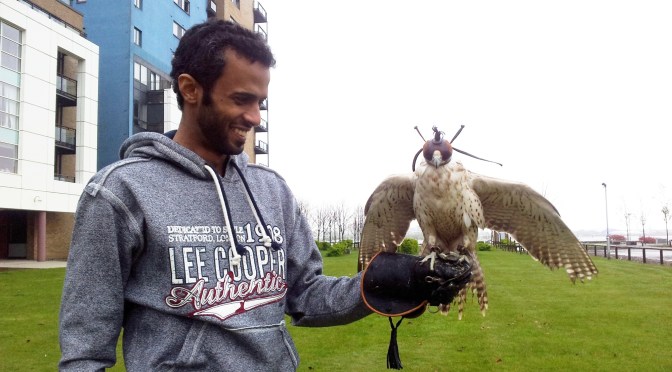
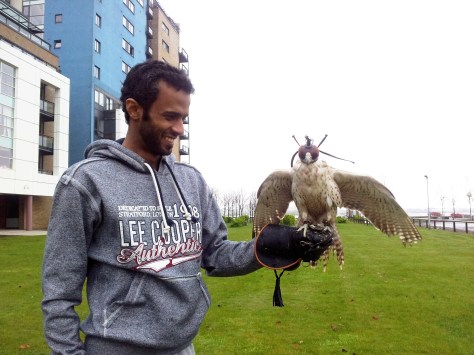
Street scene: wing span

street-scene-hawk-web

“I suppose you don’t see something like this in Cardiff Bay everyday. This is Diab. I’ve been training him for a while. We fly him here, or out on the farm. I think he likes the camera!”

As seen in: Cardiff Bay

Photograph by Helia Phoenix

***

ProjectCardiff Exhibition Preview invitation, Monday 15 October 2012

Earlier this year, ProjectCardiff announced their intention to create a portrait series of 50 people who make a contribution to the creative community of Wales’ capital city. The photographs were taken by Lann Niziblian, who is one of We Are Cardiff’s most recently acquired photographers! We Are Cardiffite Helia was asked to sit for a portrait, and the full series of photographs will be on display in the Senedd in Cardiff Bay.

An Exhibition of Photographs by Lann Niziblian

Kindly sponsored by Julie Morgan AM

Monday 15 October 2012, 18:00-20:00*
Oriel, The Senedd, Pierhead Street, Cardiff, CF99 1NA

Project Cardiff would like to invite you to attend our exhibition opening at the Senedd on Monday the 15 October. The exhibition continues until the 2 November 2012.

Curated by Spike Dennis.

See the full list of ProjectCardiff’s inaugural portrait participants

“Cardiff’s buildings may change, but the feel of the city never does” – Bazz

bazz_web

That famous Thomas Wolfe quote – “you can’t go home again” – doesn’t really apply when you’re referring to Cardiff. Buildings may change, but the feel of the city never does.

When I was growing up, to take a trip down to Cardiff Bay seemed nothing short of ‘danger tourism’. It might just be my over-active imagination embellishing these memories, but the Docks were like the set of a post-apocalyptic film back then: derelict warehouses seemed to be everywhere. Now it’s one of the gems of South Wales: a hive of family-friendly activity as well as late-night revelry.

The Hayes, in the town centre, used to be where you went to get your bike fixed (Halfords), or your photos developed (Jessops, which had a little robotic man in its shop window that haunted my dreams for a worrying period of time). In late 2009, I came back from a long trip to Australia to discover the retail Mecca that is St David’s 2, built over that once-dreary site; a centre so impressive that people from as far afield as London prefer to come here to do their shopping.

The fear of missing out is a powerful one. If you’re coming back to this city after moving away, you’re not coming back to the small village where nothing ever changes; where everybody shops at the local petrol station. You’re coming back to a city where exciting things are happening, be it in sporting, cultural or business terms (or all three). I’m appreciative of the fact that I’m living in Cardiff at a time when it’s experiencing a renaissance.

Some people are quick to drop everything and leave for another city, or country, and in some cases that’s understandable. For me, I have cultivated many friendships over the years that I would find hard to turn my back on so easily. Many of these were formed at places such as the gym in Sophia Gardens, which hosts the richest tapestry of characters I’ve ever encountered. One of the more outlandish individuals is a Phil Collins lookalike who accessorises a skimpy leotard with a bumbag. I’ve made some great friends there (though not so much with Leotard Man, for obvious reasons), and the storylines that have emerged from within the four walls of a single weights room have convinced me that I will one day write a book on these people.

I went to Ysgol Gyfun Gymraeg Plasmawr in Fairwater. It’s an amazing school. There were only three years there when I started because it had gone from being a lower school to a new, standalone institution. It meant that everyone knew each other, which was definitely not the case in the rest of Cardiff’s huge schools. My little brother goes there now, and to hear of all the developments it’s undergone since I left (including, to my eternal jealousy, an astroturf pitch and a new gym) reinforces my belief that the Welsh language continues to grow in the city.

Most of my friends in their mid-twenties are teachers, and I realise that my teachers in Plasmawr – back then, all around the same age that I am now – were still finding their way; their experiences as educators were just as new as ours were as pupils and, on reflection, they did an impressive job. English classes were a highlight, and my teacher Mr Jones was an inspirational presence who had a profound effect on the path I chose upon leaving school.

I wasn’t the perfect student by any stretch of the imagination, and my friends and I were prone to the odd displays of smartarsery. In history class one day, our new teacher immediately regretted asking our disruptive group if one of us wanted to take the lesson, because one of us stood up and did just that. But those are the good memories you take with you.

Studying for my undergraduate degree in Aberystwyth some years ago, I encountered certain Welsh people from outside of South Wales from whom I got the impression they thought people from Cardiff were somehow ‘less Welsh’ than them. Now most of them live here. A microcosm of North Wales can even be found in Canton, adding to the melting pot (or, better yet, fruit salad) already inherent in Cardiff’s DNA.

Three years ago, I was lucky to be accepted into Cardiff University’s International Journalism Masters programme. In a large group of students, I was the only Welshman (and one of only three Brits) on the course, and the UN-like environment of the ‘newsroom’ was incredible. It was interesting to see these foreigners’ perceptions of my hometown too. Maybe they were just being polite, but they seemed utterly sincere when they told me they loved Cardiff. It was a unique experience at the Bute Building in Cathays Park.

My favourite part of Cardiff is the sprawling Pontcanna Fields. There aren’t many cities that can boast a park where you are literally surrounded in all directions by greenery, and it’s one of the prime examples of why the city is one of the greenest in Europe. You can even see Castell Coch from the fields, which emphasises Cardiff’s accessibility to other distinctly non-cosmopolitan regions. Whether I’m there walking the dog or running with my friend, this place has a calming effect on my soul.

As a youngster, I had no reason to go to Cathays or Roath – now I’m there regularly. It is the bohemian heart of the city, and the elite unit of Cardiff’s intelligentsia that is my quiz team has often been known to storm the competition at the magnificent Pear Tree bar on a Sunday. (In the past, we’ve been affectionately referred to as the ‘Seal Team 6’ of quiz teams – mostly by ourselves.)

I want to be here when Cardiff reaches its tipping point and gets the global recognition it deserves as one of Europe’s finest capital cities. It won’t be long.

Bazz Barrett works in PR and lives in Pontcanna. He blogs for therugbycity.wordpress.com, tweets as @bazzbarrett and can sometimes be found avoiding leotard-wearing Phil Collins lookalikes in the gym – a workout in itself.

Bazz was photographed at the War Memorial in Alexandra Gardens by Ffion Matthews

***


“I’ve embraced all the opportunities Cardiff has offered me” – Anna

anna_milewski_web

You never really stop to think about what you like about the place you live, do you? You just, sort of, live there. You go through the motions, ride out the bad times and enjoy the good times; but you never really stop to think what it is about that place that you love or just what it is that keeps you there, do you?

Well, that’s how Cardiff’s always been for me, anyway. The seven years I’ve lived here have definitely been mixed, and it’s only during the latter few that I’ve truly settled and stopped gazing at the Severn Bridge!

In fact, when I was first asked to do a We Are Cardiff entry I remember stalling for ages before telling Helia (founder of WAC), “to be honest, I’m not sure I really like living here.”

I can’t really pretend that my ending up here was the result of informed, well thought-out ‘life choices’ like you’re encouraged to make by teachers at school. My decision to move here seven years ago from Pembrokeshire, for university, was shaped largely by circumstance really, and my decision to stay here after university was, at first, a reluctant one.

I certainly loved university; I enjoyed my course and made some great friends. But as soon as I graduated I was desperate to join the rat race and get to London, so I was secretly a bit disappointed when my boyfriend moved to Cardiff and suggested I stuck around and moved in with him, but it did make sense.

I remember having a conversation with my mum who said everyone should ‘do London’ at some point; I felt sure she was right. Despite having a job in Cardiff, I remember trawling the London job sites looking for my ticket out of Wales and I even secured a job there and was ready to make the move. Something stopped me from taking it and I carried on as I was, albeit unenthusiastically.

So the first few years after university in Cardiff were reluctant, to say the least. I watched my friends fly high in London and elsewhere and I resented staying here. I started to pave my own path – but at the back of my mind I always felt the Cardiff chapter was one I was simply skating over.

I’m not quite sure exactly when things changed; but I remember around two years ago driving across the barrage back into Cardiff Bay after netball training and feeling a real sense of contentment. It was a gorgeous sunset and I remember feeling really at ease.

Since then I’ve really changed my view of where I live. I’ve realised how much control you can have over your own fate and I’ve embraced all of the opportunities Cardiff has offered me. My roots have been firmly planted here now and I can’t imagine started afresh anywhere else. I’ve also realised the value of being relatively close to family in West Wales.

Of course, I’d be lying if I said that this is THE place for me or that I’m ‘meant’ to be here, but what was an initial reluctant acceptance has morphed into a ever-growing appreciation. Cardiff really is a great place to live, it’s become my home and I’m here to stay.

Anna Milewski works for the Federation of Small Businesses in Cardiff. Away from the office, she is an avid netball player (for MJM), an occasional horse rider and an average jewellery-maker. She loves the countryside and says there’s nowhere she’d rather be than on a deserted Marloes Sands in Pembrokeshire. Failing that, she’s happy wandering around Splott market on a Saturday morning picking up all sorts of tat for the flat – or having lunch in Cowbridge on a sunny Sunday. She currently lives in Cardiff Bay.

Anna was photographed in a field at Culverhouse Cross by Adam Chard

“Find yourself feeling very proud to be a Cardiffian” – Alistair

Alistair Stuart

My name is Alistair and this is my ode to Cardiff. Well, as close to an ode as an amateur like myself can get.

I have lived near or in Cardiff for most of my life. I grew up in Cowbridge, approximately 14 miles away, and in those hazy days of childhood, Cardiff was the proverbial “Big City”; shimmering (in places), noisy and just a little bit scary. Now I come to think of it, Cardiff has seen me through some pretty important junctures in my life. It has witnessed my darker days of dodgy student attire, misguided boyfriend selections and many a questionable home dye job! It has nurtured me through adolescence, the university years and now my current incarnation as a “young professional”- whatever that means!

The great thing about a place like Cardiff is that there is literally something for everyone. Granted, that is a worn-out expression, but in this case it truly applies. Whether you’re a lover of vintage goods, farmers markets, art house cinema, filthy nights out, fine food, not-so-fine food or shopping- oh! the shopping- Cardiff has it all. I know what you’re thinking; most cities in Britain do have it all these days, but my response to that is that not many other cities have achieved that elusive blend of cosmopolitan edge and homeliness that Cardiff has.

My partner and I recently began an illustration and design enterprise, the first few months of which were spent selling our wares at craft fetes and gift markets around the city. Despite the early mornings and lugging around of heavy boxes I was both thrilled and inspired by the amount on home-grown talent on show. I encourage every resident of Cardiff to visit the many events taking place around the city as much as possible – my particular favourite is the Joie de Vivre market at the Norwegian church which offers up a variety of Welsh-made products in one of the most charismatic venues in Cardiff.

Cardiff continues to evolve and, I think, improve; and whilst there are always emerging attractions there are also hidden gems that occasionally fling themselves into your path. Jacob’s Antique Market, Madame Fromage delicatessan and Milgi’s bar are all places I stumbled across by chance, invariably using the expression “How did I not know about this place sooner?” Now they are amongst my favourite haunts.

Of course, like most things in life, Cardiff is not all champagne and roses – it certainly has its dingier regions – but in all honesty our fair city would not be the same without them and their absence would detract from its eclectic charm. Waxing lyrical, you say? Yes, but I mean every word.

After reading this I hope you take a moment or two to wonder at the magnificence of our capital city, kick back with a cocktail (or your tipple of choice) and find yourself feeling very proud to be a Cardiffian.

Alistair Stuart is a freelance illustrator, avid dickie-bow wearer and proud parent of Slightly Wobbly Designs www.slightlywobbly.co.uk.  He lives with his boyfriend, Jonny, in Cardiff Bay.

Alistair was photographed at Madame Fromage in the Castle Arcade by Amy Davies.
See all the photos from Ali’s photoshoot on Amy’s blog.

Did you know that We Are Cardiff are making a film about our project? It’s about all the lovely things that happen in the city over the course of 2012. If you’re sick of bad press about the city, why not donate just £3 to help us make a lovely film we can all be proud of? Donate money here or check the film’s blog here


***