Tag Archives: cardiff bay

“Volunteering gives a great sense of satisfaction and achievement” – David

dave-and-bob-web

I was born in Malta and spent my formative years in the West Country. I never expected to end up in Cardiff, but I have spent all my working and volunteering life in the city since 1996.

Equipped with a Master’s degree from Sussex University I began my new life here as a Social Scientist at Cardiff University. My existence as a young academic proved less than exhilarating so being a recent business graduate I decided to set up my own Cardiff-based security company. In order to accrue the relevant experience I embarked upon a series of assignments in a variety of private security companies in tandem with the odd specialist course. I took one-on-one boxing and martial arts classes under the auspices of my ex-military friends – who were already on “the circuit” – along with some close protection and surveillance courses.

Looking back this was an exciting time in a prosperous city and I was young and fearless. I worked as a bouncer at the Metro Bar in Charles Street for a while. Bizarrely this was with a Welsh friend who did the same degree as me when I was at Plymouth University a couple of years earlier. He had also gone on to do a Master’s making us the most educated bouncers in Cardiff with four degrees between us! John continues to manage the doors around Cardiff, despite earning a fair old whack as a Health & Safety Consultant, albeit with a black belt in Aikido. I was also a ‘bodyguard’ for a while working for media clients in Cardiff (which is not half as exciting as it sounds), a ‘private detective’ for a local solicitor (surveillance and serving writs) and even a ‘store detective’ in some of Cardiff’s most high risk shops (mainly arresting professional shoplifters in the city).

It quickly became clear that if I was ever to progress in the private security industry with the “right stuff” I would need some form of military experience. To that end I joined my local volunteer Territorial Army Unit for three years and went on to become a Cadet Instructor for a year. This was where the volunteer bug really took hold…

On doing a bit of research into local volunteering at the Wales Council for Voluntary Action’(WCVA, Fitzalan Place) I noticed that the Cardiff And Vale Rescue Association (CAVRA) were looking for volunteers right on my Cardiff Bay doorstep. The rest, as they
say, is history!

I started as a team member 10 years ago and have progressed up the ranks to a Trustee and Director. I knocked the idea of starting up a company on the head and paid the mortgage with a job at the Assembly. Though I would never be rich I would be making a difference to the local community doing something I loved – if only part-time. When money is not the motivation a different side of the human condition emerges…

CAVRA was founded in 1998 at a time when flooding was overwhelming the emergency services in Cardiff and the Vale. It is an entirely voluntary search and rescue organisation, and a registered charity. Our purpose is to provide back-up personnel and frontline assistance to the Emergency Services (Police, HM Coastguard etc) in a range of situations, including searches for missing persons, during times of adverse weather conditions, natural disaster or civil emergency. We are a lowland search and rescue unit specialising in flood and swift water rescue as well as recovery. At present CAVRA has around 30 volunteers. We are highly trained in First Aid and some of us have specialist skills in land search, All Terrain Vehicle (ATV) rescue, dog handling and water rescue. We also have a Rescue Boat on permanent standby in Cardiff Bay.

Career highlights include receiving a volunteer of the year award in 2007 for getting police officers to work using 4x4s when the snow had closed most of the roads. I was also a Rescue Boat Medic when one of world’s most dangerous events the Motor Ski-ing Championships came to Cardiff Bay. I have previously been a Director of Training and Public Relations but my current role is Director of Aquatic Operations and Specialist Aquatic Body Recovery (SABR). I essentially fulfill four roles as a Rescue Boat Coxswain, rescue swimmer, medic and dog handler.

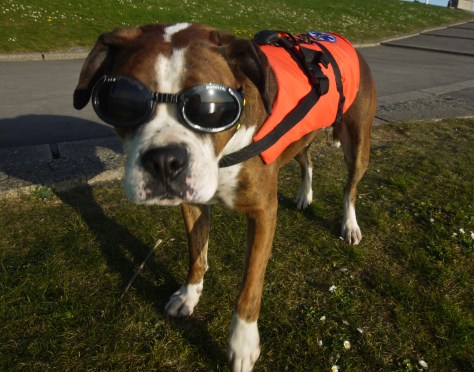
Bobby is my latest dog and the only dog I have trained in Search and Rescue. I rescued him myself from Croft Kennels in Bridgend. I was looking for a medium sized dog that I could train up as a Cadaver Dog. I ended up with a large boxer-cross who has an uncanny knack for finding the living! Boxers are not normally good search dogs but Bob is crossed with something (we don’t know what!), giving him some invaluable traits. Normally Search dogs are air sniffing tracker dogs trained to national standards.

Bob has been obedience trained externally but Search trained in-house (we also have Newfoundlands and St Bernards trained by our own dog trainers). He works as an off-lead Search and Return dog. If he senses something, or someone, who shouldn’t be in a given area he ‘points’ (snout down, right leg up, tail straight). If he sees a motionless human he will ‘approach’ and lick their face and paw their chest. If there is no response he will ‘return’ to me or the nearest team member. He also does his ‘Chief Moral Officer’ bit when the team is tired and the waiting relatives are anxious – a waggy tail and a pat on the head work wonders especially when the Newfs and St Bernard’s want to play.

Five year old Bobby thinks it’s an elaborate game. To him, all missing people are a reliable source of cheese or treats which require his personal attention. Though when he has his ‘uniform’ on he seems to enter a different mode of thinking – I think he knows he’s working at some level. He lives with me at my Cardiff Bay flat. His hobbies are loudly sighing, competitive begging for food and endurance sleeping. And they say dogs turn into their owners..!

Volunteering gives a great sense of satisfaction and achievement. It also gives you a window on Cardiff you would never ordinarily get a chance to look through.

There is of course a darker side to Search and Rescue. The harsh reality is that there are some missing people who you will not reach in time. Some have been missing for so long that exposure will have claimed them. Increasingly people want to take their own lives. No matter what the situation, CAVRA strives to provide some form of closure for the family and loved ones involved. Saving a life is the highest calling a volunteer can be asked to undertake but we always prepare for the worst case scenario.

Previous generations may have called this the ‘Dunkirk spirit’ – but people still come and volunteer when needed and they are often the un-sung heroes. They do it because they care about their community and the people in it. They want to put something back.
dave_and_bob_rescue_dog_web

David Wills works at the National Assembly in Cardiff Bay where he is jointly employed as a Senior Policy Advisor to the Welsh Conservative’s Policy Director and a Political Aide to the Deputy Presiding Officer and Member for South Wales Central. He was formerly a Social Scientist at Cardiff University and is currently a Member of the Association of Business Psychologists, where his research interests include: Organisational Psychology, Psychological Hardiness, Leadership Profiling, Situational Awareness and the Development of Performance Indicators for Elite Groups such as Endurance Athletes, Specialist Police Units and Special Forces. In his spare time he writes screenplays and books on the theme of Psychological Resilience and Leadership.

Civil Aid Voluntary Rescue Association (CAVRA) are always looking for volunteers. No experience necessary. You provide the time – they provide the training. http://www.cavra.org

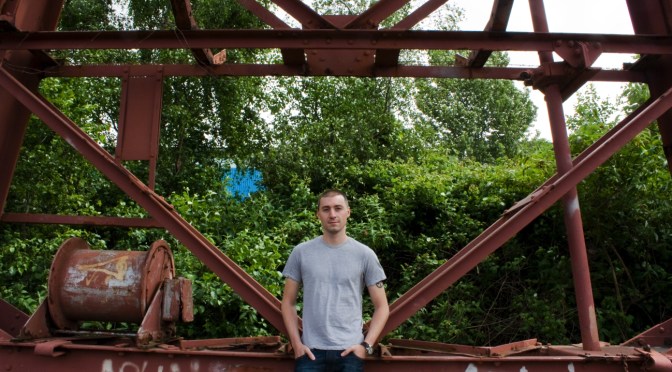
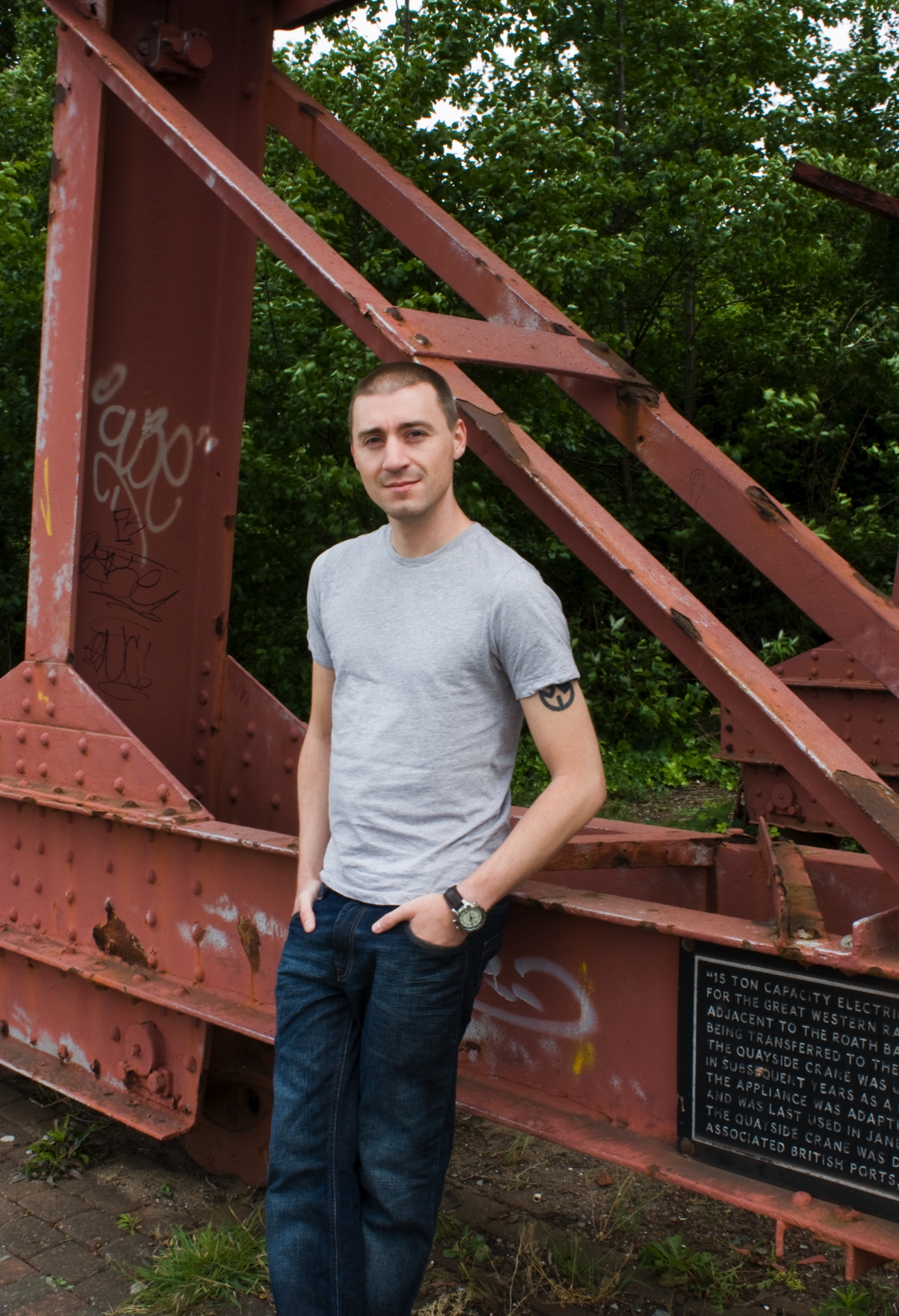
David and Bob were photographed on the Cardiff Bay Barrage by Doug Nicholls. To see the rest of the photos from the shoot, see Doug’s We Are Cardiff set on Flickr.

***

“There’s a great feeling of community here” – Dom

dom kane by ffion matthews

As I grew up, London was the place to be for any aspiring music producer, but as the digital revolution took place, I think location became less of an important factor. Until a few years ago, I was living in London as it made sense being a resident DJ at Ministry Of Sound and Space Ibiza, but I eventually grew tired of the costs of living there along with the local politics of club promoters and record labels. I’m a city-boy through and through, and having been born in Wales, I decided to try out the capital city here. That was three years ago, and I can’t see myself being anywhere else right now. Cardiff allows me to lead a lifestyle I could have only dreamt of in London.

There’s a great feeling of community here for a city of its size. The local council is absolutely fantastic at organising events from international food and drink markets, to sports events on big-screens in the bay. There’s also a huge focus on the arts within Cardiff; I’ve been to more galleries and met more musicians/photographers/designers here than I ever would have imagined. Then there are the venues; from major events at WMC and CIA, to breaking comedians at Glee, or innovative eclectic nights at Cardiff Arts Institute (with Brains on tap, and a Funktion One sound-system to boot!).

I was born in West Wales and spoke fluent Welsh as a child, but as I had English parents and an English accent, the local nationalists decided I was an unwanted English boy, and made this more than clear. This made me rebel as a teenager, and as soon as I was able, I moved to Bristol. I then pretty much resented Wales and anything Welsh for quite a few years, at least until I came to Cardiff. Now? I’m Welsh. I’m a Cardiffian, and bloody proud of it too!

This may sound a bit silly, especially as I hate football, but I saw on Twitter last summer that Cardiff football club were playing an important game the following day and Cardiff council were thinking of setting up a big-screen-TV in the bay. The following day I heard that they went ahead with it, and as the weather was stunning I thought I’d go down and take a look. What I found, was an incredibly organised event with thousands of people watching a giant TV screen on the back of a lorry, along with stewards, full security, refreshments, police, mobile food bars, the works! You wouldn’t find this type of event with such professionalism and organisation in many other cities around the world, especially with such short notice.

I love the area I live in, with lake views and a local tavern, but only a five minute walk into the city centre and a 10 minute walk to the bay. I really couldn’t ask for any more. I’ve always said that Cardiff comes without the pretentiousness of most other capital cities; I can go to any bar/restaurant/venue here, and I’m always made to feel comfortable. Cardiff isn’t the place to be seen, it’s just the place to be!

Dom Kane started DJing in 1992 when free-parties were rife, discovering the love of performing to a 2000-strong crowd, by 1995 he was performing with residencies around the Southwest, and guest slots in Ibiza during the summer of 1998. By 2004, Dom began his monthly residency with Proton Radio, and then in 2006 he launched Xeton Records. Visit his website here. Dom currently lives in Cardiff Bay.

Dom was photographed at Bute East Dock by Ffion Matthews

dom kane by ffion matthews

***

“Cardiff Bay – what’s in a name?” – Jeremy

jeremy-rees-web

I get out and about in Cardiff quite a bit, it goes with the job. Unsurprisingly, then, I’m often asked the question ‘where do you live?’ It’s a fairly humdrum, commonplace way to initiate small talk. For some people the reply to such a query would roll off the tongue without a second thought. In my case though, it’s not such a straightforward matter….

For the record, I live in a terraced street in a cluster of Victorian houses near where the River Taff ebbs and flows its way towards the Bristol Channel. The houses on my street were built to accommodate the families of men working in what was one of busiest seaports anywhere in the world. The houses all look pretty much the same from outside, but all are built slightly differently – some quite considerably larger than others to reflect more senior positions of the inhabitants, with the Sea Captain’s houses being the largest. The house I live in is one of the smaller ones and was home to a docker’s family for 65 years. That family has gone, but the stories of their time here lives on in the memories of my neighbours who have lived on the street for decades. It’s a friendly and welcoming place to live; the community is richly diverse in ethnicity, and that’s nothing new – the area is part of what many regard as the oldest multi-cultural community in Britain. To those who’ve lived here for generations, this area is known simply as ‘The Docks’. Separated from what used to be Tiger Bay by Clarence Road, it’s a small enclave that survived both the bombings of World War 11 and the brutal bulldozers of Cardiff Corporation in the 1970s.

To call it ‘The Docks’ is a nod to its history, its heritage – to the stories of the people who lived and died here, but it can’t be denied that the name no longer reflects the area. What remains of Cardiff Docks is a good couple of miles away, and the only vessels we now see calmly making their way down to the barrage are yachts and the occasional Water Bus. Estate Agents have applied the term ‘Cardiff Bay’ to these streets for 20 years or more, and unsurprisingly that’s how many others of my neighbours describe where they live. The street is a stone’s throw from the heartland of ‘new’ Cardiff – the Wales Millennium Centre, Mermaid Quay, The Red Dragon Centre and the profusion of restaurants and arty shops that have transformed this once neglected part of the City into a thriving cultural hub. For me, though, all the impressively shiny newness is a stark counterpoint to what it replaced. The decaying but still majestic empty buildings at the top end of Bute Street and the abandoned railway station in the Bay are screaming out for investment while new constructions – which could be anywhere in the UK – are still springing up.

As far as maps – and Cardiff Council – are concerned, I live in Butetown. The area of the City about which most books have been written, and which inspires reactions as diverse as the district itself from people who have never been here. It is in Butetown that Cardiff’s only community radio station has its studios. Indeed, Radio Cardiff is the only radio service exclusively aimed at the city. It’s an extraordinary operation. It receives no grant aid and employs no staff, but has a team of over 50 unpaid volunteers who put together programming that is quite unique and with a definite Cardiff accent. The team behind it ran short-term restricted licence broadcasts (under the names Tiger Bay FM, Bay FM and latterly Beats FM) regularly from 1992, and then in 2007 succeeded in winning the licence to broadcast the full time ‘Radio Cardiff’. I joined at its official launch, first as a newsreader and then as a presenter. Now I co-ordinate the volunteers who produce the news output and a youth programme. I also present the Saturday Breakfast Show. It’s more than a radio station for the community, it’s a community within itself – multi-cultural and across age ranges. I have learned so much from being part of the team there, not just about radio but about the city in which I live. I have been privileged to meet – and often interview – many of the people who have contributed to make Cardiff what it is today.

So, just where do I live? I totally respect the idea of referring to my area as ‘The Docks’ but in truth it’s a name that reflects a time I wasn’t here and so it doesn’t really feel right. I’m not a ‘Docks Boy’ – I grew up in the Swansea Valley and lived much of my adult life in London so while I love hearing the stories of its past, they are not my stories. I’m uncomfortable with calling it ‘Cardiff Bay’ perhaps because of what was cleared away to create it – it’s still raw for many who grew up in Tiger Bay that the unique community that meant so much both to them and to the city could have been swept away by a planners blueprint. I have no problem with the name Butetown other than it refers to the larger district, and so whatever the Post Office may say, I live in ‘The Bay’,

Jeremy Rees works for Voluntary Action Cardiff, – the organisation supporting charity & voluntary organisations in the City – and at Radio Cardiff where he presents ‘Soulful Saturday Breakfast’ every Saturday morning 7am-9am. He currently lives in the Bay.

Jeremy was photographed at the Radio Cardiff studios by Adam Chard

***

“Cardiff is on the cusp of something quite brilliant” – Matt

matt-williams_web

I grew up in Aberystwyth and had spent most of my childhood, teenage and adult years there – I moved away for a short period during university to study in Canada, but I’d never been away for longer than seven or eight months at a time – so moving to Cardiff is probably my first big break away from home. I probably shouldn’t be admitting this at close to 24 years old.

I’ve felt close ties to Cardiff for a few years now. Many of my school friends ended up here and I was a fairly frequent visitor for that reason. During university I also managed to form some ties with the Cardiff music scene – inviting a few (locally) renowned Cardiff bands to play in dingy back-rooms in Aberystwyth and travelling down here on a semi-regular basis for gigs.

I finally moved to Cardiff in June 2010 after having spent six months travelling to and from the city to spend the weekends with my partner. Moving here had been in the pipeline for over a year before I finally made the move – Hannah and I had agreed that we would both move here once she’d finished a number of internships abroad, it seemed like a logical place for us both to look for long-term employment. However, it took me quite a long time to find work, especially as I had a good, secure job in Aberystwyth that I didn’t want to abandon for something less appealing. In the end I’m glad I held out to find a job I wanted, as I now have the privilege of doing a job I enjoy at Positif Politics. I work with a great group of people and it’s an exciting time to be involved in public affairs/politics – what with the Assembly elections in May 2011, and the vote on further powers in March.

I have a fantastic cycle route to work through Bute Park and along the river, and it’s a brilliant way to wake up in the morning, and to finish off the day – though with the nights drawing in I shall once again be relegated to the dreariness of a commute on my beloved Cardiff Bus (that’s a lie, we really don’t get on very well at all but there’s another story for another day). I feel privileged to live in a city with so much green space, I live almost exactly halfway between Bute Park and Roath Park and there are plenty of other spots to go hide in scattered around. The city is also surrounded by beautiful countryside – the view from Castell Coch is one of my favourite in the world.

Cardiff is also giving me the opportunity to further indulge my love of music. The annual Swn festival is a great chance to enjoy music around the city in a condensed format – it was brilliant fun this year. Going out to gigs in different clubs and pubs has allowed me to meet some interesting characters and make some fantastic new friends.

Cardiff seems to be a great place to be for music at the moment, I feel like the city is on the cusp of something quite brilliant with a number of fantastic bands beginning to emerge and a seemingly thriving community-based approach to the arts and culture. My particular favourite of the current crop of Cardiff based bands (like so many others) are of course the wonderful Islet. But the hard work and dedication of so many others is really at the heart of what is going on, and for that I thank all the citizens of Cardiff who try so very hard, and more often than not succeed in making this city a wonderful place to live and work. Apart from the buses. I hate the buses.

Matt Williams is 23 and a bit years old and lives in Cathays with his partner Hannah, close friend Grace and two Guinea Pigs, he works at Positif Politics in Cardiff Bay and tweets at @mdwaber, he can also be found online at LastFM. In his spare time he tries to attend as many gigs as humanly possible and dances badly to loud music wherever he can find it. He can also often be found somewhere in or around the city exploring on his bike.

Matt was photographed at the Pierhead in Cardiff Bay by Adam Chard

***