Tag Archives: cardiff

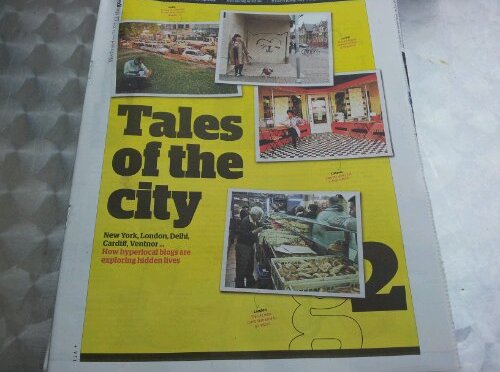
Did you miss us in the Guardian last week?

Fear not! You can read the article online here
Patrick Barkham – Local bloggers: voices from the global village (Guardian G2, Tuesday 20 March)

Also, did we mention we’re making a film of We Are Cardiff? We’re crowdfunding it, so we need YOU to donate some pennies! Visit our Indiegogo campaign where you can invest in the film in exchange for great rewards like getting your name in the credits, posters and free t-shirts
We Are Cardiff documentary film fundraising page

Also, why not join our We Are Cardiff page on Facebook

or follow @WeAreCardiff on Twitter

And of course we’re still looking for residents of Cardiff to feature on this blog! So if you’re interested, ping us an email at wearecardiff@gmail.com

helia
x

“It’s unusual to perform burlesque in a Masonic Hall, but it works for us” – Cherrie

cherrie-pips1_web

During my decade in Cardiff, I’ve gained a degree, worked in the music industry, been backstage at some of the greatest festivals in the UK, made some amazing friends, been to some of the best gigs of my life, and transformed myself into a burlesque artiste amongst many other things.

All of these things happened to me because I moved to Cardiff.

There are so many talented people here, from Santa Macabre – who makes jewellery that just blows my mind – to Ewan Jones-Morris and Casey Raymond who create fantastical music videos, the people who make Chapter Arts Centre so amazing, Swn festival, and Caroline Duffy – a beautiful graphic designer (a physical beauty and beautiful work!) to name but a few!

I have battled with depression for the past few years, and one day a friend handed me a flyer advertising burlesque classes, with the intention of going for a bit of a laugh. I was nervous, but agreed to try it out. We were introduced to Miss FooFoo La Belle and took our first, somewhat wobbly, high-heeled steps into the world of burlesque.

And what a world it is! That was four years ago, and since then I have become a chorus girl of FooFoo’s ‘Burlesque Cardiff’ troupe. After venturing into a duet or two, I slowly gained the confidence to become a solo performer in my own right, and so Cherrie Pips was born!

In the beginning of my burlesque life, fellow Cardiff performer Violet Noir was a huge influence on me. She really inspired me to make the leap and become a solo performer. I was captivated by her style and grace, and her music choices showed me I could be bold and unusual with my performance.

Burlesque Cardiff’s first outing was with 25 of us crammed onto the tiny stage at Ten Feet Tall, but we’ve come a long way since then. Our current home is at the majestic Guilford Hall, just around the corner from Gwdihw. It’s unusual to perform burlesque in a Masonic Hall, but it works for us! FooFoo LaBelle has put together some incredible shows for us, including a tribute to Hollywood, some memorable characters such as Beetlejuice and Tony Montana, and even some Mexican all-female wrestling thrown into the mix. She sets a new theme for each show, choreographing group routines, as well as performing her exceptional solos. We also have the gorgeous pole dancing doubles with Sminxie and Cariad Cwtch, to add an extra bit of tease to our shows.

Some of the starlets currently performing with Burlesque Cardiff are: Miss FooFoo LaBelle, Poppy Vanguard, Sandy Sure, Miss Betty Blue Eyes, Evie Wonder, Katie Von Cupcake, Sunshine Sparkle, GiGi Sextone, Scarlet Blush, Molly Toff Cocktail, Sassafras Sundae and Luna C Fur. Each performer has a unique style and our fans are equally fabulous! I love being a part of Burlesque Cardiff, because no two of us are the same. We are of all shapes, sizes, ages and abilities. Our troupe does not conform to consist of only skinny young girls – we are all different and that’s what’s so great about being a Burlesque Cardiff girl. We’re like a family, we support and love one another, and I wouldn’t want it any other way.

Cherrie Pips hails from Kidderminster, and moved to Cardiff to study for a Fine Art degree. She loves photography and collecting photographic paraphenalia. She teaches photography classes during each term at Celtic Learners Network, an adult learning initiative set up in 2010. She currently lives in Canton.

Cherrie was photographed in the bar upstairs in Ten Feet Tall by Ffion Matthews


***


“floorboards creak out a secret or two” – Ivy

ivy-web


Chapel

worms drill, silent in the wood
floorboards creak out a secret or two

this bench needs another polish
a neighbour exchanges a pointed word
to the woman next to her
who smoothes her old wool skirt and nods

at the couple glimpsed in the lower floor—
the wife goes through the little door
her husband holds open for her
her new hat trembles as she sits
he slips the latch closed behind them

when the priest speaks, the shuffles hush
everyone’s here for the word of God
he rests his Bible on a cushion
it’s still all true, last year’s sermon

out the windows, houses climb the hill
rooves of soot, limned with sunset

Ivy Alvarez is the author of Mortal (Red Morning Press, 2006), her first book of poems. While finishing her second book, she wrote poems at St Fagans National History Museum, which will be included in her third book (thanks to a bursary from Academi). She arrived in Cardiff in 2004 and, after jumping the appropriate hoops, swore allegiance to the Queen a second time and became a British citizen in 2010. She lives in Canton.

Ivy was photographed at St Fagans by Robert Bell


***

“If you can’t beat them…” – Lola

lola-coaster-web

My name is Lola and I have a problem. In fact my name isn’t even Lola, it’s Laura, and that’s testament to my problem. By which I mean addiction. By which I mean love.

In 2005 I moved to Cardiff from Swansea; a quiet, scrawny (not naturally) blonde girl who kept her head down in Uni and went back to Swansea every weekend to go back to the familiar; the comfortable. Seven years later I’m a confident, outgoing (not loud) person who has grown to love my abnormally-large-for-such-a-slim-girl thighs. And why the change in confidence and self-esteem? Roller derby, that’s why! (Oh, and living in Splott, where sometimes you have to be brave).

In early 2010 I was talked/cajoled/bullied into trying roller derby by a friend after watching Whip It. Now, I don’t know if you’ve seen Whip It, but it depicts roller derby as a sport played by scantily-clad girls who punch each other in the face and stab each other in the back. So no, I wasn’t overly enthralled by the idea of joining a new Cardiff league – the Tiger Bay Brawlers – to give it a try. But because then I was easily led and scared that I’d lose friends if I didn’t do as I was told, I tagged along.

I’m so glad that my weak-willed personality allowed me to go. I now find it laughable that I believed the Hollywood version – stupid, huh? (For the record, we’re all lovely, highly ambitious athletes with a huge dedication to furthering our sport. Yes, it’s full contact, but no; punching, kicking, biting are not allowed)!

Channel View leisure centre, Sunday 25 April 2010, was where I found roller derby (or where roller derby found me, because I feel like I’ve been waiting for something like this for a very long time). That first session was scary; not because I was walking into a room full of strangers (yes, over 50 of them!) but because suddenly, at the age of 23, I was strapping eight wheels to my feet and throwing myself on the floor and now, further down the line, at other skaters.

Almost two years later I have passed my obligatory minimum skate-skills test, bouted as a member of the Tiger Bay Brawlers A Team a number of times and am an active member of the team management committee. I’ve also Co-captained the B Team and one of our intra-league teams, the Merchants of Menace (the other team is the Bruise Birds)!

Roller derby has had a positive influence on me in far more ways than you’d think ‘just a sport’ would. It’s a huge aspect of my life now. Any spare time I have (or had) is spent doing derby; skating, watching, writing press releases, blog posts, just talking about it. It’s not something I begrudge doing because I get so much out of it. Not only have I met some of my best friends, but I’ve also become a much more confident person; my self-esteem has increased and I have become an ambitious athlete, concerned about what I’m eating, what I’m doing, how much fitness I’m squeezing in and how far I can push myself.

The Tiger Bay Brawlers are the longest-established and (though I may be biased) most successful roller derby league in Wales. We formed in April 2010 and have gone from strength to strength, playing ten public bouts in our debut year (we won seven of those), being accepted as members of the UK Roller Derby Association (UKRDA) and securing features on S4C, The Guardian and BBC Sport Wales to name but a few. We’re currently hoping to secure their own training and bouting venue this year, and we’re on the lookout for empty warehouses and suitable units – if you know anywhere, let us know!

We’ve also implemented a rolling recruitment programme comprising of a recreational league and freshmeat sessions, as well as working with Sport Wales and Cardiff Council to start junior roller derby sessions! AND we’ve just kick-started our second year of bouting and are bringing roller derby home again when we bout the London Rockin’ Rollers Rising Stars in Talybont on Saturday 31 March 2012.

Roller derby is taking the UK sport scene by storm at the moment, and we intend to be part of that emergence. You can be part of it too! If you want to come and see us play, then please do. If you want to connect with us then you can on our website, Twitter, Tumblr and Facebook, and if you want to join us then don’t be scared. Strap on your skates and come to rec league. If that’s not your thing then join us in an off-skate capacity. It’s a really inclusive sport and there are numerous ways to get involved so don’t let anything put you off. I promise you won’t regret it.

Roller derby isn’t going anywhere soon, and neither are the Tiger Bay Brawlers. And you know what they say? If you can’t beat them….

Laura ‘Lola Coaster’ Joyce has been skating with the Tiger Bay Brawlers since April 2010. She is an active member of the league skating with both the A and B teams and, offskate, undertaking the league’s PR and Marketing. Lola plays as both a blocker and a jammer and is known for her pre-bout routine, including taking days off work and eating copious amounts of cherry tomatoes. She currently lives in Splott.

Lola was photographed at a Brawlers bout by Adam Chard


***


“It’s a genuine community” – Zoe

zoe_howerska_web

I came to Cardiff in 2005 – I’d lived in Newport since 2003, being at university there. True to its name as the little capitol city, the first house I lived in was the same one that Dirty Sanchez used to film their first series in. One night we all went into the basement to find their names burnt into the floor beams surrounded by pentagons. But that’s just one of the many crazy Cardiff stories that you’ll find all Cardiffians have, about the famous people and places we encounter on a daily basis.

For me Cardiff is a place where you can be who you really are, no judgement, no fear. It’s a massive pleasure to see Cardiff bloom creatively, to see what has always been a small but diverse community, now recognised further afield for the potential it has, and it’s down to this zeitgeist Cardiff offers artists.

Personally, Cardiff has helped me evolve as an artist in innumerable ways. I knew I loved film and I knew I loved making clothes but I’d never put the two together until I moved to Cardiff. It was Cardiff that brought these things in my life together, like some mystical force – and I realised that I wanted to work on costumes in films. I’d see Doctor Who out on location, would recognise  various Cardiff locations on screen and like most people, it seemed magical that I could make the fictional world real. Working here for five years now, I’d say I’ve become part of the Cardiff independent filmmaking circuit.

I guess most people see costume as two things: superhero outfits and big period dresses with wigs and fans. It’s so much more than that and the industry in Cardiff definitely recognises that. I’ve met people here who believe in the same things as me: living here and working here. I work all over Cardiff and the surrounding areas, and take great pleasure in contributing to the creative output Cardiff is so well known for.

I’ve shot all over Cardiff – in an abandoned quarry in Fairwater for the digital short “Magpie”, in the carpark underneath the Coal Exchange for the Iris Prize film “Boys Village” and even in City Hall, in the upstairs marble hall with Rutger Hauer, over one night in May for “The Reverend”. Some cynics might say that most films made in Cardiff come from elsewhere: big companies with money looking to film somewhere cheaper than London. Those cynics are wrong. Yes, we welcome the big productions, they bring the chance for us to prove Wales has so much to offer. But I’ve also worked with some amazing local talent that want to make films about Wales, about their lives, and about Cardiff.

I’ve lived almost always in, or adjacent to Roath, and six years later, live around the corner from that first student house, affectionately titled “the dirty sanchez house”. It’s a wonderful area to be young, have children, or grow old. It’s the memory I often return to, of my first summer amble around Roath Park, to the boating lake with friends that made me realise this was the place for me.

I love Roath for Wellfield Road’s Christmas lights, for walking my dog in Waterloo Gardens, and watching him chase (or rather attempt to) squirrels, I love Roath for the fabric shops which in my line of business being a walkable distance away is impossibly helpful. I love Roath for the multicultural mix that never seems cliche, pretentious, or threatening: just open and welcoming. On City Road you can walk ten paces and go from Mexican to Lebanese to traditional or super modern interpretations of tandoori classics.

Testament to Cardiff’s “big little city” tag, you can shoot a city landscape, drive fifteen minutes and be in the rolling countryside – but, as I often need to pop off set to grab something, like a pair of socks, or a cup of coffee, its nice to know you’re not far from civilisation and in Roath’s case, about 100 paces from any given Tesco!

I read recently that Roath was the new Pontcanna. My friends from Pontcanna weren’t convinced, but thanks to Made In Roath, The Gate, and Milgi there’s a really strong creative cultural atmosphere beginning to settle here. There’s always been an artistic atmosphere, but little output for creatives to showcase their work. Now, with Milkwood and Sho galleries which are literally around the corner from many of its patrons, it feels like our art is on show. It’s a genuine community, and you walk into Milgi knowing you’re likely to see someone you know within five minutes. Made In Roath festival gives people the chance to visit locals and see their art in their houses: a new and inventive exhibition style. I urge anyone who hasn’t been to the open houses before, to come along this year and see for yourself what Roath has to offer.

As for the big screen – keep your eyes peeled, you’re more likely than ever to see a part of Cardiff you might recognise.

Zoe is a costume designer living and working in Cardiff. Originally from Yorkshire she came to Wales for university and stayed for love. Last year she worked with people from all walks of life –  from Jean Claude Van Damme to Denise Welch (you can watch this in “Loserville” – one of Zoe’s projects – very soon on BBC Wales). In her spare time, Zoe likes to pamper her dog, George, and runs a small dog clothing company called dogtailor.

Zoe was photographed on Albany Road in Roath by Simon Ayre

***


“To me, it’s my passion and I am proud to have done it all in Cardiff” – Terry

terrymatthews_web

1996 was a good year. I got my A levels, “Cool Britannia” was in full swing, and the British were making the best music in the world again and London where I am from, was the centre of the world.

It was also the year I came to University in Cardiff and the year I discovered my great passion, Korfball.

Despite playing several typical sports at school, and being pretty good at one or two, I was determined to do something different, and it doesn’t get much more different than Korfball, and mixed sex hybrid of basketball and netball (the one with the tall yellow posts).

Throughout my five University years, (I had nothing better to do) I played a lot of Korfball in Cardiff and met numerous friends whom are still that today.

The centre of this Korfball Universe was Lys Talybont, an identikit sports hall to everyone you have ever seen before.

To me, it’s special. To me, it’s where I won the British University Sports Association (BUSA) National Championships in 2001, the finest moment of my life.

I had qualified as a Korfball coach in 1998, and started where all coaches deserve to start, at the bottom, finishing last in the 1999 Nationals. The following year, we did somewhat better coming 9th. However, it was 2001 Cardiff made their indelible mark on British Korfball.

A strong season with strong British Student squad players had made Cardiff dark horses, but we remained un-fancied, because we had no pedigree, no experience of doing well. However, several close knock out games put us in the final against the run away favourites Sheffield.

I don’t remember my team talk (and sure this is a good thing!), I don’t remember most of the game, but I do remember in slow motion the winning move and goal; which, for added excitement, was in (the first and only to date) Golden Goal period after normal time finished level. Cardiff won 8-7 and was crowned the best in the UK for the first time in their history. They were also crowned the Cardiff University Athletic Union Club of the Year, and picked up no less than seven individual colours awards.

Since that inspirational day, I have worked constantly to promote the sport and develop the players in Cardiff.

I have co-founded a city team, and took them to the regional league title, established Wales, and taken them to the European B level Gold medal, and having won the local league last year with the University, I am now going to coach my own team Cardiff Dragons KC.

Korfball maybe a minority sport in Cardiff, played in sports halls you have never been in, but to me, it’s my passion and I am proud to have done it all in Cardiff.

Terry D Matthews works as an office manager for an equality charity in Cardiff, where he has been living since 1996 when he came for University to study Chemistry. He was awarded the British Korfball Association Certificate of Merit for Outstanding achievement in 2006 and is the only person to have achieved this for achievements based in Wales. He also watches foreign films and wishes he could take better photos. He currently lives in Roath.

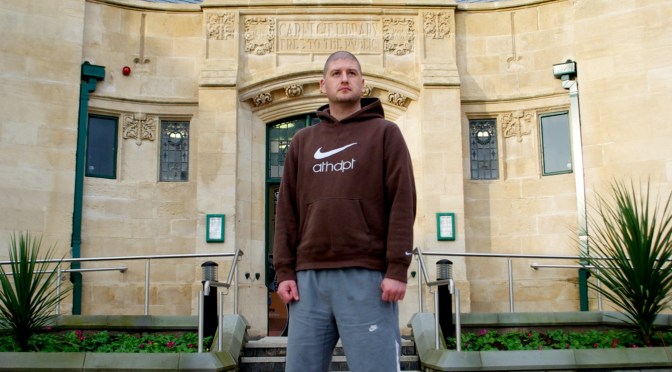
Terry was photographed outside Cathays Library by Adam Chard

***


“Metropolis and nature; memory and future; big and little” – Alice

alice-paetel-web

Having been born in Birmingham I’ve always felt very protective of my Cardiffian status. I moved here when I was two so I think that I’ve lived here long enough to consider it home. It’s an energetic, sleepy city that has history and vibrancy all at the same time. ‘Big Little City’ seems a perfect description for a place where you can always encounter a new experience and still bump into someone who knows someone, who knows someone you knew.

When I’m away from Cardiff I realise how much I love it, and feel proud to say that it’s my home. It seems that with distance you truly appreciate what matters. There is a possibility that I might move away, but Cardiff seems to have a hold on me. My childhood memories of life and death situations at the ‘big slide’ in the rec are ones that I hope to relive through my own children (one day!). The nature that surrounds the city so tightly is reassuring, and nothing is more calming than being next to the sea. Whilst it’s great to visit other cities and countries, Cardiff always seems to be the benchmark for the perfect city of contrasts. Metropolis and nature; memory and future; big and little.

Alice Paetel is in her third year studying English and Popular Culture at Cardiff Metropolitan University (Previously UWIC). She hopes to go on to become a Secondary English Teacher and have a siamese cat. She currently lives in Splott with her husband and pooch.

Alice was photographed in her garden in Splott by Adam Chard

Do you enjoy the We Are Cardiff website? Want to help us turn this project into a documentary film? Please donate any amount to our fundraising campaign and join the Facebook group


***


We Are Cardiff – Big Little City interactive wall responses

Between April 14 – July 22 2011, We Are Cardiff took part in the BigLittleCity project at The Cardiff Story – the new museum dedicated to the capital of Wales. As well as displaying stories and photographs from the project, we had an interactive story wall, where visitors to the exhibition were invited to write their Cardiff story on cards and put them up for others to read.

Click on the image below to visit the Issuu website and read the booklet. There are some wonderful stories on its scribbled pages!

“More and more Cardiff is less my city” – Lee

leemarshall

Cardiff looms large in my life. I slag it off, complain about all and sundry, move elsewhere and still end up coming back. It’s that baggy old mis-shapen t-shirt you would never wear outside but is the first thing you put on when you have the flu and feel crappy.

It’s my first kiss, closed eyes and disbelief on my bedroom floor in Fairwater. It’s my first betrayal, my first break-up, The Cure in my headphones and tears down my face. It’s playing my first gig, 17 years old, downstairs in Clwb Ifor Bach, the stage lights making sweat run down my face, over in a blur, my hands shaking like mad till I fretted that first chord and muscle memory took over propelling me through the set, a bundle of teenage nerves and elation.

I was born in East Glamorgan hospital, and lived the first years of my life in Llantwit Fadre, my family moved us to Cardiff when I was two years old, determined for me and my brother to have the best opportunities for school and work, and partly to make sure I didn’t end up with a Welsh accent, something that my family have always hated. I always got corrected, and as such have ended up with a bizarre posh half accent that doesn’t really belong anywhere. I get everything from Australian to Bristolian thrown at me. “No, I’m Welsh” is always my response.

Cardiff has changed massively in my time here. Growing up as a teenager I was introduced to a warren of crazy small shops in the city’s beautiful indoor Victorian arcades, which seemed to sustain a colony of weird and fascinating shops like a coral reef. Places like Emporium, which was more like 50 small shops all crammed into one big one, reeking of incense, dope smoke and musty second hand clothes, you could buy anything from a seven inch record to a world war 2 mortar shell and everything in between. Shops like Partizan, all long hippy skirts and moon and star paraphenalia, that pretty much defined the early 90s for me. Tie dye and candle holders, incense and adhesive stars on bedroom ceilings, first cigarettes, band posters, red wine in the park, falling in and out of love.

The building of the Millennium Stadium was the death knell of a lot of these shops, as rents doubled overnight, many of the shops and stalls folding immediately. It’s only got worse since, and it’s been terrible to watch, as shop by shop has vanished to be replaced by another identikit franchise that you could find in any city, and the heart of Cardiff died. Spillers Records, Troutmark books and Wally’s Deli are the only survivors from those days, and they took casualties on the way.

I never understood the logic of putting a stadium slap bang in the middle of a city which struggles with its infrastructure at the best of times. For a capital city, Cardiff has one of the smallest city centres I have ever encountered. Everything is on top of everything else. You could probably throw a stone across town if you tried hard enough. Come 5pm there are queues in and out of the centre, long before the rugby dumped 70,000 people on top of that to create bedlam and bring the city to a standstill.

Full disclosure. I hate rugby. Yes I know, I should be banned from Wales just for that, but there we are. Why the stadium couldn’t be outside the city, like the Cardiff City stadium, with its own rail station and transport links I will never understand. Then maybe we could have kept the bits of the city that I liked the most.

Similarly the arrival of the hulking behemoth that is the St. David’s 2 centre ground out a few more of the independents, and put Starbucks and the Apple Centre in their place. Attack of the Clones.

More and more Cardiff is less my city, and more a place that I wouldn’t want to go, and I don’t feel I belong in.

It will always be the place I grew up, it will always be my first kiss, it will always be my first cider in Llandaff Cathedral graveyard, but it might not be my home any more.

Still, Bristol is just over the bridge eh?

Lee Marshall is a freelance music producer, dj, remixer and sound designer,as well as recording albums under the name “Underpass”. His new album “Submergence” is released on the 21st November by Mutate Records. He makes a mean veggie spag bol and is obsessed with camouflage. Visit the Underpass website, Lee is also on twitter, @leeunderpass. You can listen to his work on Soundcloud. Lee currently lives in Riverside.

Lee was photographed in the Castle Arcade by Amy Davies – you can also see more shots from Lee’s photoshoot on Amy’s blog

***

“Back to my roots” – Dan

dan-alsobrook-web

Cardiff born and Cardiff bred? Not quite in my case. I was actually born in Leicester; a bit of a mongrel really. Dad was born in Shotton, Flintshire, although his mother was a Welsh speaker from Gorseinon and his father a Mancunian raised in Hawarden.

Mum’s father was an RAF officer from Sussex, shot down and killed over Norway in 1941 before he’d even met his infant daughter. Mum’s mother (our Gran) was a dedoubtable lady of Scottish stock and temperament, one of nine children. After the war she married a Trinidadian civil engineer, and they moved to Sale in Manchester.

My parents met whilst teaching together at Eccles Grammar School in Cheshire, and after their marriage in Sale their careers took them to Northampton and then to Loughborough. In 1972, Leicester General Hospital was the nearest maternity unit, and so that’s where I came into the world. Within a few months we had moved to Newport in South Wales, and then two years later we alighted in Whitchurch, a relatively affluent suburb of Cardiff. By then I’d acquired a sister, and my parents decided it was time to stay put for a bit. And there we stayed for 20 years.

Our house was a Edwardian semi just north of the railway which divides the mean streets of Llandaff North from the leafy boulevards of Whitchurch. Our childhood was blissfully happy and we had a close-knit group of friends from the surrounding streets who all went to the same primary school, Eglwys Newydd, next to the brook in Glan-y-Nant Terrace. At the time, Eglwys Newydd had English and Welsh streams; I went into the Welsh stream in spite of neither of my parents being able to speak the language. Nevertheless, I flourished academically, despite being painfully shy and small compared to my peers.

A fork in the road came in 1983, when a choice had to be made about my secondary education. Would I go to Whitchurch High School, the enormous English comprehensive across the brook, or would I follow several of my closest friends to Glantaf, the (then) relatively new Welsh-medium secondary school across the tracks in Llandaff? My best friend Howard, neither of whose parents spoke Welsh either, had already decided that he wanted to go to Glantaf, so it was natural that I wanted to go there too. But Mum and Dad were concerned that they wouldn’t be able to support my studies if I was learning through the medium of a language they didn’t speak, so I went to Whitchurch.

I often wonder how things would have turned out if I’d gone to Glantaf. It was then, and is now, a very good school with some impressive alumni from the world of the arts and sport.

In any case, the choice was made and I went to Whitchurch High School. My experience in my early teens at that school broadly reflected a lot of people’s experience of the 1980s in South Wales: a feeling of confidence and ambition being crushed by the people in charge. In the early 80s, Whitchurch had grown to be the largest secondary school in Wales, with over 1000 pupils. It was divided over two sites in the village, with kids from places as diverse as Rhiwbina and Mynachdy on the roll. I felt swamped.

There was the added complication of my mother being an English teacher at the school. Luckily for me, she was well-respected by the majority of pupils so I didn’t suffer from any of the usual “teacher’s kid” treatment from my schoolmates. On occasion I did suspect I was being made an example of by some teachers, notably when I was given a week’s detention by the head of year for uttering the word “Smarties” during a Science lesson.

My time in Lower School was pretty miserable. But things took a turn for the better when I moved to Upper School in my fifteenth year. We were the first kids to take the new GCSE exam, the replacement for the O-Level. I’d narrowed my career choices down to two options: journalism or medicine. Instead of leaping in one direction, I took a compromise and chose a mixture of arts and science subjects. Partly, I suspect, due to the fact that neither of my parents had any background in science. I did fairly well at both (although I was a disaster at Drama due to my horrific shyness), and when A-level decision time came, I plumped for sciences, as I felt medicine was my chosen path. Probably one of the biggest mistakes I ever made; not that I knew it at the time.

At the same time, my social life had started to re-establish itself, mostly outside of school, through my membership of County Wind Bands and Orchestras. I’d eschewed the sexy french horn in favour of the deeply creepy oboe, but luckily it seemed the oboe section were the outsiders of the orchestra: the kids who were too cool for school. We formed an alliance with like-minded viola and clarinet players and other “edgy” types. Some of them had super record collections. I went from Ultravox to the Cure within 12 months. Girls from Howell’s School, Glantaf and St Cyres danced with me to to “Lovecats” and “This Charming Man” at summer camp. We went on coach trips to Manchester and London listening to The Pixies and The House of Love on our personal stereos. School was all about work, and this was play, with my exotic new friends from Glantaf, Howell’s, Stanmore and St Cyres. The music we played in the orchestras and wind bands was incidental: we were in it for the alternative social scene, which revolved around the legendary and dingy Square Club on Westgate Street.

As a result of this separation of work and play, and also due to some subtle nagging from my mother, I managed to avoid cocking up my A-levels and gained a place at Cambridge to read Natural Sciences. The story of the intervening years between then and my return to Wales over a decade later is for another time and place (check my 30 Day Song Challenge for some highlights), but eventually I ended up in London, in my late 20s, having accomplished not that much.

Luckily for me, London Welsh RFC was the place to be for the young Welshman about town, so I headed there. In 1998 I’d discovered Gwladrugby.com, an Welsh rugby fans’ website created by a chap called Rhys, a Welsh exile in London. The site soon became a focus for rugby-related social gatherings in London and a number of us went on trips to watch Wales play in exotic locations such as Edinburgh, Paris, Rome, Nottingham and Bedford. Wales’s victory over England at Wembley in 1999 was a particular highlight during the period.

Whilst in London, Gwladrugby.com also provided me with the opportunity of meeting my wife. We spent several carefree years in London before something began to tug us back to Wales. I’d like to say it was hiraeth, but in fact it was a job I’d managed to secure, at the Wales Millennium Centre in Cardiff. And so, in 2003, we moved back to Whitchurch, to the street next to the one I’d grown up in from 1974 to 1990.

So finally I get to the point of this story: why I love Cardiff, and Whitchurch in particular.

Cardiff has had a terrible reputation over the years. According to many, our city centre is infested with binge drinkers and football hooligans. Hen and stag parties stalk St. Mary’s Street, rendering it a no-go zone for respectable folk looking for an enjoyable night out in one of Europe’s newest capital cities. This may be true. I’m not that fond of Cardiff city centre on a Friday or Saturday night, but that could be because I’m getting old.

On the other hand, Cardiff has been lauded as “better than London” by many of my London friends who’ve travelled here to watch sporting events at the Millennium Stadium, due to the proximity and density of pubs and restaurants in the city centre. Far better than the suburban wastelands of Twickenham and Wembley, for sure. And cheaper too, for the most part.

For me, the return trip to Cardiff for rugby internationals took a turn for the better after the completion of the Millennium Stadium and the Rugby World Cup in 1999. True, the Welsh rugby team’s fortunes had already been on an upward curve for a few months that year, with victories over England and South Africa, but since we started playing at the new stadium, it feels a lot more like a fortress than the old one and I really think it gives us an edge over visiting teams. Two Grand Slams in the last decade would tend to support this theory. Sadly the fortress effect doesn’t always work, but we’re a small nation punching well above our weight, so we can’t win all of the time.

I left Cardiff in 1990 and didn’t return for 13 years. During that time, another massive project was completed in the city. The Cardiff Bay Barrage was constructed and with it came the redevelopment of the waterfront around the old Bute Docks. In the early 90s the barrage and the wider redevelopment of the Bay were very contentious and many people questioned the long-term value of the project. Twenty years later those objections have been largely forgotten and Cardiff Bay has been transformed into an impressive waterside destination. I’ve worked in the area on and off for a few years since I moved back to Cardiff and I really like the Bay as a place to go, whether it’s for food, drink, a show or a film.

The Bay still feels a bit disconnected from the city centre. It’s partly a transport problem, but the regeneration has been concentrated around the waterfront and has left the relatively deprived areas of Butetown and Riverside which sit between the Bay and town untouched.

Until the mid noughties, the development of the Bay left the city centre looking tired and unappealing. People in search of a quiet night out would stay in the suburban peace of places like Pontcanna and Roath. But in 2010 the balance was restored with the opening of the new St. David’s 2 shopping centre, complete with a John Lewis department store and celebrity chef-branded restaurants like Jamie’s and Carluccio’s.

“Where’s the local identity?” you may ask. Most of these newcomers are chains; this could be any city in the UK. There are still plenty of Cardiff originals, such as the Cameo Club and Bully’s restaurant in Pontcanna, along with relative newcomers like The Potted Pig and Oscar’s. The big question is whether Cardiff can sustain places of this quality itself, through local residents, without having to rely upon big events to draw in the punters from elsewhere. That depends on the affluence of the city increasing. At the moment I don’t think it’s quite there.

When it comes to the arts scene, Cardiff is definitely there. As a boy in the late 1970s I went to see Star Wars at Chapter Arts Centre in Canton. More than 30 years later the place is still going strong; a recent refurbishment having injected new life and light into the building. Whether you’re going to see a film, show or just hang out in the bar with the great and the good of the Cardiff media and arts scene, Chapter is a wonderful destination.

Fairly recently I’ve also discovered a couple of groovy smaller venues: The Gate and the Globe in Roath, and Gwdihŵ in Guildford Crescent. Last year I was lucky enough to see one of my childhood heroes, David Gedge, play at the Globe with his band The Wedding Present.

I also saw the eternal loony Julian Cope play the Globe in October, and a toweringly beautiful and fierce set by the Throwing Muses, one of my favourite bands from the golden age of Indie Rock, at the Gate just a couple of weeks ago. The Gate is a former chapel just off City Road in Roath. An intimate venue with a friendly little bar; it’s a great place to get close to the performers, as I did when Neil Hannon played there last October.

Then there’s the WMC. As I said, I worked there before, during and after its opening in November 2004. One of the most ambitious building projects ever conceived in Wales, it very nearly didn’t happen. Several times. But through the hard work of a dedicated, passionate team of people, we got it open on time. It’s now part of the dramatic skyline of Cardiff Bay, and an institution that is respected and admired across South Wales and beyond. I love going back to the building and it evokes some powerful, proud memories for me. The centrepiece of the is the staggeringly beautiful Donald Gordon lyric theatre; probably the best place to see and hear live performance I’ve ever been in. Although I’m probably a bit biased.

Before it became the glittering, albeit slightly tarnished capital city it is today, Cardiff was little more than a collection of villages: Llandaf, Radyr, Llanishen, Llanederyn, Rhymney, Rhiwbina, Tongwynlais and the rest. And to a great extent it still is. Certainly my village, Whitchurch, retains a character of its own: a high street, the common, a village pub or two, small primary schools and some well-kept local shops. My favourite shop in Whitchurch is Martin Player’s butcher opposite the library on Park Road. Shops like this bring you closer to the producers of the products you’re buying, and you can see the care taken to preserve this closeness.

For the past five years or so our lives in Whitchurch have revolved largely around activities with our children. We’ve been incredibly lucky to have access to exceptional Welsh-medium nursery and primary education in the village; it makes such a difference when these facilities are on your doorstep. And with kids come a new social circle. We have a jolly and sizeable Mums and Dads’ club who enjoy nothing better than lounging on each others’ patios in the sun, sipping wine while the kids chase each other around the garden.

Finally, there’s the allotment. Earlier this year our 30 month wait was rewarded with an allotment plot in Llandaff North, just around the corner from our house. The first harvests have been pretty fruitful; some spuds, beetroot and runner beans. It’s early days, but over the years I’m sure we’ll get the hang of growing our own and the crops will become more bountiful each time. Gardening is great exercise and being outdoors makes me feel particularly happy, even when it rains (which it does a lot in Cardiff). Coming back to my roots in Whitchurch has been a joyful experience and I can’t imagine life being any other way.

Dan Allsobrook is an IT consultant who lives and works in Cardiff. In his spare time he’s one of the editors of Gwladrugby.com, an irreverent, amateurish yet surprisingly popular Welsh rugby fans’ website, and is responsible for @gwladrugby on twitter. He writes about politics, music, food and many other things on his own blog, Eggnewydd and has been known to tweet as @eggynewydd too. He is married to Eleri and they have two young sons, Geraint and Rhodri. Dan currently lives in Whitchurch.

Dan was photographed near his allotment by Adam Chard

***

“Cardiff has a thriving creative community” – Ardie

ardie_web

A little over a year ago I found myself on a train with a rucksack heading to meet a friend in London. I had decided that I was going to move there. It seemed like a natural step, I had been at University in Southampton for three years and had grown used to my independence and suddenly I was back in Cardiff and living at home with my parents. I needed to get away. I had done the sums; I had enough savings to last me a few months’ rent in London while I looked for a job there, and I had a floor to sleep on for a few nights while we looked for a place to stay.

I had always loved London. The idea that there was always something to do – that there was always something going on – appealed to me. I had resolved that it would be impossible to ever be bored there. “Dull would he be of soul who could pass by A sight so touching in its majesty” said Wordsworth of London. It didn’t take me long to realise, however, that the idea of London had been romanticised in my head, that the hustle and bustle wasn’t a sign of stimulating activity, it was a sign of stress. This was a lot of commitment and a lot of money to hand over to something that I had just found out I didn’t want. I went back and forth in my head about what to do but I eventually made a decision that it wasn’t for me. I came home.

A year later I am in my hometown of Cardiff finishing up a Masters degree. Though study has taken up much of my time, it has not been the most important part of my being back. Cardiff has fuelled a lot of big things for me this year, and this past year will always be an important one to me. It is since being back that I finished my debut novel and found a publisher, something that I would never have dreamt of happening. Also, since the 1st of January I have found myself undertaking a project that sees me release one original song every day throughout 2011. These are certainly projects that take personal dedication, but I also think that it wouldn’t be too far-fetched to consider my geographical location in all of this. Cardiff has a thriving creative community. And it took a few years of my being away from here to realise that. I grew up here, and so perhaps I had forgotten to appreciate what was on my doorstep. Workshops, exhibitions, book groups, gigs, plays, comedy nights, music and arts festivals. Creative endeavours are springing up all over the city from thinkARK to the Cardiff Arcades Project to this website. I think the fact that this has only recently come to my attention is down to two things: 1) I had grown used to Cardiff and so wasn’t engaging with what it had to offer, and 2) This is a city that has grown up around me, and what it has to offer is growing all of the time.

As I finish up my course and begin looking for full-time work, my seeming desperation to move away from this city has entirely diminished. This is not to say that I would never move away, but there is currently nothing dragging me out of this city, and the list of things keeping me here is growing all of the time.

Ardie Collins is a novelist, radio producer, MA student, and singery-songwritery type person born and based in Cardiff. His debut novel is entitled ‘Cult Fiction’ and is about a man who, inadvertently and through very little fault of his own, sets up a cult. It was released on the 1st of September 2011 by Knightstone Publishing, and is available on Kindle. The Cooper 365 project can be found here. Ardie’s  main webpage can be found here. He is on Twitter as @ardiecoll and @coopersounds

Ardie was photographed at Trout Books in Castle Arcade by Amy Davies

***

“I always knew I wanted to join the family business” – Dennis

dennis-dutch-web

When I was a child, I used to tell people my ambition was to open a Clark’s Pie shop at the top of Snowdon! I always knew I wanted to join the family business that had been established by my grandmother, Mary Clark, in 1913. It was a thriving company by the time I was born in 1930, and before leaving school at the age of 14, I was already working at my parents’ shop at 454 Cowbridge Road East, just around the corner from our family home at Victoria Park.

This was in 1945, and the end of the Second World War. Canton and Grangetown in particular had seen much damage and significant loss of life, especially during the Cardiff Blitz of January 1941. I clearly remember nights spent in the air raid shelter in our garden, and the bomb that dropped on Lansdowne Road, shattering windows in our shop. It was business as usual soon afterwards, but with food on ration, the number of pies we could produce on a daily basis was limited.

We had no fridge at our premises, so a local butcher used to store our meat for us. One of my jobs was to collect the meat at 7am before production began. Because of the rationing, customers would queue for hours before the shop was due to open. On Saturdays, families would often send their children along to buy pies, and they would begin queuing from as early as 6.30 in the morning. On days like these we would sell out of pies within 45 minutes.

But it wasn’t all about work. Canton was a wonderful place to grow up and I had plenty of friends in the area. I spent many hours playing tennis in Victoria Park, opposite my family home, and played football for the Victoria Vikings. Always a keen gardener, I had an allotment near Llandaff Cathedral from the age of 14, and I was a member of Wesleyan Methodist Church and an Officer in 9th Cardiff Boys Brigade.

Everything changed in 1948 when I was called up for National Service at the age of 18. I was stationed at RAF South Cerney near Cirencester. I was lucky enough to secure a much sought after job as a driver, but, despite this, I wasn’t happy about being away from family and friends in my beloved Cardiff. I came home every weekend and, because I was in church every Sunday, some of the congregation didn’t even know I’d been called up!

The Boys Brigade was an important part of my early life and one of my proudest memories is when 9th Cardiff Company reached the finals of the Cardiff Competition. The finalists were to parade in the Assembly Room at City Hall and I was at the front swinging the mace. We were all nervous and knew we would need to put on an outstanding performance to win. I took a last minute decision to throw the mace up in the air at the end, knowing there was a risk of hitting one of the chandeliers that hung from the ceiling. The risk paid off. I managed to catch the mace without dropping it, the chandeliers remained intact and we won the competition!

In May 1955 I opened my own Clark’s Pie shop and bakery at 23 Bromsgrove Street, Grangetown. As well as a small number of staff that I’d employed, my mother also helped out during the first week. Things were up and running in no time and the shop soon became established. We have seen some tough times over the years with the BSE crisis and economic recession, but in 2005 we celebrated the shop’s 50th anniversary with a surprise visit from Frank Hennessy who sang some of his songs for staff and well-wishers.

I celebrated my 80th birthday in 2010 and, as a surprise, my family arranged for us all to see Cardiff City play. We had a meal beforehand in the corporate suite, met Craig Bellamy and I got to choose and award Man of the Match to Jay Bothroyd. Cardiff City won 4-0. The whole day was perfect and felt like a dream.

A year before I turned 80, I was diagnosed with Alzheimer’s disease. I had been worried about my memory for some time and was referred to the Memory Clinic at Llandough Hospital. It was upsetting to receive the diagnosis but I am determined to be positive and live a full life. Two of my three daughters now run my Grangetown shop, but I am still actively involved in the business. My family give me a lot of support and I go out for social trips with two Care Workers from Crossroads Care (both called Janet!) during the week.

This means I can still do my own shopping, enjoy meals out and visit the garden centre. I have a good laugh with Janet and Janet and we often talk about our memories of Cardiff. Mine go back much further than theirs though!

Dennis Dutch was born in August 1930 to Arthur and Winifred Dutch, the third
of five children. The family lived at 23 Victoria Park Road West and Dennis
attended Lansdowne Road Primary then Cardiff High School. Dennis left
school at the age of 14 to work at the Victoria Park shop with his parents
before opening his own Clark’s Pies shop and bakery at 23 Bromsgrove
Street, Grangetown, in 1955.

***