Tag Archives: cardiff

Record Store Day 2018 in Cardiff – events and happenings!

How is it already time for Record Store Day again?? If you’re looking to go join the queues or catch some of your favourite musical heroes in town, we’ve got the skinny on all the events – from Lauren Laverne broadcasting her BBC 6Music show, to Gruff Rhys and Charlotte Church djing! Don’t forget to check the full list of RSD 2018 releases

Get out and about and support your local independent music scene, this Saturday 21 April, 2018!

Record Store Day 2018 at Spillers Records

9am – 6pm, Spillers Records, Morgan Arcade

The annual celebration of independent record shops and all things vinyl is happening on Saturday the 21st of April – and alongside the armfuls of exclusive releases, Spillers  will be hosting their usual range of DJs and live music to keep you entertained throughout the day – and this year, they’ve got SPECIAL GUEST Lauren Laverne broadcasting her BBC 6 Music show from the store! She’ll be joined by guests Gwenno and Gruff Rhys.

And Lauren’s excited about her visit to Cardiff! She says: “I love taking my show on the road for Record Store Day, but to be going to Spillers in Cardiff – the world’s oldest record store – this year is something really special. We’ll be chatting to the team there and will be joined by Gwenno and Gruff Rhys, with music from Haley. It’s going to be a fantastic show and I’m so looking forward to be heading to Wales’ capital city!”

A Record Store Party That’s Not A Record Store Party

9am – 6pm at RIP Outpost, in the Castle Emporium (Womanby Street)

Come and join us at The Castle Emporium for a right old knees up to celebrate all things vinyl! Come join the Official-Unofficial Record Store Day 2018 All-Dayer, where there will be :

  • *BRUNCH SPECIAL
  • *RIVAL BREWERY BOTTLE BAR
  • *BANGIN TUNES FROM CRUSH DJS / DRUNK YOGA / ROTARY CLUB / BAN LAB
  • *DEALS DEALS DEALS
  • *PRIZES PRIZES PRIZES
  • *HAIRY BABES + SLIMEY HUNKS
  • *PUPPY PARTY PETTING ZOO
  • *DISCOUNT CROC SHOP
  • *POSI PARTY VIBES
  • *THE SUPER LIMITED UNOFFICIAL RSD LIST

NO DIVING IN THE SHALLOW END!

Record Store Day at Kellys Records

9am- 6pm, Kellys Records in Cardiff Indoor Market

A Cardiff institution, Kellys has all your second-hand music needs – and a great line up of DJs on the day!

DJs on rotation at Kellys through the day:

  • 9-11am – Kellys staff
  • 11-12pm – Sarah Sweeney
  • 12-1pm – Don Leisure
  • 1-2pm – Gruff Rhys
  • 2-3pm – Ani Glass
  • 3-4pm – Charlotte Church & Esther
  • 4-5pm – Boy Azooga

Record Store Day After Party hosted by Vinyl Cruisers and Spillers Records

6-11pm, The Andrew Buchan Bar, Albany Road

Vinyl Cruisers and Spillers Records present The Record Store Day After Party! Besides the normal crew there will be Spillers regulars manning the decks. Expect some exclusive tunes for your delight!

If you’re out and about over Record Store Day 2018 be sure to tag us in your pics and we’ll reshare the best! Enjoy! #shoplocal #independentcardiff.

Also shout out to woke Record Store Day sponsor, Friels Cider! Supporting independent music! Give them a big up and tag em in, #FrielsRSD.

***

Polly Thompson talks Cardiff, and a new kind of living

Our reporter Jenny Jones speaks to Cardiff resident Polly Thompson today, about her move from the city to London in the ’90s – and back again last year, and the new kind of living she’s found here.

I’m that common person, who grew up in Cardiff through the bleak and grey 80s and then couldn’t wait to leave. In fact I found out about We Are Cardiff when I read James’ piece ‘Cardiff – it’s where you’re between’ and couldn’t believe how similar our stories were, almost exact parallels. I came across it by accident, just lost in endless scrolling one night on the internet, maybe I saw a link to it on Twitter. James’ experience of wanting to escape ’80s Cardiff totally resonated with me.

I was living in London at the time I read it – a couple of years ago. I was jobless, living for cheap in an old people’s home near Tottenham that was up for sale (I was part of one of those guardian schemes that stop squatters moving in by letting legitimate tenants live there for peppercorn rent). It was a disgusting place, with damp on all the walls, plasterwork that crumbled to the touch and squelching carpet over soaked underlay in every room, including the kitchens and bathrooms. But it was cheap. Really cheap. And in London, cheap housing is not to be sniffed at.

I left Cardiff when I was 16. I couldn’t wait to leave. There’s a big age gap between me and my older brother and sister, so they were already long gone from home when I was growing up, flown the coop, abandoned me in the nest. My was already in his 60s when I was born so my only real memories of him feature his disappearance into dementia, which started almost the second I was born.

By the time I arrived on earth, my sister had married and moved to Caerphilly, with children of her own just a few years younger than me (I’m nearly 16 years younger than her). My brother had slipped away and was living in some off-grid community in north Wales. Neither were around to watch the end of dad’s life. They barely visited, and didn’t register in my young mind as siblings. I saw how hard it was for my mum, working part time, trying to bring me up, and care for my father who was getting more and more confused. He almost never knew who I was, and so we had a strange relationship – he was a dad but also a not-dad, just some crazy old man who lived in the house.

I hated school. I don’t know how it’s possible to enjoy or engage when your home life is so mad. I felt isolated all the time. We lived in a small two bed house in Roath. I think it was somewhere around Alfred Street, but I’ve never been able to find its exact location. All I remember are heavy velvet drapes and dark wooden panels that were so fashionable in houses for a while.

My dad died when I was ten and my mum when I was thirteen, and so I ended up moving in with my sister in her new-build-box-house. I remember being young as pointing the TV aerial towards Bristol so we could watch Channel 4 instead of S4C – I never learned to speak Welsh, and besides that I felt like being Welsh was a strait jacket I couldn’t escape. It didn’t feel cool, it felt parochial, not something to be proud of. I wanted desperately to move where things were happening, to somewhere so big I could get lost within it and forget about all the crap things I’d experienced as a child. I wanted adventure and neon and to stay up all night. And none of those things felt possible in Cardiff in the 1980s. I would have preferred New York, but London was a pretty good second on the list.

The second I was old enough to leave, I did. I had barely any money but my sister surprised me by paying for my coach ticket and then handing me an envelope with five hundred pounds in it. She’d been saving up for me since I’d started living there. I’d told her what my plan was when I moved in, and apparently she had believed me.

I won’t bore you with the details of what happened in London, but here’s the short version. I went to art college, made good friends. Had a few boyfriends and one girlfriend. Fell in love with one of the boyfriends. I mostly lived around south London, as that’s where was cheapest, around Peckham and Deptford. To say I lived thriftily is an understatement – but I was where I wanted to be, and that was the most important thing.

I learned to turn off my Cardiff accent. I very deliberately cut ties to home. I told people I was from the West Country if they asked. I never wanted to come back to Wales. Never.

Fast forward 20 years. I’m divorced now, and after a couple of years where I actually had money, I’m broke again after some terrible decisions – very bad timing in buying and selling our married flat, which ended up with both of us divorced, in negative equity, having to bear the debt of fifteen grand each, which I am still paying off (although I’m almost completely debt free). I was technically homeless for a bit, a couple of months sofa surfing with friends until I managed to get myself back on my feet (and it really was sofa surfing – no one I know in London has a spare room). I spend most of my time drawing and illustrating, which is what I love and prefer to do but it’s not a steady job and so I do days of supply teaching around it.

It was the day I visited the Haringey food bank that I realised the cost of living in London was breaking me. Most of my friends were happily married or “consciously coupling” with children, and had moved out into north west London. Some of them are struggling too – squashed together in one bedroom flats, carrying their prams up and down the stairs. But they’re together. There’s probably little that’s as depressing as getting divorced when you’re in your early 30s. It should be the decade you’re making babies and growing a family and having widening waistlines but it doesn’t matter because you’re all together and that’s what counts.

Instead I was edging closer to 40 and worried about making rent, I was worried about being able to eat, what was I doing with my life. I was swinging in the other direction from almost everyone I knew – I was single, working jobs I hated to pay for £800 a month for a room in a communal house full of twenty somethings, with a shared bathroom that was always covered in other people’s hair, and a kitchen I’d stopped storing my food in as people openly helped themselves to whatever they wanted.

I was drinking a lot, alone. One of those days I was in the kitchen bitching about the rent – which had just been hiked by £50 a month for each of us – when my Australian housemate told me a couple of them were thinking of moving out and joining a guardianship scheme, where you get moved into empty properties to stop squatters and pay next to nothing. Did I fancy joining them?

I did, and so I did, and for the next year the worries about money eased up a little. But it’s a very unstable existence. You can be moved on from the place you’re staying whenever the landlord sells it (or decides to remove you). The places are often in a state, they may have been empty already for years, and it takes a lot to renovate a place that’s like this.

I was lucky – one of my housemates was a set designer, and very handy at building and repairing things. But I had just moved into my fourth place in 18 months when it hit me – I couldn’t keep living like this. I was exhausted, I was worried about money all the time. I was still drinking, all the time. It is a sobering (no pun intended) realisation to be a female that’s nearly 40, divorced, single, and living a life that is miserably itinerate.

I had come across James’ piece about Cardiff shortly after moving into the Tottenham residential home. It was a strange, squat building – seventeen rooms set across this weird sprawling building that only had one floor. I ended up living there for nearly eight months, during which time I started seeing a counsellor through a scheme that was training students for a nearby university, which made it a lot cheaper. And I tried to make a plan for myself.

During that time I started talking to my sister again on a more regular basis. I’m not sure why. We fell out of touch after I moved to London because I just wanted to eradicate the past from existence – it was easier to have no contact than try and renegotiate all the things that had happened every time I spoke to her. I think she understood. My sister sent me money every year after I left her house, up until I was 25 – always at Christmas, always £50. She stopped sending money the year I got married, which I told her about in a letter … after the ceremony had happened. I didn’t invite her to the wedding, which I feel guilty about to this day. She still sent me a card every Christmas, even then. I never sent her anything. I am objectively a terrible, terrible sister.

Anyway, during that time, I started thinking about moving out of London. From the second I arrived there I had never wanted to leave. But over the course of 24 years, things can change, right? I wasn’t the same person I had been when I arrived there. Sensing I was perhaps open to options, my sister suggested I come back to Cardiff to visit her for a weekend, for us maybe to spend some time together and for me to get some distance from London. I hadn’t been back for years – not since the late ’90s.

There was some big football thing on that weekend, she said, so it might be a bit busy in town, but she was looking forward to seeing me and showing me around. She booked my train tickets and emailed them to me (I’ll never really ever be able to pay her back for everything she’s ever given me, in terms of opportunity and opening doors for me).

I apprehensively boarded the train. It was the start of June, and I arrived in Cardiff to witness the hundreds of thousands of people creating a hot, crazy carnival in the city for the Champions League Final.
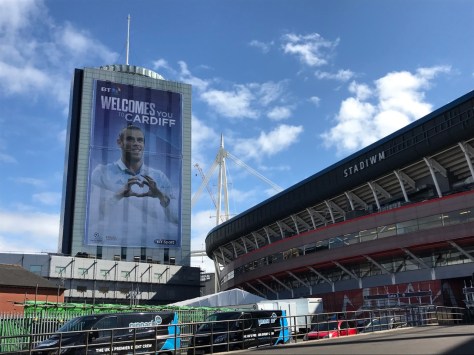
I think it’s fair to say that Cardiff astonished me. I’m sure the weather helped that weekend – scorching hot sunshine and blue skies – but it was more the scale of everything. That enormous stadium right in the heart of the city centre. The huge St David’s 2 shopping centre. All those high rises that seem to be exploding out of the earth all around. The Wales Millennium Centre. The BAY – and the barrage. It was a million miles away from the Cardiff I remembered – all squat buildings and bad weather and aerials pointed towards Bristol and verruca socks at the Empire Pool.

There is something tangible in memory that is beyond anything you can explain to someone about a place, however hard you try to. It’s a feeling, it’s colours, it’s a weight. Cardiff was grey and brown in my memories, and heavy, like a wool jumper soaked in cold rain. This Cardiff was somewhere entirely new, with bars and clubs and people with dyed hair, all dressed up, and a circus, and opera, and galleries. It was like the Cardiff I remembered was an entirely different place. While we walked around the stadium I struggled to remember how it had looked before with Empire pool there, even though I used to go swimming in it nearly every week.

On the Saturday of my visiting weekend we went down into the Bay, where I marvelled at the Millennium Centre, the Senedd. I don’t really remember going into Cardiff Bay as a child – it wasn’t the sort of place you’d go for a day out, like it is now. My only memory is driving through it once when I was really young … and my mum locking the car doors.

And now there were thousands of people – families, tourists, everybody – wandering around, eating ice creams. There was music blaring. We bought pints from some outdoor bar and walked around, people watching, place watching. I have never really been into sports, but Champions League was a really impressive event.

When the actual match was on we walked back through town to my sister’s house. She lives in Canton now, she has done for years – on a small side street off Cowbridge Road. It’s very old school – she knows her neighbours – everyone knows everyone on that street. Next door to her is a young family, who she sometimes babysits for in exchange for them looking after her dog. She said she had told them all about me, that I was coming to stay, and that we hadn’t seen each other in nearly 20 years. At first I found it a bit alarming, even intrusive that she would share information like that with total strangers – they’re just neighbours. My sister laughed at me when I said that to her. “I’ve spent more time with them than I ever have with you!”.

It wasn’t that that made me decide to move back, although it was a part of it. We got on better than I imagined we would. We’re quite similar, although I never would have been able to see it or admit it when I was 16. While at her house that night, we put on some Hitchcock films, ate popcorn and I idly checked rental prices in Cardiff. Just to check. If you’ve ever compared rental prices in London to Cardiff, you’ll probably be able to imagine what comes next.

I found a nice room in a shared house in Adamsdown, really near the city centre, sharing with three other girls – two Spanish girls studying postgrads at Cardiff uni and one girl from Porth who was a hairdresser. My sister persuaded me to send them a message – might as well go and have a look while you’re here, right? So I wrote some long rambling message to them on Gumtree about my situation in London, and how I probably wasn’t going to move in but would like to have a look … Sofia messaged me back and told me to come over anyway. I took the bus over there, and from the second I stepped into the house, something clicked. We had a glass of wine, and I ended up staying for dinner.

But I couldn’t do it … it seemed too drastic, too big a step. I went back to London, but within two months the management agency were in touch. The place had been sold, and was going to be knocked down so flats could be built there. We had to move. Again.

I packed up my meagre belongings – the ones that weren’t already in storage from the divorce – hired a van, and moved to Cardiff.

Unfortunately the room in Adamsdown was taken so I ended up in my sister’s spare room until Christmas, when Sofia messaged me and told me their new room mate was moving out – she was Greek and had decided eventually that Brexit would make it impossible for her to stay, and was going back to Greece. I moved into her room on New Year’s Day, and I’ve been in that house since. It feels like a whole new life, like it did when I first moved to London.

I didn’t think it would be possible to move somewhere, aged 40, and make new friends, and feel at home. It doesn’t feel like moving ‘back home’ in the sense that Cardiff never felt like home to me before. But I was so desperate to escape when I was 16, that coloured my view of everything. It’s also possible that Cardiff was fine back then. I just couldn’t see it.

Much of what remains from my childhood in Cardiff are photos my sister has now, that seem weirdly over-saturated technicolour compared with my memories. There are hardly any photos of my brother and sister, but my sister doesn’t care. She’s the archivist for our weird disintegrated family now, our historian, and she’s taken good care of these memories for me, when I probably would have burned them if I’d known they existed.

I’m glad they still exist. Me, aged about four, in some bizarre red woollen jumper that has  ‘cute’ repeatedly emblazoned across it (either to reinforce the message or set the record straight in case you saw me and thought I looked hideous), lying on a blanket in the flower gardens in Roath. This would be around 1980-something, the early 80s though, maybe ’82 or ’83. My dad has a ridiculous tash and I can’t even really describe what mum is wearing, she looks like a cross between Joan Collins and someone ready to dance around the Maypole. Other photos are from the fountains outside City Hall, me in a white dress covered in grass stains and mud, carrying water from the fountains over to some flowers I saw scorched and dying in a nearby flower bed. It is the sort of hopeless endeavour I’m attracted to that probably explains most of my relationships and the major choices I’ve made in my life.

Apart from now. This move feels a bit different. I hope I’ve approached it in a slightly less manic way. And I like Cardiff. It feels busy and buzzing. I’m impressed with Cardiff’s creative scene. There are so many co-working spaces and meet-ups and exhibitions and things going on, it’s been a very quick process to find out what’s going on and meet other illustrators, something that felt hard and intimidating in London (and often included an hour Tube ride to the other side of the city). It’s hard to describe the difference – in London there’s so much more going on, you do feel part of this huge machine – but then it can feel inaccessible, because you don’t know the right people, or that all the fun is happening somewhere else.

It’s still such early days of being back in Cardiff, I’m not sure what the future holds or whether I’ll stay here permanently. And I’m not saying there’s nothing wrong with living here – already I can see problems with inner city traffic, parking, public transport – especially compared to London.

But I’ve managed to pick up work here and it’s easier to walk or cycle to work in Cardiff then it was in London. Well it’s closer distances, although the roads could do with actual cycle lanes. And less potholes. But for the moment, I’ll take those.

Polly Thompson is an illustrator and teacher who lives in Adamsdown. Polly’s story was told to Jenny Jones. Her name was changed for this article, at her request.

***

Global Gardens needs your vote!

Global Gardens, a wonderful Cardiff project that supports intercultural exchange through gardening, cooking and eating, is one of five Welsh projects in the running for a share of up to £150,000 of funding.

But they need your vote! Now in its 13th year, the Big Lottery Fund, ITV Wales and The National Lottery are teaming up to give the public a chance to decide how National Lottery funding should be put to good use in their local area.

The Global Gardens Project runs weekly garden sessions at the allotment site and monthly suppers at the Embassy Café in Cardiff. If successful, this funding will help Global Gardens Project to develop the gardening and cooking activities offered and facilities on site. This includes development of a small kitchen so that dishes from the garden can be cooked on site. Their aim is to make the site more welcoming and accessible to people.  

Please take a minute to vote for this lovely project at www.thepeoplesprojects.org.uk.

Fancy getting involved with their work?
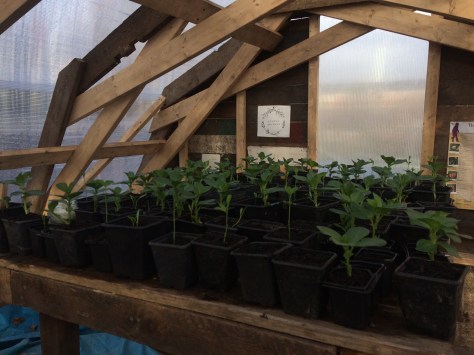
The Garden also won funding from Grow Wild to to deliver a series of practical workshops and identification walks, with the aim of inspiring and educating a future generation of seed-savers and fungi enthusiasts.

The Seeds and Spores Project will start on 21 April (10.30am-4.30pm) at the Global Gardens site, with a workshop on outdoor fungi cultivation with fungi enthusiast Rich Wright.

In June, Annwen Jones (Rhizome Clinic) will be leading a workshop on a range of healing native plants found. They will also be hosting a seed-saving workshop with Green City.
There will also be opportunities to develop identification skills later this year-Rich Wright (Feed Bristol) will be leading a fungi identification walk, and Julian Woodman (Glamorgan Botanical Group) will lead a walk on native plants in the local area.

International fungi expert Prof Lynne Body will talk about the good, the bad and the ugly (in fungi terms).

The workshops and walks are free but places are limited so book a place to avoid disappointment.

Throughout the project they will be creating a zine and various artwork, and the project will culminate with an exhibition in the Global Gardens Greenhouse. So, if you are an artist who would like to get involved, they also want to hear from you!

To find out more and keep up to date with activities, follow the Global Gardens Facebook page: https://www.facebook.com/globalgardensproject/

***

Introducing TEDxCanton: the tiny event with BIG ideas

On Saturday 19 May, a specially curated event will bring inspirational speakers and performers to the heart of Canton to share exciting new ideas and discussion.

Speakers include a firefighter who changed the way emergency services make decisions, and a man who believes trees can solve social problems. The talks aim to challenge, inspire and motivate the audience, and give them ideas to improve their lives and the world they live in.

Only 30 tickets will be available for the main event in local micropub St Canna’s, and there will be a viewing party down the road in the Printhaus with some extra community-led events. The talks will also be streamed online.

Event organiser James Karran said:

I opened St Canna’s to help create a place where people could meet, talk and drink great beer. Running an event licensed by the world-famous TED conferences is a fantastic way of bringing new ideas to our little community.

The three organisers and our team of volunteers have worked really hard to find the most inspiring speakers and amazing performers, and we can’t wait to reveal our full plans for the afternoon’s event!

Tickets will be released at midday on Tuesday 3 April. The price is £15, which includes four talks, two performances, two videos, a goody bag and a snack. Follow @tedx_canton for updates on ticket sales, speaker announcements and more exciting news!

About us

TEDxCanton is being organised by James, Hannah and Sara.


James Karran 
is the owner of St Canna’s and the holder of the TEDx license. He is a Baptist minister with a history of arranging unusual events, once running a ‘pub church’ project around Cardiff city centre. He opened St Canna’s in April 2017 with the intention of creating a space for the local community to meet, chat and drink great beer.

Hannah Johnson co-runs We Are Cardiff, an award winning volunteer-run blog that celebrates Cardiff’s alternative culture, arts scene and diverse communities. In her day job she’s a parliamentary researcher specialising in equality, human rights and poverty. She also writes for a human rights public education project, and works as a consultant for the UN Development Programme.

Sara Williams has managed corporate partnerships between businesses and the third sector for six years. She is incredibly passionate about bring local community and businesses together, and has led on sponsorship for the TEDxCanton.

About TEDx

In the spirit of ideas worth spreading, TEDx is a program of local, self-organised events that bring people together to share a TED-like experience.

At a TEDx event, TED Talks video and live speakers combine to spark deep discussion and connection. These local, self-organised events are branded TEDx, where x = independently organised TED event. The TED Conference provides general guidance for the TEDx program, but individual TEDx events are self-organised.

Sponsors

TEDxCanton is kindly supported by the Waterloo Foundation, and sponsored by a range of very generous local businesses and organisations:

Notes for editors

Contact
For more information about the event, contact tedxcantoncf@gmail.com.

About TED
TED is a nonprofit organisation devoted to Ideas Worth Spreading, usually in the form of short, powerful talks (18 minutes or fewer) delivered by today’s leading thinkers and doers. Many of these talks are given at TED’s annual conference in Vancouver, British Columbia, and made available, free, on TED.com. TED speakers have included Bill Gates, Jane Goodall, Elizabeth Gilbert, Sir Richard Branson, Nandan Nilekani, Philippe Starck, Ngozi Okonjo-Iweala, Sal Khan and Daniel Kahneman.

TED’s open and free initiatives for spreading ideas include TED.com, where new TED Talk videos are posted daily; the Open Translation Project, which provides subtitles and interactive transcripts as well as translations from thousands of volunteers worldwide; the educational initiative TED-Ed; the annual million-dollar TED Prize, which funds exceptional individuals with a “wish,” or idea, to create change in the world; TEDx, which provides licenses to thousands of individuals and groups who host local, self-organized TED-style events around the world; and the TED Fellows program, which selects innovators from around the globe to amplify the impact of their remarkable projects and activities.

Follow TED on Twitter at http://twitter.com/TEDTalks, on Facebook at http://www.facebook.com/TED or Instagram at https://instagram.com/ted.

***

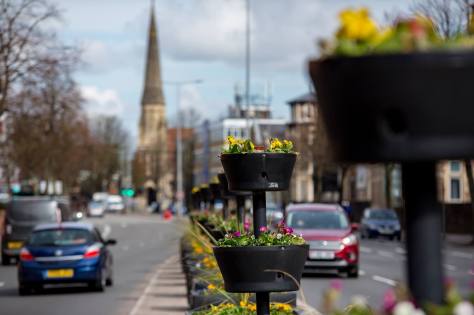
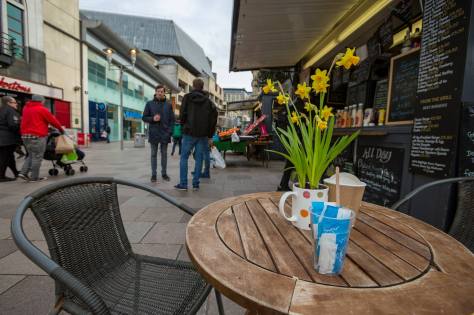
The first signs of spring!

Okay, so it’s official – spring has sprung! No lambs or fluffy chicks in the city centre, but plenty of colour. Photojournalist Ben Rice went on the hunt …

Fingers crossed for warmer weather!

Follow Ben Rice at The Cardiff Tribune and Ben Rice Photography.

***

Riverside Market Garden – behind the scenes

If you’ve ever been to the Riverside Market, you’ll have noticed the Riverside Market Community Garden stall. They sell fresh produce and also provide veg boxes for very reasonable prices for local folks. The produce comes from a little further afield than Riverside though – to trace these leaves and roots back to … well, their roots … you’ll have to travel over to St Hilary. Veronika Merkova headed over there to take some snaps (pre snow!) to show you where those green bits come from.

To see the full album, visit the We Are Cardiff Facebook photo album: Riverside Market Community Garden

Find out more about the Riverside Market Garden on Facebook

There is a very lovely feature on Veronika here on Together and Sunspell – Veronika Merkova

***


Meet Charlotte: teacher, tailor, sewer, superfly

Have you ever wanted to learn to make your own clothes? Do you want to embroider swear words or cross stitch your wifi password? Fancy making gorgeous, unique home furnishings?

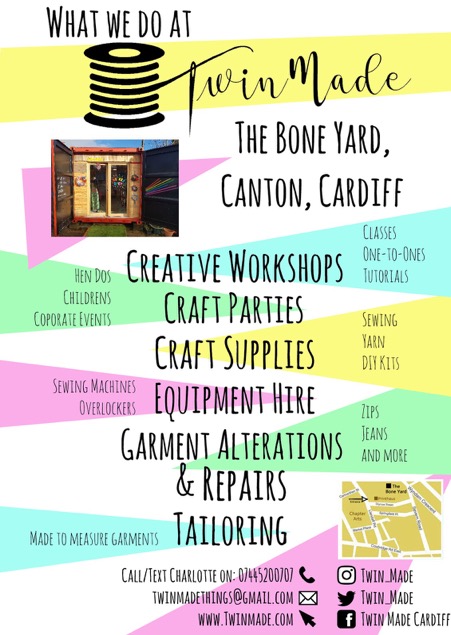
Well, we have found the woman for you. Twin Made (aka Charlotte) is quickly becoming our favourite creative micro-business in Cardiff. Operating out of a shipping container at the Bone Yard in Canton, she runs INCREDIBLE creative workshops to help you make anything from retro skirts to lampshades – no experience (or common sense, in our case) necessary. T

We were lucky enough to experience her circle skirt workshop this weekend and were so impressed that we asked her to tell us a little bit about her recent journey from secondary school teacher to full time creative queen!

Hi, I’m Charlotte. I have just left my day job to see if I can make my craft business in Cardiff into my full time job! Current feelings: scared, excited, worried, elated, overwhelmed, underwhelmed, a whole mixed bag of emotions! 

I am the Boss Lady at Twin Made. I often rope my husband in – have two colourful creative containers at The Bone Yard in Cardiff, slightly hidden but conveniently located in the heart of Canton. We run creative workshops, sell craft supplies, and rent sewing equipment.

It all started about 13 years ago, when doing a standard 9-5 job in a library. I got royally dumped by someone I thought, but definitely was not, THE ONE; he just happened to be the one who was still in the pub at the end of the night. About a month after our split, when he was off with his new fiancee,, I decided that I really needed to get a hobby that wasn’t just drinking two bottles of wine for a fiver ( or at least something I could do while drinking this admittedly questionable wine).

I had always been creative and had been to art college. I moved to Cardiff because I loved the band Mclusky, but also to study Graphic Communication at what was then UWIC. I dusted off my art supplies and started painting and knitting and making all manner of creations. My bedroom in a crappy shared house, in Roath, soon became the creative haven for a business I proudly called Boozy Floozy Designs. I would sell my makes on Etsy and Folksy and at local markets.t was great fun and I got to meet lots of Creative Cardiff types. Later on my twin sister Kathryn got involved and we rebranded and relaunched as Twin Made.

About five years ago I did a Design Technology PGCE at the Cardiff Met and became a qualified teacher. This was a really steep learning curve but I realised I was able to transfer my skills in a more creative way and at weekends I began to run workshops in Cardiff and London with my twin sister, teaching people how to create lampshades and embroidery.
During this time I met my now husband (out mutual likes were gin and embroidery). He was my dream man *insert emoji heart eyes* and he encouraged me to go ahead and find a more permanent home for Twin Made. And so it was that two years ago we moved in to the Bone Yard and set up a colourful new home.

Look! It’s Helia and Hana from We Are Cardiff after making their circle skirts! No sewing experience necessary, just lots of lolz

We run a wide range of creative workshops, such as lampshade making, modern embroidery, macrame and our very popular dungaree dress class. All our workshops are designed so that in 2-3 hours you can come to Twin Made, learn a new craft, and create an item to take home having gained the confidence to make more. The workshops are always very creative, relaxed, and are a great opportunity for people to forget their worries and, without too many distractions, engage in a new skill or refresh an old hobby. We also host craft parties, one-to-one sessions, and corporate events.

This year we are looking to increase our craft supplies and our range of equipment hire, as well as teaming up with lots of local makers to create more excellent workshops. I love reusing any leftover fabrics and am currently working on a exciting range of colourful collars and capes, all created from leftover textiles from our workshops.

In short, then: come and visit us in our colourful containers, support your local creatives, and even if you buy just a card we really appreciate it all. I’m looking forward to making Twin Made bigger, brighter, and giving it my all as my full time job!

Give us a follow to see what we are up to next! You can find us on Twitter, or if there’s something in particular you’d like to make/do email twinmadethings@gmail.com .

********

Cardiff Music Awards 2018 – finalists announced! Get voting!

YES Cardiff. The finalists for the 2018 Cardiff Music Awards HAVE BEEN ANNOUNCED! So get on with it, and get your votes in!

There were over 3000 nominations across all 20 categories, which have been narrowed down to just FIVE in each section. Voting is NOW OPEN, and will close on the 23rd of March. You can vote now! Head to the Cardiff Music Awards website.

Need some inspiration? TAKE YOUR PICK (before voting …)

CHROMA – Vampires


Boy Azooga – Loner Boogie


Astroid Boys – Cheque

GRLTLK Mini mix

VOTING IS OPEN NOW! GO! Head to the Cardiff Music Awards website. 

***

Meet The Jutes: Cardiff’s answer to Pavement … via Addis Ababa

Hold on to your pants, one of our favourite Cardiff bands (who played at our book launch back in 2015) are dropping their debut album this week as a Christmas gift to you all! Here’s Robin from the Jutes to take you through the album track by track, along with a video (made by our very own Jameso) and some gorgeous album art….

You can listen to Rumours in the peloton by the Jutes below, and don’t forget to follow them on Twitter: @TheJutes

Track 1: Permutations among the nightingales

A scene-setter rather than a first song, really, this was an instrumental guitar piece I’d had knocking around for a while that we quickly jammed and recorded in the studio. We recorded all of the basic tracks for this EP in one hectic day in the Music Box this spring – live as bass, drums and guitar, and pretty much in the same sequence as the track-listing.

Sadly Dan – our bassist – couldn’t make it, so Adam deputised on bass as well engineering/producing with his brother Paul. Adam was a complete monster – playing all these songs for the first time on the day we recorded them. I imagined this as the soundtrack to a shot of a car driving towards the vanishing point in the American mid-west at sunset. Not sure that explains the frog noises.

Track 2: Light a match

An attempt at a punchy, crowd-pleasing first proper song, we tried to channel Yo La Tengo and the Lemonheads, with hopefully some Real Estate guitar on the chorus. It’s one of only two songs on the EP about anything – distracting yourself from existential boredom by chit-chat and getting drunk. I tried to go full J Mascis with the guitar solo, but perhaps mustered up a slightly virile Norman Blake from Teenage Fanclub.

Track 3: Dear Susan

I really love Orange Juice (Edwyn Collin’s early-’80s fusion of the Byrds, Chic and fey Scottish teenagers with plastic sandals and fringes like Roger McGuinn) and this is intended as a straight-up homage.

The first line (“Evidently my dear Susan”) seemed like the sort of comically overblown thing Edwyn Collins would sing, though I couldn’t quite manage the voice – which Alexis Petridis described as like “a tipsy man launching into an after-dinner speech with his mouth still full of port and walnuts”. The lyrics are an aggressive take-down of religious extremism, which should hopefully sort a few things out.

Track 4: Gallic Way

When I formed the band I basically wanted us to be Pavement, but we could never manage their nonchalant slacker charm. Sounding like you don’t care and still being good is really hard! This is probably as close as we got. I think Neil nailed the drums, which sound like someone very drunk falling down the stairs holding a pint and somehow not spilling a drop.

The lyrics are fairly Malkmus-pastiching, but those are the sort of lyrics I like – a collection of (hopefully) striking images and phrases rather than a coherent narrative. No-one listens to lyrics beyond the first verse and the chorus anyway. The chorus refers to a traumatic haircut I once received where the hairdresser maintained eye-contact with me – in the mirror – throughout, seemingly never once looking at my hair/head, and relying on some sort of echo-location to avoid cutting my ears.

Track 5: Persian Regret

The name for this song is taken from the Jutes range of hard-wearing interior paints. The concept (for the song rather than the paint range), is that you (YOU) have just stepped out of a taxi in down-town Addis Ababa and into a club where this music is playing. Full disclosure: I’ve never been to Addis Ababa or listened to any Ethiopian music. Paul made some throat-noises, as this is what he presumes happens in Addis Ababian nightclubs.

Track 6: Borderline

This starts as a charming tale of love thriving in the tedium of low-level espionage, but quickly resolves into gibberish. Quite an unorthodox pronunciation of “archipelago”, but I’m sure Mick Jagger has done worse. After a straight-up American 90s college-rock first half we tried to seamlessly weld a 70s psych-rock outro onto the back like a backstreet mechanic. I enjoyed trying to play guitar like Neil Young, anyway.

Track 7: Plane

Another contender for most-Pavementy-song (an attempt to channel Here from Slanted and Enchanted), this was the first song we wrote as a band, and the last one we recorded. Despite playing it for over two years, 6 songs into the session I experienced some sort of studio-induced dementia and had to do star-jumps in the car park until I could remember how to play it again. Paul (producer and long-time friend and collaborator) reminds me that this is the second time I’ve used the line “sold up and moved to Tibet” in a song, which could tell you something (I’ll plagiarise anything: including myself).

I’m glad there’s some funny guitar halfway through. For me, the worst thing that’s happened in music in the last 20 years is the dominance of self-obsessed earnestness – in indie music and X-factor pop. When people talk to each other, they constantly use irony and humour, but when they pick up a guitar or a microphone they so often rely on po-faced seriousness. Whatever happened to Chuck Berry singing about his ding-a-ling?

The Jutes are:

Robin Wilkinson: guitars, vocals, songs, arrangements
Neil Williams: drums, arrangements
Adam Rustidge: bass, keys, percussion, production, engineering, mixing
Dan Holloway: bass inspiration, arrangements
Paul Rustidge: production, engineering, mixing, head of logistics
Recorded at Music Box, Cardiff
Mastered by Charlie Francis at Synergy Mastering

Photos courtesy of Lorna Cabble and Peppe Iovino, from the We Are Cardiff Press launch party in November 2015.

****

Jenny moved to Cardiff … because of Human Traffic

This week’s up close and personal comes from an old raver who moved to Cardiff in 1999. Her inspiration: Justin Kerrigan’s clubtastic Cardiff-based flick, Human Traffic. Here’s Jenny to tell us more.

I can still remember the first time I saw Human Traffic. Sounds ridiculous, but that film changed my life. I was living in Exeter and I messed up my A level exams, and so ended up with shoddy grades, unable to get into any of my university choices. I only just managed to get into Reading, but I didn’t like Reading at all. Most of my friends were off travelling, and I just didn’t seem to click with anyone there. One night, my flatmates suggested we watch a film before we went out. One of them had this new film, Human Traffic, on video (VHS!!! Imagine). I’d heard vaguely about it but couldn’t afford to go to the cinema back then, so hadn’t seen it.

We watched the film in the communal area (which was basically the kitchen), all wrapped up in blankets, sitting on uncomfortable kitchen chairs, smoking spliffs and drinking beers, totally absorbed in the whirlwind 99 minutes of clubs, drugs, pubs, and parties, all set in this magical narnia called Cardiff. The soundtrack was amazing, the people seemed friendly, the city like a neon playground inviting you from club to house party, back to club.

I realise, obviously, that the film’s not without fault. The dialogue is clunky sometimes, the storyline abjectly ridiculous. But it’s not really about any of that, so none of that matters. It’s about capturing a moment in time. It’s about being a certain age, being part of a scene, when you might never have really belonged anywhere before. And by those standards, it might as well be Citizen Kane. That’s certainly how I felt about it.

Also Danny Dyer. It is most definitely about Danny Dyer.

I was super fed up with Reading, and my friend Pete was at uni in Cardiff, and so during the first term I bought myself a railcard and took the train there to visit. There was some event on at Solus in the student union – maybe Carl Cox, or something? The entire union was covered in camo netting – it was everywhere. By this point, drugs had entered my recreational lexicon. I hid the pills in my bra and we distributed them amongst us when we got in there. Pete’s flatmates came with us too, they were still in that slightly awkward initial freshers phase, where you sort of have to hang out together because you haven’t met your tribe yet, but they were all lovely, if awkward.

I was off my face, ended up snogging this cute blonde that lived in a student flat a few buildings away from them. The music was a mixture of trance and hard house. It was epic, driving music, with enough weird psychedelic sounds to keep your brain tweaking while you danced and stamped away, blissed out.

Pete and his flatmates ended up meeting loads of new friends that night – we all went back to someone else’s flat in Talybont South, where they produced endless amounts of weed and bongs, lungs, shotties. I never really liked weed so opted to just keep drinking booze and smoking fags. We hotboxed ourselves in that tiny living area until it started getting light, when we all stumbled back to Pete’s flat, shading our eyes from the dazzling October skies.

We couldn’t sleep, of course, so after a few hours fitfully rolling around on the floor, Pete decided we needed a fry up and then to go back to the pub. We didn’t bother showering – I think I just about managed to brush my teeth – and back out into the wilds we went, all wearing sunglasses, clutching cans of Oranjeboom, heading up to Cathays to The Warm As Toast Cafe (Twat … RIP!) for ‘breakfast’.

After we’d managed to hold down the food, Pete started getting a second wind. We headed for the nearest pub – can’t remember which one it was now, one on the way into town. It might have been Inncognito, which later became Cardiff Arts Institute. It was late afternoon by this point and they had DJs setting up in there. We alternated between pitchers of beer and pitchers of cocktails, and although it’s almost impossible to get pissed the day after a massive session, the day-after drinking always felt so nice: like a big cushion around your come down. (I would find out years later was actual real come downs were like: when you’ve got an unforgiving 9-5 and you haven’t slept all weekend and by Wednesday you think everyone hates you and wtf does your life mean and literally want to fall into a hole and die).

Feeling slightly more sprightly, we decided to head into town. It was only about 5pm at this point and all the shops were still open, so I got a whistle stop tour of the most important independents: Hobos, for natty threads; Catapult, for all your dance music; and Spillers, for indie, rock, and everything else. I bought a London Elektricity CD from Catapult (I still have it!) and a Spillers t shirt which I wore over my shirt for the rest of that night.

We went for a burger in the Gatekeeper, and Pete bumped into some friends from his course, who were heading into Clwb Ifor Bach, which really was a ‘Welsh club’ back then: we were only allowed in as we went in with some Welsh speakers, and I got given a membership card to sign that promised that I was learning Welsh (something I’ve still not managed to master, despite having lived here for nearly 20 years now – good job they don’t check up on you anymore).

The night gets hazy after that. Endless trips to the damp loos, as Pete got some charlie off someone in the queue. Sneakily smoking spliff on the dancefloor. I can’t even remember what the music was now, maybe some sort of indie night. The crowd was completely different though. Fewer students. More young professionals.

We got to bed around 2am and slept til about 3pm. I woke up already late for my train, and had to get a taxi to the station. I made it with seconds to spare. I got a Burger King when I was back in Reading and slept through all of my Monday lectures.

And that was the first of many such weekends in Cardiff. I was back in Cardiff every weekend during that first term. I bumped into Meic again (the blonde guy I’d snogged that first night), and soon we were an item. Eventually realised there was no point in travelling back and forth all the time. My heart was in Cardiff. Not necessarily with Meic – we split up after a few months – but in the city. Pete moved in with his girlfriend so I took his room and moved in with his flatmates. Turns out we were a tribe all along!

I thought I might apply to Cardiff Uni, but my grades hadn’t been great, and I didn’t really know what I wanted to do – I just knew I was much happier doing anything in Cardiff than I had been in Reading or back in Devon.

I gave up on the idea of uni altogether and started working. Like lots of people, I guess, I was temping, doing all sorts of different things, and then just sort of fell into working in events. I think I got to have the best of both worlds, back then: I hung out with students all the time. I even went to a couple of lectures, just to see if I’d enjoy it. But I didn’t really.

My memories of those days revolve around the nightlife. I made so many good friends on nights out – people I’m still close to now. Friendships forged in sweaty hugs and toilets and on dancefloors across the city. I even ended up meeting some people that had been extras in Human Traffic itself – extras in the house party scenes towards the end. They told me they’d wanted to make it as realistic as possible, so they were all smoking spliffs and drinking beers. TRUTH.

The venues were key. The Emporium, for example – where I spent so many nights – was where part of Human Traffic was filmed. You can even see some of its posters in the background of the scene where Jon Simm tries to blag his way into the club – apparently this scene was shot in the manager’s office.

Then there was Welsh Club. The Toucan. The Hippo. The Model Inn. Club M. Club X. Gretzskys. Metros. Apocalypse or Vision  or whatever it was called by  the end (it then turned into Primark … and is now some other high street chain shop). The Student Union – Solus upstairs, and Seren Las downstairs. The Philharmonic. Evolution and the party bus from town to the bay. Barfly. Sugar. Moloko. The Point. There was some place behind a fancy dress shop on Clifton Street we’d go to for after hours parties. And we used to go to everything: techno, drum & bass, the reggae parties down the Bay. Hard house was more of a push for me but I’d still go.

There were some nights we wouldn’t leave the house until midnight. These days I can’t remember the last time I was even awake at midnight without there being a baby crying or a dog with the runs demanding to be let out of the house. How things change!

Venues open and close. Unless you were around Cardiff at the start of the 2000s, you probably don’t even recognise half those places I’m talking about. The union is all coffee shops now. I read something recently about how students and young people don’t rave or drink or take drugs anymore, and it made me sort of sad, double sad, for them – that they won’t experience all those amazing things – but also myself. I miss those days. I miss being young and carefree and not having kids or a mortgage to worry about and being able to spend all night roaming around the city, smoking rollies with tramps and going back to random houses for parties.

Don’t get me wrong, I wouldn’t change my life now for the world. I just wish I’d revelled in those days, in that time a bit more. Also it was a weird time in terms of the internet – right early days, so it’s not like I can just flick through Facebook albums whenever I feel nostalgic. I barely had a mobile phone at that time, and I certainly didn’t have a digital camera until nearly a decade later.

As for Human Traffic now? I actually haven’t watched the film in ages. It’s a treat that I save up for myself when I’m poorly. I love doing that really boring thing of “I know where that is!” when they’re in some of the outdoor scenes. And I know I’m not the only one that really loves it: because I still see articles about the filming locations or interviews with Justin Kerrigan popping up every so often.

***

Jenny Jones is an events manager who dreams fondly of her youth. She currently lives in Fairwater.

Wanna read more?

Peas

Catch this family friendly Cardiff Christmas show, made by feminist theatre pioneers: The Giant Who Had No Heart In His Body

If you’re looking for some heartwarming, family friendly theatre to warm your cockles before the big C hits this year, head to Chapter on Friday 22 and Saturday 23 December! Likely Story Theatre’s newest work – The Giant Who Had No Heart In His Body – includes grand tales of adventure, once forgotten fables, and that anecdote your uncle always tells at Christmas. No matter what they are about, stories can’t just be told – they have to be caught. Thankfully story catchers Agi and Dot are doing just that. Watching from their home in the clouds, they scout the sky for stories and catch them before they float away on the wind. Now the pair face something they’ve never faced before: telling their own story. Will they be able to pull it off? Only time will tell…

This is a lovely Christmas show that takes on an Norwegian fairytale using a magical mix of puppetry, live music and humour. GET YOUR KIDS THERE (grown up ones too!), THEY WILL LOVE IT.

WHEN AND WHERE
Friday 22nd December, 6pm (British Sign Language interpreted performance) &
Sat 23rd December, 11.30am and 3.30pm.
Chapter Arts Centre, Market Rd, Cardiff, CF5 1QE Tickets: £5 / £17 family ticket (4 tickets including at least 1 child)
Info: www.likelystory.org.uk
Tickets: www.chapter.org


This heart-warming show was created by Likely Story’s founders Hazel Anderson and Ellen Groves, with the help of their young children.

“We were developing a piece with my son Toby in the room,” Hazel explains, “we were playing with ideas and getting really excited when Toby started to cry because we’d left him, our audience, behind. We did the piece again but, this time, we built up the energy more slowly and bought him with us. It meant we created a scene with a completely different feel.

“It was a good reminder that the audience wants you to play with them, not just for them.”

Motherhood hasn’t just had an effect on this particular show, however, as Likely Story acts as a flagship company that demonstrates how creative organisations can foster the talent of mothers, and how people can create theatre as a family.

“In a professional setting you so often feel like you need to apologise for your kids being in the room,” says Ellen “now we’ve changed that from being seen as a burden, to being a gift.”

With both kids and grown-ups helping to shape The Giant Who Had No Heart In His Body – and with tickets only £5pp or £17 for a family of four – the entire family can see a show that is just as funny and fascinating for the over 70s as the under 7s.

“In the mix of a very commercialized Christmas, this is a show that aims to bring families closer together with play, love and lightness. It’s a show that is created with a lot of everyday objects, so that families can play and recreate it at home” says Ellen.

Hazel explains: “It’s a show that kids will laugh at, adults will laugh at, and they will both laugh at each other laughing.”

Likely Story Theatre was founded in 2006 by likely ladies Hazel Anderson and Ellen Groves. It was created on the simple philosophy that the women shared: the belief that storytelling is magical and that stories are best brought to life through the imaginative use of ourselves and everyday objects.

***

Writing the city: a Cardiff love story

Writer Nick Frampton talks to us about his life in Cardiff, moving to the city for the first time and why he decided to set his novel The Cardiff Christmas Club here.

I first moved to Cardiff at age 22 to study for my master’s degree. Like many people I fell in love with the city and ended up staying long after my degree was finished with.

Some 12 years on, Cardiff is still the largest city I’ve ever lived in. I grew up in a small village in Devon and before Cardiff the only other city I’d lived in was Durham, where I went to university. Of course I say ‘city’ but Durham is in many ways simply a town with a beautiful cathedral. It’s less than a third of the size of Cardiff and rarely feels busy – it’s a sleepy place populated almost entirely by students.

To many, Cardiff is a small city — even I can recognise that. I love that you can easily walk from one end to the other, and that with the exception of match days— and the annual Christmas shopping frenzy— it rarely feels crowded. But to me, it still feels large.

I love the excitement of cities: the ready availability of bars, theatres and shops. Growing up in a village with only a church, a sawmill and a long closed post-office for entertainment, even a nearby corner shop still seems decadent. But the vastness of cities is strange to me. I know a lot of people in Cardiff, but can still walk around without seeing anyone I recognise. In the village I grew up in, people stop and talk to me for no other reason than I look exactly like my dad, a man who at one stage or another would have taught them or their children. It’s a different world, and even after 34 years of it, it still seems that way to me.

When I started writing, cities became an unexpected theme throughout my work.  My first novel The River was a fantasy title set in a world where humans are born fully formed in the waters of an enormous river. The first place people run to is known simply as The City, and it is a place of shelter and safety, but also hidden danger.  Soon after I wrote a dystopian short story Adam 0532, where the boundaries of a futuristic city became the means through which the population is controlled.

When I decided to venture into the real world and write a romance novel, my first thought was where can I set this? Fiction, like film, is dominated by the big hitters; London, Paris, New York, San Francisco. Just as aliens are only interested in destroying the Golden Gate Bridge, the Eiffel Tower and Big Ben in disaster movies, we’re sold the same idea on love. Fictional love is largely the domain of far-off cities, full of mystery and adventure. It’s that or sleepy English villages much like the one I grew up in. Where according to every TV detective show I’ve ever seen, I’m a statistical miracle having not been murdered by the age of 18 collapsed face first in to a Victoria sponge.

Setting my book in Cardiff felt like a sweet (if tiny) rebellion; a proud middle finger to our London-centric society. Life does go on outside the M25 and actually it’s rather good. I’ve always thought of Cardiff as a fun city; somewhere people know how to enjoy themselves. We work hard here, but work isn’t everything and that’s something I like to channel in life as well as in my writing.

The Cardiff Christmas Club has Cardiff at the heart of the novel. The characters met here in university and simply stayed, as many – myself included – have done. There’s a lot in the book that will be familiar to Cardiff residents; like the joy of running over the bouncy footbridge into the wide expanse of Bute Park, stumbling down Chippy Alley takeaway in hand, ice skating at Winter Wonderland and watching the sunset in the bay.

After spending a few years writing about fantasy cities, full of danger and deity-rivers, writing about a city I lived in for over a decade was actually a relief. Rather than agonising over how a street might look for hours, being able to just look it up on Google Maps certainly made my life easier.  My husband’s obsession with moving flats also helped. In the four years we lived together in Cardiff we moved four times. Over the years I’ve lived in Cathays, Roath, Butetown, Canton and Pontcanna; and so finding homes for my characters was a breeze.

Cardiff also has a lot of really unique features that are a dream to write about. My lead character Katy loves the city’s arcades and has always dreamed of living in a house with the Victorian tile and checkerboard hallway so distinctive to Cardiff. I guess writing about somewhere you love it’s easy to put a lot of yourself in to a character. Sometimes more than you realise until you read it back! I hope when people read the book they have that same feeling of rediscovering their city through a character’s eyes.

***

After just over a decade living in Cardiff, Nick now lives with his husband in a village of 500 people in Devon. But Nick still returns to Cardiff often.

The Cardiff Christmas Club is Nick’s second novel and is available as a paperback from Amazon and as an eBook from all major eBook retailers. 

The novel tells the story of Katy Winters, who finds herself at the centre of a love-triangle between ex-boyfriend David and handsome farmer Rhodri; a member of the newly formed Cardiff Christmas Club.

We think it might make a great gift for that special someone in your life … find out more:

Aaaand the usual from us: